
Does coffee affect health? What are the main components of coffee?
Coffee contains antioxidants; for instance, "tannic acid" can protect cardiovascular health, reduce cellular damage, and thereby lower the risk of cardiovascular disease. In addition, moderate coffee consumption helps reduce the occurrence of Alzheimer's and Parkinson's diseases, while improving liver health, preventing fatty liver and gallstones, and even lowering the risk of cirrhosis and colorectal cancer.
As one of the world's three major beverages, coffee has become an indispensable ritual in modern life, playing an important role from waking up in the morning to staying alert in the afternoon! But does drinking coffee every day affect physical health?
Coffee can make some people alert, give others a racing heart, send some running to the bathroom, and leave others unable to sleep at night. So what kind of impact does coffee have on physical health? In fact, medical literature is full of various studies on coffee's effects on health, and the recent New England Journal of Medicine published a study on the effects of coffee on the human body.
#What are the main components of coffee?
- Caffeine: Source of bitterness (caffeine is a central nervous system stimulant that can temporarily dispel drowsiness and refresh the mind)
- Tannic acid: Source of acidity (tannic acid is also known as chlorogenic acid, a type of polyphenol that can act as an antioxidant and scavenge free radicals)
- Fats: Source of coffee aroma (mainly divided into two types: acidic fats and volatile fats)
- Proteins: Source of calories (coffee proteins are not easily soluble, low in calories, making it a weight-loss staple)
- Sugars: Source of sweetness and color (after roasting, sugars turn into caramel and fuse with tannic acid, giving coffee a sweetness within the astringency)
- Crude fiber: Source of color (carbonizes after roasting, and combines with sugar caramelization to form coffee's color tone)
- Minerals: Source of astringency (potassium content is highest, accounting for about 40% of all minerals, followed by calcium, magnesium, phosphorus, sodium, sulfur, etc.)
- Moisture: Green beans contain about 11% moisture, which drops to about 2.5% after roasting.
Antioxidation is the process of stabilizing free radical structures; by scavenging free radicals produced during normal metabolism, it blocks their oxidative chain reactions, reduces damage to cells, and thus protects the body from harm.
#5 Major Benefits of Drinking Coffee
- Boost alertness and work efficiency: Caffeine in coffee is a natural central nervous system stimulant that stimulates the brain, improves alertness and concentration, especially when feeling fatigued or needing to work for long periods, coffee has a strong refreshing effect.
- Promote metabolism and weight loss: Caffeine can increase basal metabolic rate by 3% to 11%, effectively promoting the body to burn more calories, and stimulating fat breakdown to accelerate fat burning. The antioxidant component "tannic acid" in coffee can inhibit glucose absorption and fat accumulation, having a significant effect on preventing weight gain. In addition, coffee's weight loss effect is also reflected in promoting gastrointestinal motility and diuresis, helping to eliminate excess water and toxins, maintaining a light figure. No wonder many weight loss products contain caffeine!
- Maintain digestive health: Coffee can promote gastrointestinal motility; when bowel movements are difficult, drinking some black coffee can improve constipation. However, the downside is that coffee can easily damage the gastrointestinal mucosa; it is recommended not to drink coffee on an empty stomach. In addition, people with gastritis, gastric ulcers, or duodenal ulcers must stop drinking coffee. On the other hand, if there is excessive gastric acid secretion, it is recommended to choose low-acid or acid-free coffee to avoid burdening the gastrointestinal tract.
- Lower disease risk: Coffee contains antioxidants; for instance, "tannic acid" can protect cardiovascular health, reduce cellular damage, and thereby lower the risk of cardiovascular disease. In addition, moderate coffee consumption helps reduce the occurrence of Alzheimer's and Parkinson's diseases, while improving liver health, preventing fatty liver and gallstones, and even lowering the risk of cirrhosis and colorectal cancer.
- Improve mood and lower depression risk: Caffeine in coffee can stimulate the central nervous system and promote the production of neurotransmitters such as dopamine and serotonin, which are closely related to mood stabilization. Moderate coffee consumption not only brings pleasure but also helps reduce neurodegeneration, further lowering the risk of depression.
#How much coffee per day is appropriate?
In China, the average annual coffee consumption per person is 6.2 cups (yes, this is the annual consumption). However, China's coffee consumption growth rate is astonishing, reaching about 30% per year; over the past 14 years, China's total coffee consumption has grown by a staggering 1000%. So in the future, coffee will continue to permeate people's lives and become part of daily beverages.
In European countries like Finland, Denmark, and the Netherlands, annual per capita consumption reaches 1,000 cups, 160 times that of China. Coffee intake in North America and South American countries like Brazil is also very high; the darker the color in the map below, the more coffee is consumed.
It is recommended to drink 2-3 cups of coffee a day: a black coffee in the morning, a latte in the late morning, and possibly another cup after lunch.
#Caffeine: Giving the Body and Brain a Green Light
Caffeine, as the name suggests, is the primary active ingredient in coffee. The type of coffee, roasting method, extraction method, and individual genes and gut microbiota all affect the action of bioactive substances in coffee. For example, one study found that among various brands of coffee sold in Glasgow, the caffeine content per cup ranged from 50mg to 322mg.
Caffeine is a small molecule belonging to the methylxanthine class that can freely enter and exit blood, cells, and even the brain. Within 45 minutes after drinking coffee, 99% of caffeine is completely absorbed by the body, while the average time for metabolic excretion is 5 hours; studies also show that consuming coffee around 6 hours before bedtime can affect sleep.
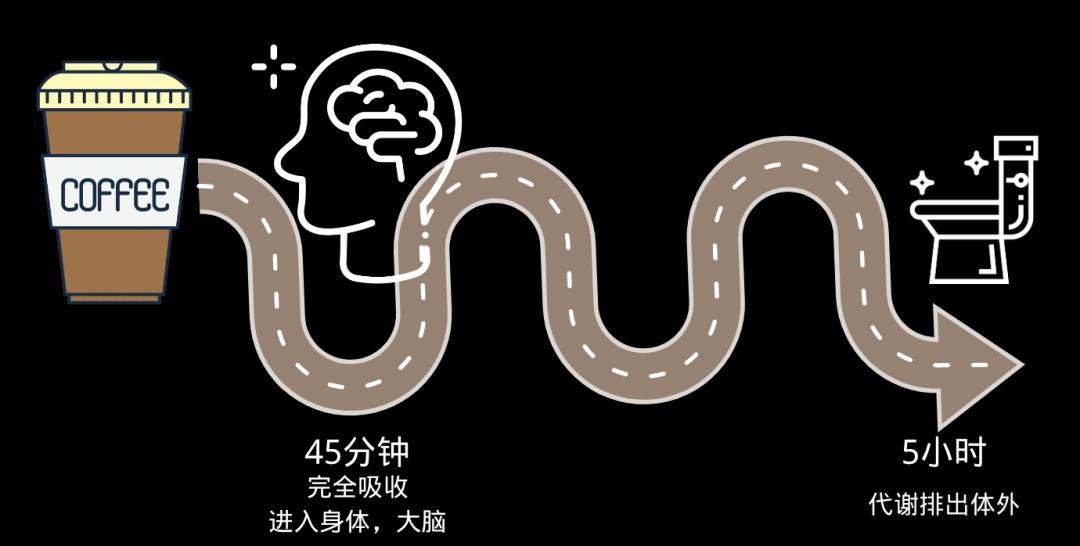
In the body, caffeine's main mechanism of action is inhibiting adenosine. Adenosine transmits fatigue signals in the nervous system, but caffeine can inhibit the binding of adenosine to its receptors—meaning the nervous system turns a blind eye to fatigue signals, giving a green light all the way to continue executing the brain's commands and completing the tasks required by the boss!
#What are the short-term effects of coffee on the body?
Coffee's short-term effects mainly stem from caffeine's action on the nervous system, cardiovascular system, muscle metabolism system, and urinary system. Many people experience palpitations after drinking coffee, so people worry whether coffee causes arrhythmia.
There is a study on this very question in the New England Journal of Medicine. Researchers in California, USA, randomly assigned 100 adults to "more coffee days" (1-2 cups daily) and "no coffee days" (average 0.3 cups), and monitored ECG, location, activity, and sleep via continuous wearable ECG monitors and fitness trackers.
Results showed that compared to no coffee days, more coffee days did not cause more premature atrial contractions, but may result in more premature ventricular contractions. Additionally, on days with more coffee, participants' average daily step count increased by 1,000 steps, while sleep time decreased by 30 minutes.
Coffee makes us exercise more, sleep less, and may increase the possibility of premature ventricular contractions. If you have sleep issues or underlying heart disease, coffee may not be suitable for you. However, note that this study was conducted in healthy young adults with a small sample size and cannot be generalized to older populations.
#Does frequent bathroom trips after coffee cause dehydration?
Besides insomnia and palpitations, the most common reaction after drinking coffee is the urge to use the bathroom—frequent urination—so some worry whether coffee causes dehydration.
The simple answer: drinking coffee does not, but consuming large amounts of caffeine might.
Coffee does have a diuretic effect, but because coffee itself is a liquid beverage, the fluid intake and output can reach a basic balance. Research shows that daily caffeine intake below 400mg (about 5 cups of drip coffee or 3 cups of double-shot espresso drinks) rarely causes dehydration. However, consuming caffeine gummies or tablets without timely water intake may lead to insufficient hydration and should be avoided.
#Does long-term coffee consumption affect health?
The palpitations, frequent urination, insomnia, and increased activity mentioned above are short-term reactions shortly after drinking coffee. What about long-term consumption—drinking several cups every day—does it affect health?
Before counting coffee's health impacts, here's an interesting phenomenon: questionnaire surveys in European countries found that on one hand, people drink coffee every day; on the other, most believe coffee has no health benefits. It seems people have a love-hate relationship with coffee, but there's really no need.
In fact, multiple large-scale nutritional cohorts mostly find that long-term coffee consumption seems to have no harm; on the contrary, it benefits many diseases, making it a beverage that, while not a cure-all, is highly beneficial to the body.
Both a review in the New England Journal of Medicine and a meta-analysis in the British Medical Journal indicate that compared to non-coffee drinkers, when drinking 3-4 cups daily, all-cause mortality decreases by 17% (RR 0.83, 95% CI 0.83-0.88), cardiovascular mortality drops by 19%, and among coffee drinkers, the incidence of certain tumors, neurological diseases, diabetes, gallstones, and liver diseases is also lower.
Overall, drinking 3-4 cups of coffee daily is beneficial to long-term health, because antioxidants and phytonutrients in coffee have certain anti-inflammatory effects, can help appropriately raise basal metabolism, increase the utilization of fat by muscles and other tissues, and the overall effect is favorable for cardiovascular health, prevention of metabolic diseases like diabetes, and prevention of certain tumors and liver diseases.
Over 1,000 bioactive molecules can be isolated from roasted coffee, including antioxidant, anti-inflammatory, anti-fibrotic, and anti-tumor molecules, so the long-term health effects of coffee come not only from caffeine but also from chlorogenic acid, diterpenes, cafestol, and kahweol.
#Who should not drink coffee?
Although coffee is a relatively safe, even health-beneficial beverage, like all bioactive substances and drugs, coffee has unsuitable populations.
People unsuitable for coffee: those with sleep issues, heart problems, children, pregnant women.
Coffee can cause palpitations and worsen sleep, so people with heart problems—especially arrhythmias—should not drink much coffee, and those with existing poor sleep are also unsuitable.
Additionally, caffeine metabolism is related to body weight; infants basically cannot metabolize caffeine, children's ability to metabolize caffeine is also poor (because they weigh only a few kilograms). For pregnant women and women taking oral contraceptives, caffeine metabolism slows down, causing ingested caffeine to accumulate without being metabolized out. Children and pregnant women are not recommended to drink coffee; pregnant women's daily intake should not exceed 200mg (2 cups of drip coffee or 1 cup of double-shot espresso).
Many energy drinks also contain high caffeine content, and cola contains caffeine as well. Children and adolescents' caffeine intake mostly comes from these beverages; if they consume too much at once it may lead to caffeine overdose, so children must not be allowed to drink too many sports drinks or carbonated beverages, especially when thirsty after exercise—the best drink is still water.
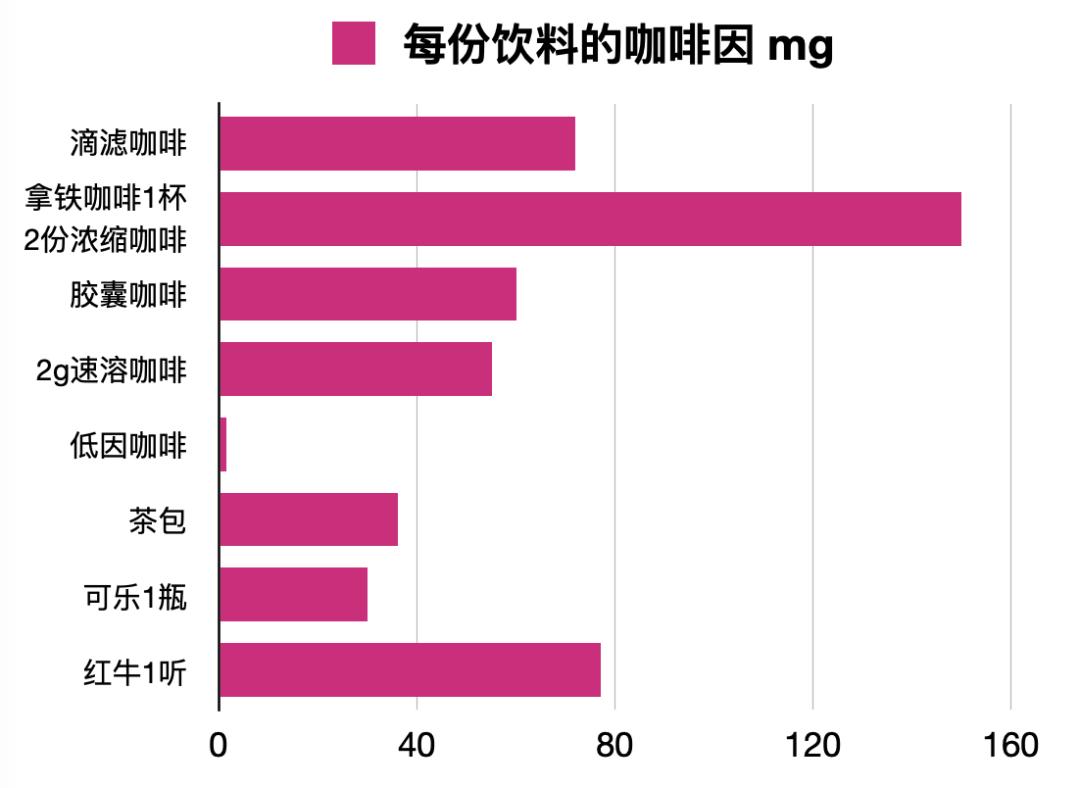
Caffeine content in sports drinks is not low; daily caffeine intake below 200mg is relatively safe even for pregnant women—that's the amount in 1 latte. For healthy adults, drinking about 3 cups of coffee daily is healthy.