
Why Do Coffee Beans Get Oily? Are They Stale?
During roasting, coffee beans undergo a series of chemical reactions. After absorbing large amounts of heat, water vapor and carbon dioxide build up inside the bean, causing the cell walls to rupture due to expansion. Whether coffee beans show oil has no absolute connection to freshness—this is a common misconception.
Coffee enthusiasts often notice that some roasted beans develop a sheen of oil on the surface. Coffee oil has long been a topic of discussion, and the crema on espresso (Crema: the golden foam atop espresso) is a particularly hot subject in the coffee world.
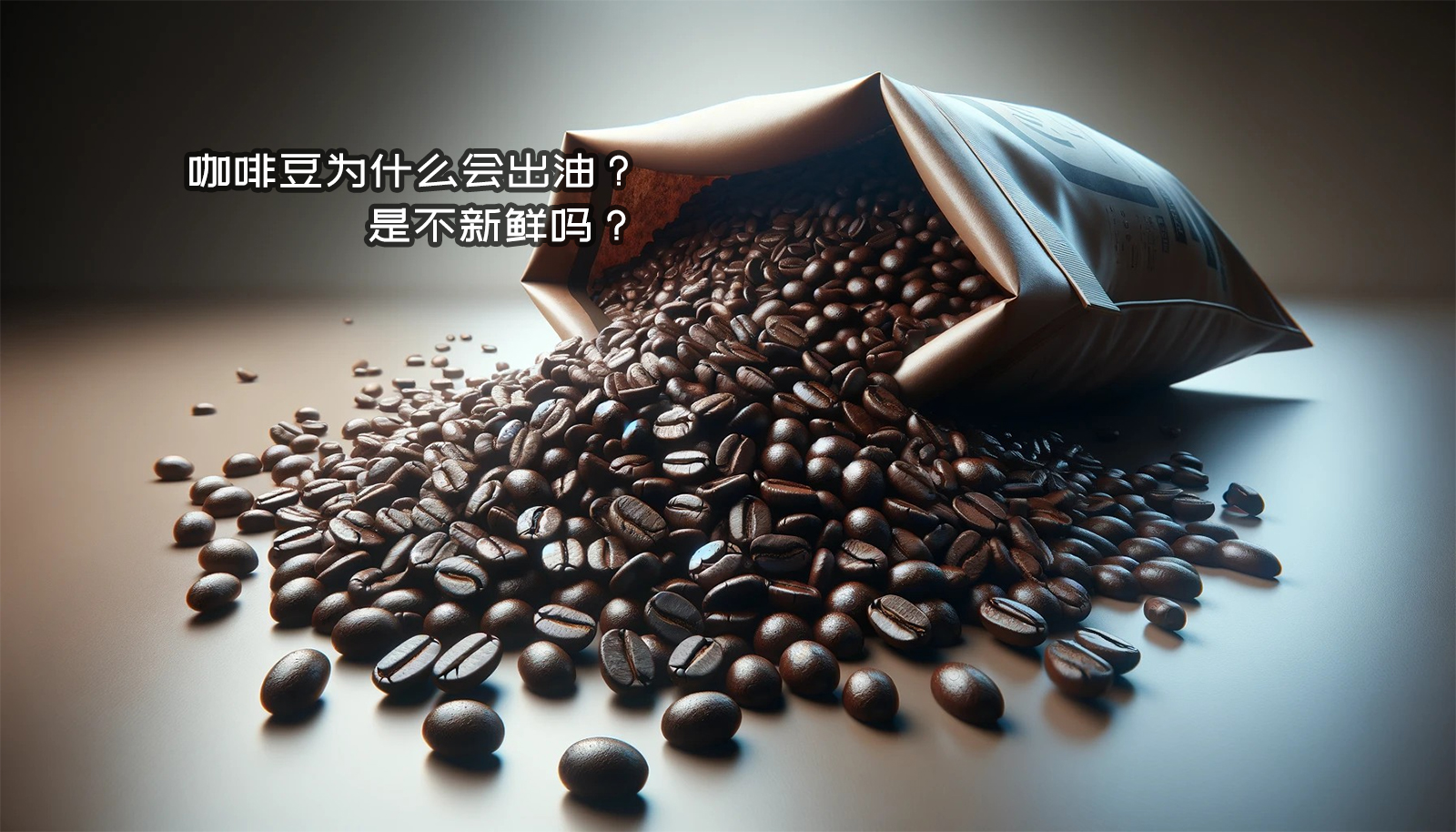
#Why Do Coffee Beans Get Oily?
Coffee's aroma and smooth mouthfeel come largely from its lipid content. Arabica beans contain about 60% more lipids than Robusta—15–17% of total weight—which is one reason Arabica is more popular.
During roasting, beans undergo a series of chemical reactions. When they absorb large amounts of heat, water vapor and carbon dioxide build up inside, rupturing the cell walls. At this point, moisture, organic compounds, and lipids are carried to the bean surface, creating the oily sheen.
This oil-like substance is actually a water-soluble organic compound that dissolves in water and is the primary source of coffee aroma. Human taste buds detect only a few basic tastes, but the nose can distinguish over 1,000 aromas. Taste and aroma together form "flavor"; taste compounds are mostly water-soluble, while aroma compounds are mostly fat-soluble. That's why high-lipid Arabica delivers such outstanding flavor. So, oil on beans is normal—not a sign of spoilage.
#Roast Level Is the Main Factor Affecting Oil
Darker roasts absorb more heat, which drives more lipids to the surface. Therefore, roast depth is the true key factor influencing oil appearance.
Very light roasts show a dry surface and rarely exhibit oil;
Light-medium roasts may develop tiny oil droplets after 5–7 days of storage; medium roasts, due to high pressure and temperature during roasting, release more CO₂ over time, producing obvious oil. Dark roasts can show oil immediately after roasting. So judging freshness by oil alone isn't very accurate!
Early coffee roasting—especially during wartime—tended to be darker to protect beans for long-distance transport. This extended shelf life and improved durability but impacted flavor, making coffee more bitter and roasty. Preferences vary: some like dark roasts, others prefer light roasts.
#Different Roasting Methods Affect How Quickly Oil Appears
Oil is primarily driven by roast level, but even at the same roast level, different roasting methods change how fast oil appears. Every roaster's technique varies, so actual results differ.
- Direct-flame roasting: Beans are heated by flame; harder to control, but when done well, aroma is often superb. Direct flame contact creates larger temperature gradients, leading to less even roasts and a higher tendency for oil to appear.
- Semi-hot-air roasting: Flame doesn't touch the beans directly, combining advantages of direct-flame and hot-air. Roast is more even; experience shows oil appears more gradually than with direct flame.
- Hot-air roasting: High-temperature air flows directly over the beans. Best heat transfer, fastest and most efficient, and most even roast. Oil appearance is generally the most gradual.
#Does Oil Mean the Beans Are Stale?
Whether beans show oil has no absolute link to freshness—this is a common misconception. Many people mistakenly think oil means the beans have been stored too long, overlooking more important factors.
In fact, oil on beans isn't absolutely tied to age. While prolonged storage can increase oil, the biggest influences are roast level and roasting method. Oil is a natural phenomenon during roasting and should not be the sole criterion for judging freshness; roast process and processing method must also be considered.
Roast level is a key factor in whether beans show oil. Different roasting methods also affect oil. Washed and natural processed beans may have different lipid content and oil characteristics. Freshness matters, but proper storage—sealed, away from light and moisture—helps preserve it, though it doesn't necessarily change the degree of oil.