How to Make a Cappuccino?
Learn how to make café-quality cappuccino at home. We'll walk you through the essential equipment, the perfect recipe, and the best coffee choices for this popular brewing method.
Learn how to make café-quality cappuccino at home. We'll walk you through the essential equipment, the perfect recipe, and the best coffee choices for this popular brewing method.
#What is a Cappuccino?
A cappuccino is a traditional coffee beverage made with espresso and milk, distinguished by a thick layer of steamed milk foam on top.
#History of the Cappuccino
The cappuccino traces back to the 18th-century Viennese coffee house "Kapuziner"—a drink made by adjusting the ratio of coffee, cream, and sugar to achieve a brown color resembling the robes of Capuchin friars. The modern cappuccino, composed of espresso, steamed milk, and foam, originated in Italy in the early 20th century, coinciding with the spread of espresso machines.
#How Much Milk is in a Cappuccino?
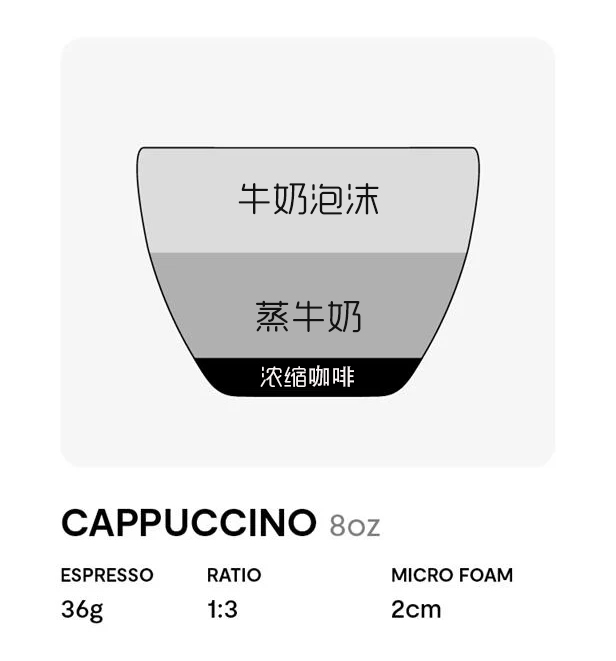
A cappuccino typically consists of approximately 1/3 espresso and 2/3 steamed milk, characterized by a generous layer of microfoam on top, usually exceeding 1.5 cm in thickness.
#Difference Between Cappuccino and Flat White
Milk texture is the primary factor distinguishing a cappuccino from a flat white. A cappuccino is a classic "foam-rich" coffee, containing espresso, steamed milk, and topped with foam. The finished drink has a fluffier mouthfeel and a more pronounced milk aroma, typically served in a 7-9 oz cup, often dusted with chocolate powder.
#Difference Between Cappuccino and Latte
Milk texture is also the main difference between a cappuccino and a latte. Both use the same cup shape, with a capacity of about 7-9 oz, and are made with a double shot of espresso. However, a cappuccino typically has a foam layer exceeding 1.5 cm, while a latte usually has only about 1 cm, giving the latte a slightly lighter mouthfeel.
#How to Make a Cappuccino
The way coffee is roasted makes it suitable for all brewing methods. For a more traditional taste, we recommend using an espresso blend. The Classic Espresso range satisfies every palate—from rich and mellow to full-bodied and intense—these coffees feature notes of chocolate, nuts, and sugar, creating a delicious balance when paired with dairy or plant-based milk. Follow the steps below to make a cappuccino:
- Prepare a double shot of espresso. Learn how to pull a balanced, delicious shot of espresso.
- Pour fresh, cold milk (or non-dairy alternative) into a clean milk pitcher, filling it just below the spout.
- When steaming, introduce only a small amount of air to ensure ideal microfoam formation—for a cappuccino, aim for 2-3 seconds of aeration depending on machine power. The goal is to achieve a medium "thickness" of microfoam.
- Gently tap the pitcher on the counter to remove large bubbles and swirl the milk to achieve a silky texture.
- Ready to pour. Start from a lower height, pouring the milk into the espresso at an angle while gently swirling the cup to integrate.
- When the cup is about two-thirds full, bring the pitcher close to the surface and continue pouring while gradually straightening the cup—this is the perfect moment to showcase your latte art skills.
- Dust with chocolate powder to taste and enjoy.
#How Much Caffeine is in a Cappuccino?
The caffeine content in a shot of espresso varies depending on factors such as coffee bean variety, roast level, and brewing method. On average, a single shot of espresso contains about 60 mg of caffeine, while a double shot contains about 110 mg.