
What are Arabica coffee beans?
Arabica coffee, also known as small-bean coffee or Arabian coffee, but the name "Arabica" is by far the most widely recognized. Arabica originated in the southwestern highlands of Ethiopia. It is a species of the genus Coffea in the Rubiaceae family, and is the most popular, most common, and most widely cultivated coffee variety. Currently, about 60% of the coffee grown worldwide is Arabica.
Botanically, coffee belongs to the evergreen trees of the subgenus Coffea in the Rubiaceae family; coffee beans are the seeds of the coffee tree's fruit. Classified biologically, there are three main coffee varieties: Arabica, Robusta, and Liberica. Liberica is often overlooked due to low yields or inferior quality, so the main varieties discussed for coffee beverages are Arabica and Robusta.
#What are Arabica coffee beans?
Arabica coffee, also known as small-bean coffee or Arabian coffee, but the name "Arabica" is by far the most widely recognized. Arabica originated in the southwestern highlands of Ethiopia. It is a species of the genus Coffea in the Rubiaceae family, and is the most popular, most common, and most widely cultivated coffee variety. Currently, about 60% of the coffee grown worldwide is Arabica. The second most common variety is Robusta, accounting for 30-40% of global coffee production.
#What are the advantages of Arabica?
Arabica has undoubtedly become synonymous with specialty coffee; when specialty coffee is mentioned, options other than Arabica are virtually non-existent. Arabica is generally considered superior to Robusta in flavor complexity, sweetness, balance, and acidity. Moreover, Arabica is more difficult to cultivate and requires more care than other varieties, so "100% Arabica" is the standard baseline in the specialty coffee world and is widely regarded as the starting point for quality coffee.
- Rich in antioxidants.
- Contains caffeine, which helps you stay alert and focused.
- Low in calories (without added milk or sugar).
- Contains small amounts of vitamins and minerals — such as niacin, magnesium, riboflavin, manganese, and potassium.
- Research suggests coffee can help maintain hydration because it is 95% water.
#How to grow Arabica coffee
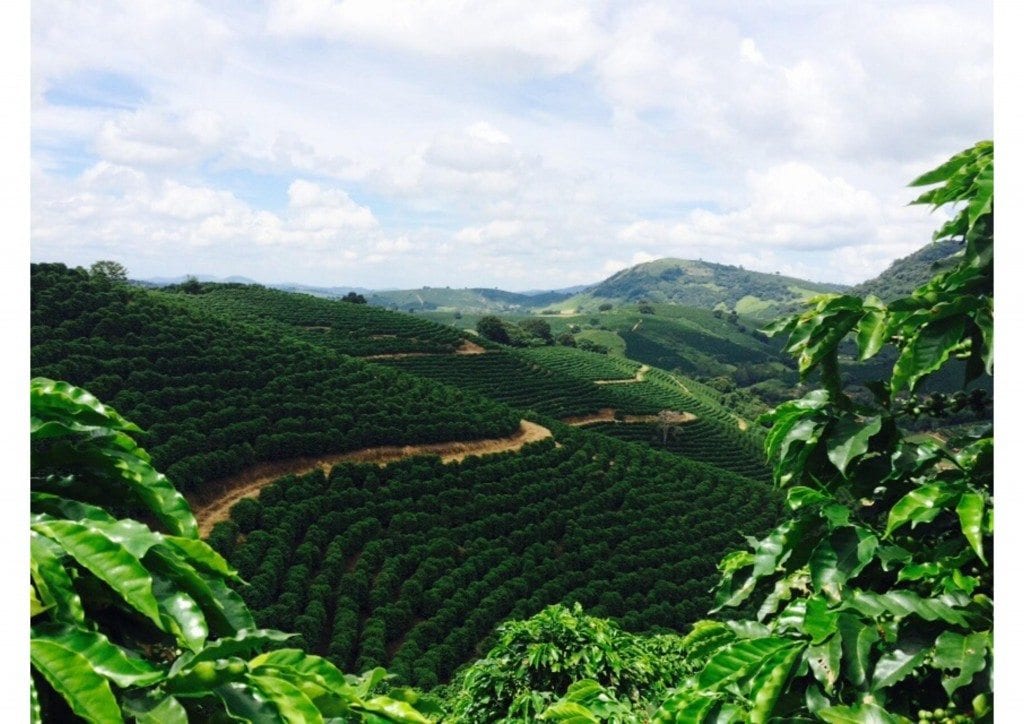
The optimal temperature range for Arabica coffee trees is 15°C to 24°C (59°F to 75°F). They prefer a cool, humid climate but are not frost-tolerant, typically growing on slopes at elevations around 600 meters, taking approximately 7 years to mature.
In the wild, they can grow up to 9-12 meters tall. For commercial cultivation, Arabica trees are usually kept at around 2 meters for easier harvesting. Arabica flowers are small, white, smell slightly of jasmine, and are very beautiful.
The coffee beans we drink are actually the seeds. When the fruit (cherry) turns deep red, it is ready for harvest. Each fruit typically contains two seeds. Since the fruits do not ripen simultaneously, hand-picking is the best method, as unripe cherries severely affect coffee flavor. These cherries then undergo processing to remove the skin, pulp, and parchment, becoming green coffee beans ready for roasting.
#In which countries is Arabica coffee grown?
Arabica thrives in tropical climates near the equator, so most high-quality Arabica comes from Central and South America and Africa. Brazil is the world's largest producer of Arabica coffee. Below is a non-exhaustive list of Arabica-producing countries:
The above lists only a portion; many other regions produce excellent Arabica, each with its own unique flavor profile.
#Are there other varieties of Arabica coffee beans?
Arabica actually comprises a vast family containing dozens of sub-varieties (cultivars). Some evolved naturally under local terroir conditions; others are man-made hybrids. Below are some common Arabica varieties:
- Typica: Considered one of the original coffee varieties, known for its clean, sweet flavor. Typica is often crossed with other varieties to produce unique flavor profiles.
- Bourbon: Also considered one of the earliest varieties. Bourbon typically exhibits chocolate and fruit notes. Many varieties also use Bourbon as a parent for hybridization.
- Caturra: A natural mutation of Bourbon discovered in Brazil in the early 1900s, now widely grown in the highlands of Central America. It produces coffee with good body and fruit flavors.
- Catimor: A hybrid of Caturra and Timor (the latter itself a hybrid of Arabica and Robusta). Catimor inherits the bitterness of Robusta, but Catimor grown in Nicaragua, El Salvador, and India can produce a richer taste.
- Catuai: A hybrid of Caturra and Mundo Novo (a Bourbon/Typica cross). Widely grown in Brazil, typically featuring pronounced acidity and subtle sweetness.
- Geisha: Originated near the town of Gesha in Ethiopia, but rose to fame in Panama.
Since winning top honors at the 2004 Best of Panama competition, its popularity in the specialty coffee world has skyrocketed.
Grown at high altitudes in the Central American tropics, it possesses a unique, delicate flavor, often with tropical fruit, jasmine, and floral notes, making it one of the most expensive coffees in the world. - Blue Mountain: Jamaica Blue Mountain refers not only to the Arabica variety but also to the mountain region in Jamaica. It is highly prized for its light body, creamy smooth mouthfeel, and mild flavor, offering just the right amount of sweetness, making it one of the representatives of top-tier coffee.
- Kona: Another top-tier coffee alongside Blue Mountain. This unique coffee grows only on the slopes of two volcanoes (Mauna Loa and Hualalai) in the North and South Kona districts of the Big Island. The climate, elevation, and rich volcanic soil give Kona coffee a light body and natural sweetness with spice and nut notes.
- Maragogipe: A natural mutation of Typica, distinguished by its extremely large beans/cherries. First discovered in the town of Maragogipe in Bahia, Brazil, hence the name.
- Mundo Novo: A natural hybrid of Bourbon and Typica from Brazil. This bean is frequently used as a parent for other varieties.
- Pacamara: A hybrid of Pacas and Maragogype, primarily grown in El Salvador, producing coffee with balanced sweet acidity and floral notes.
Beyond the varieties listed above, there are many more Arabica cultivars. Coffee researchers worldwide continue to develop new ones, aiming to find Arabica plants that are hardier, higher-yielding, and better-tasting.