Specialty Coffee Beginner's Guide: 30-Day Roadmap from Novice to Blind-Tasting Flavors
TL;DR: The specialty coffee beginner's guide centers on building a complete "seed-to-cup" cognition chain: define quality by SCA ≥ 80, train flavor recognition via a 30-day "micro-lesson + hands-on task + community check-in" system, and use a pitfall checklist plus a dynamically updated value bean list to master gear, brew parameters, and cupping logs with minimal trial-and-error cost.
#What Is Specialty Coffee? What SCA Score Counts as Specialty?
The term "Specialty Coffee" was coined by Erna Knutsen in 1974 in Tea & Coffee Trade Journal, highlighting exceptional flavors from specific microclimates. Today the industry standard is an SCA (Specialty Coffee Association) cupping score ≥ 80/100, with zero Category 1 defects and ≤ 5 Category 2 defects per 350 g green coffee. Scoring covers six 10-point categories: Fragrance/Aroma, Flavor, Aftertaste, Acidity, Body, Balance, and Overall.
Key Term Glossary: SCA Score = SCA评分; Cupping = 杯测; Green Bean Defects = 绿豆缺陷。
#What's the Difference Between Specialty and Commercial Coffee?
| Dimension | Specialty Coffee | Commercial Coffee |
|---|---|---|
| Bean Grade | SCA ≥ 80, single-origin traceable | Lower grade, often multi-origin blends |
| Roast Logic | Light/medium-light to preserve terroir | Dark/charcoal to mask defects, chase uniform bitterness |
| Flavor Profile | Floral, fruit, tea-like, bright acidity, layered | Caramel, smoke, bitterness dominant, flat |
| Supply Chain | Traceable to farm/co-op/lot | Often only country or continent |
| Pricing | Premium feeds back to origin, supports sustainability | C-market commodity pricing, weak farmer leverage |
Commercial coffee isn't "bad"—it serves "standardized, consistent, low-cost" mass demand. Specialty coffee is like single-malt whisky: it chases unique terroir expression.
#How Should a Beginner Pick Their First Bag of Specialty Beans?
#Step 1: Lock In Your "Flavor Coordinates"
- Floral, fruity, tea-like clarity → Ethiopia Yirgacheffe/Sidamo (Washed/Natural)
- Chocolate, nutty, balanced body → Colombia/Guatemala/Brazil (Washed/Honey)
- Tropical fruit, funky fermentation → Panama Geisha / Costa Rica Anaerobic Natural
#Step 2: Decode the Bag Label
Must-check fields:
- Origin / Farm / Mill (the more specific, the more traceable)
- Variety (Geisha, Typica, Bourbon, Caturra, etc.)
- Process (Washed / Natural / Honey / Anaerobic)
- Roast Level (Light / Medium-Light / Medium) — beginners start at Medium-Light
- Roast Date (best 7–21 days post-roast "resting window")
#Step 3: Use the "Value Bean List" to Avoid Pitfalls
We maintain a dynamically updated value bean list with 20+ entry-level singles tested monthly, tagged for "flavor fidelity," "brew forgiveness," and "value index" so you get 85+ point experiences at $15–22 / 200 g.
#What's the Budget for a Specialty Coffee Gear Starter Kit?
#Entry Level (≈ $70–110)
| Gear | Recommended Spec | Core Role |
|---|---|---|
| Dripper | V60 01/02 Ceramic/Resin | Stable flow, beginner-friendly |
| Filters | OEM white papers 100 ct | Remove paper taste, catch fines |
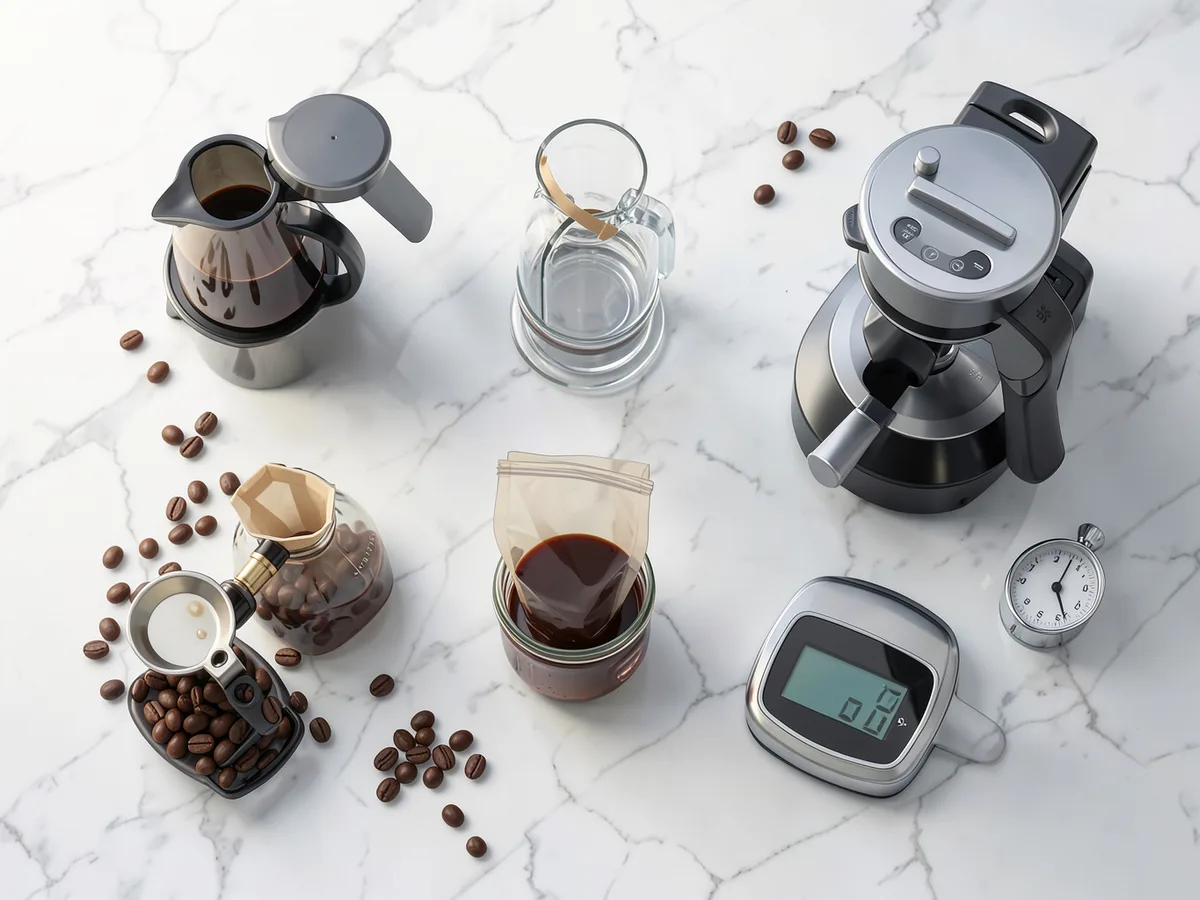
| Kettle | Narrow spout 300–600 ml (e.g., Hario Buono) | Precise pour, clean cut-off |
| Scale | 0.1 g accuracy + timer | Replicate "Golden Ratio" 1:15–1:17 |
| Grinder | Entry hand burr/flat burr (e.g., Timemore C2) | Particle uniformity drives even extraction |
#Advanced Level (≈ $210–420)
- Grinder upgrade: 64 mm flat/conical electric (e.g., Option-O Lagom P64)
- Water: Third Wave Water packets or RO + mineral concentrate
- Temp-control kettle: ±1 °C (e.g., Fellow Stagg EKG)
- Cupping bowls/spoons: SCA-standard 200 ml white ceramic + long spoon
Pitfall Alert: Don't be sold on "super-automatic espresso machines" or "premium dripper materials." The real flavor leverage order is Grinder > Water > Temp > Dripper > Technique. See "Which Dripper Material Is Best? Ceramic vs Glass vs Resin".
#How to Read Flavor Notes on Coffee Bags?
Flavor notes aren't marketing fluff—they're projections of the SCA Flavor Wheel. "Jasmine, lemon, black tea" maps to inner-wheel nodes: Floral → Jasmine; Fruity → Citrus → Lemon; Roasted → Tea-like.
#Three-Step Decoding
- Identify the category: Floral/Fruit / Nut/Chocolate / Spice / Roast / Fermentation
- Locate the layer: Fragrance (dry/wet) → Palate (mid-sip) → Finish (aftertaste)
- Anchor to sensory memory: Link "raspberry" to the actual tart-sweet berry you've eaten, not an abstract word
#Practice: Build Your Personal Flavor Map
- Brew 3–5 different-origin coffees with identical parameters
- Cross-reference with the Coffee Origin Flavor Map
- Form "Origin–Process–Flavor" reflexes
#30-Day Roadmap: From Novice to Blind-Tasting Flavors
#Days 1–7: Cognitive Foundations
| Day | Micro-Lesson (15 min) | Hands-On Task | Community Check-In |
|---|---|---|---|
| 1 | Specialty definition & SCA scoring | Buy one fully labeled entry bag | Post bag photo + key info annotated |
| 2 | Origin/Variety/Process triangle | Compare dry aroma of washed vs natural same-origin | Log olfactory keywords |
| 3 | How roast level reshapes flavor | Brew same bean at light/medium/dark roasts | Note acidity/bitterness/body shifts |
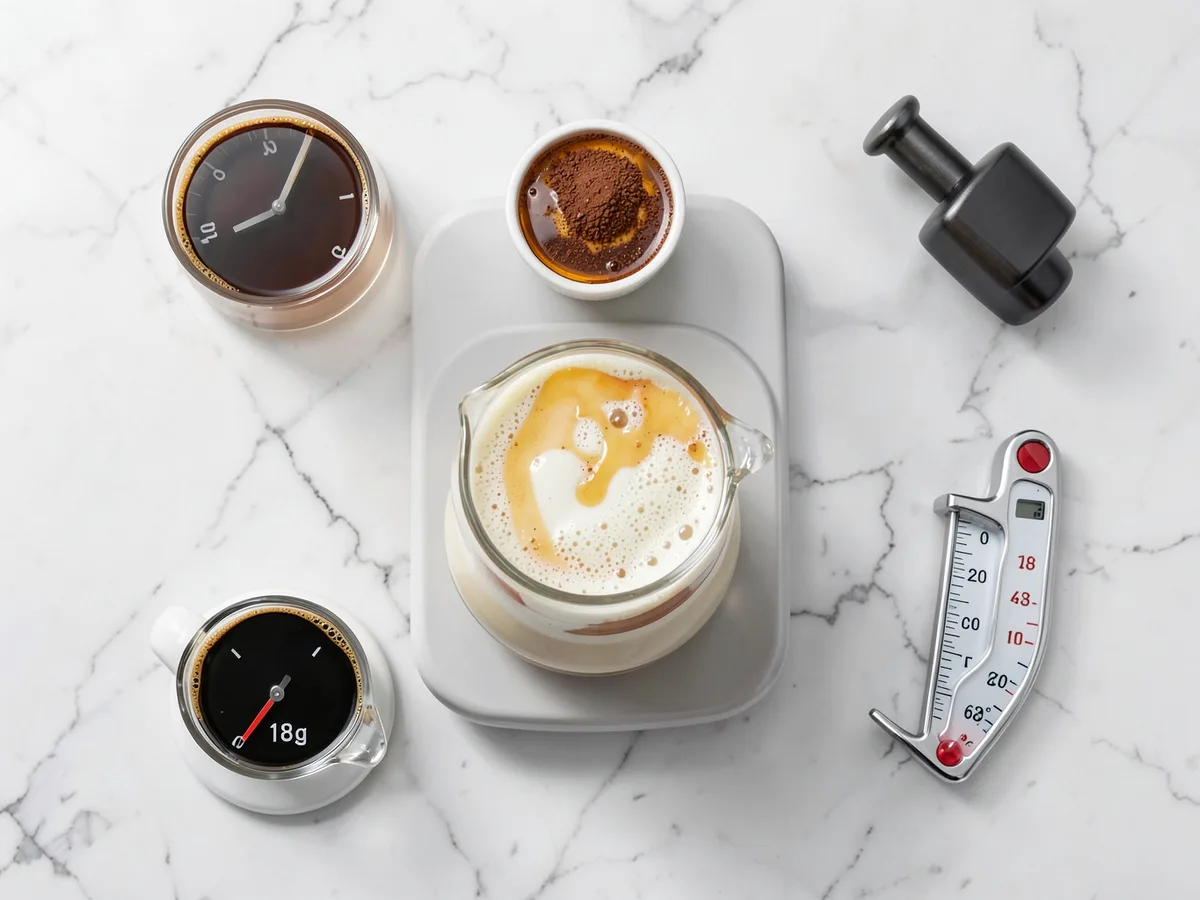
| 4 | Golden Ratio 1:15–1:17 & TDS extraction | Replicate 15 g : 225 g with scale | Upload brew parameter sheet |
| 5 | Water's hidden impact on extraction | Same params: distilled / mineral / tap water | Blind-log mouthfeel differences |
| 6 | Grind size & extraction physics | Fixed ratio, three grind settings only | Plot extraction-vs-flavor curve |
| 7 | Weekly review: build "param→flavor" mental model | Write 200-word brew retrospective | Peer review in group |
#Days 8–14: Sensory Calibration
- Days 8–10: SCA Flavor Wheel drills — identify 3 reference aromas daily (citric acid / jasmine / dark chocolate)
- Days 11–13: Triangle cupping — three cups, two same, one different; spot the odd one
- Day 14: Complete first full cupping form (Aroma 7.5, Flavor 8.0, Aftertaste 7.5…)
#Days 15–21: Brew Refinement
- Core task: Same bean, 7 consecutive days, change only one variable per day (temp / pour pattern / ratio / grind / time)
- Log template: Params → Dry/Wet Aroma → Flavor sequence → Mouthfeel → Finish length → Overall score
- Community: Share "Today's Best Cup" parameter pack for collective debrief
#Days 22–30: Blind-Tasting Challenge
| Phase | Task | Pass Criteria |
|---|---|---|
| Days 22–24 | Single-blind 3 known-origin coffees | Correct continent + process category |
| Days 25–27 | Double-blind 3 unknown-origin coffees | Name ≥ 3 accurate flavor descriptors |
| Days 28–29 | Same-origin different-process blind | Distinguish washed/natural/honey fingerprints |
| Day 30 | Graduation cupping: 5 unknowns, full form | All SCA scores within ±0.5 of reference |
Toolkit (dynamically updated):
- 📋 Pitfall Checklist: 12 common beginner errors + fixes
- 📊 Value Bean List: updated 1st of each month with radar charts
- 🗺️ Origin Flavor Coordinates: Global 20 Core Regions Flavor Map
- 📝 Cupping Log Templates: printable PDF + Notion database
#Closing: One Cup, One Life Attitude
Thirty days ago you might have confused Yirgacheffe with Sidamo. Thirty days later, when you close your eyes and catch jasmine piercing through lemon acidity into a black-tea sweet finish, you gain more than flavor ID—you gain the poise to parse life into perceptible details.
Specialty coffee's magic never lay in expensive gear or perfect numbers. It lies in the ritual—those ten morning minutes you claim for yourself, the gentlest rebellion against a fragmented age. As we wrote in "Two Questions You Must Know About Specialty Coffee": "Coffee is a metaphor for bitterness turning sweet, and an emotional customization in your third space."
Now, open your calendar. Set Day 1 for tomorrow morning. Prep one fully labeled bag, a grinder with adjustable burrs, a narrow-spout kettle, a 0.1 g scale. We'll be in the community, waiting to watch flavor wake at your fingertips.
#FAQ
#What is specialty coffee? What SCA score counts as specialty?
Specialty coffee scores ≥ 80/100 in the SCA cupping protocol, has zero Category 1 defects, and carries full traceability. Six attributes—Fragrance/Aroma, Flavor, Aftertaste, Acidity, Body, Balance, Overall—are each scored out of 10.
#What's the difference between specialty and commercial coffee?
Key gaps: bean grade, roast philosophy, flavor profile, supply-chain transparency, and pricing. Specialty chases single-origin terroir with light roasts; commercial uses dark-roasted blends for consistency and cost control.
#How should a beginner pick their first specialty coffee bag?
Start from flavor coordinates: floral/tea → Ethiopia washed/natural; chocolate/nut → Colombia/Brazil washed/honey. Verify the bag shows origin/farm, variety, process, roast level, and roast date. Budget $15–22 / 200 g using the dynamic value bean list.
#What's the budget for a specialty coffee starter kit?
Entry ≈ $70–110 covers dripper, filters, gooseneck kettle, 0.1 g scale, hand burr grinder. Advanced ≈ $210–420 adds electric flat-burr grinder, water treatment, temp-control kettle, cupping set. Priority rule: grinder investment beats dripper material.
#How to read flavor notes on coffee bags?
Notes map to the SCA Flavor Wheel. Use the three-step decode: category → layer (fragrance/palate/finish) → personal sensory memory. Brew same-parameter comparisons across origins and log against the origin flavor map to build reflexes.