
Best Beans for Coffee: A Complete Guide by Brew Method, Roast Level & Flavor Profile
TL;DR: Picking the best coffee beans comes down to matching your brew method, preferred roast level, and desired flavor profile; define the need first, then filter by origin, processing, and roast curve.
#What Are the "Best Beans for Coffee"?
Legend tells of a ninth‑century Ethiopian goatherd named Kaldi whose flock grew spirited after eating red cherries; monks brewed the fruit and stayed awake through prayer — thus coffee entered human ritual. Today, the best beans for coffee do not point to a single brand. They refer to single‑origin beans that meet specialty coffee standards (SCA score ≥ 80) and, after a suitable roast, express clear, balanced flavors in your chosen brew method.
#How to Choose Beans by Brew Method
#Pour Over
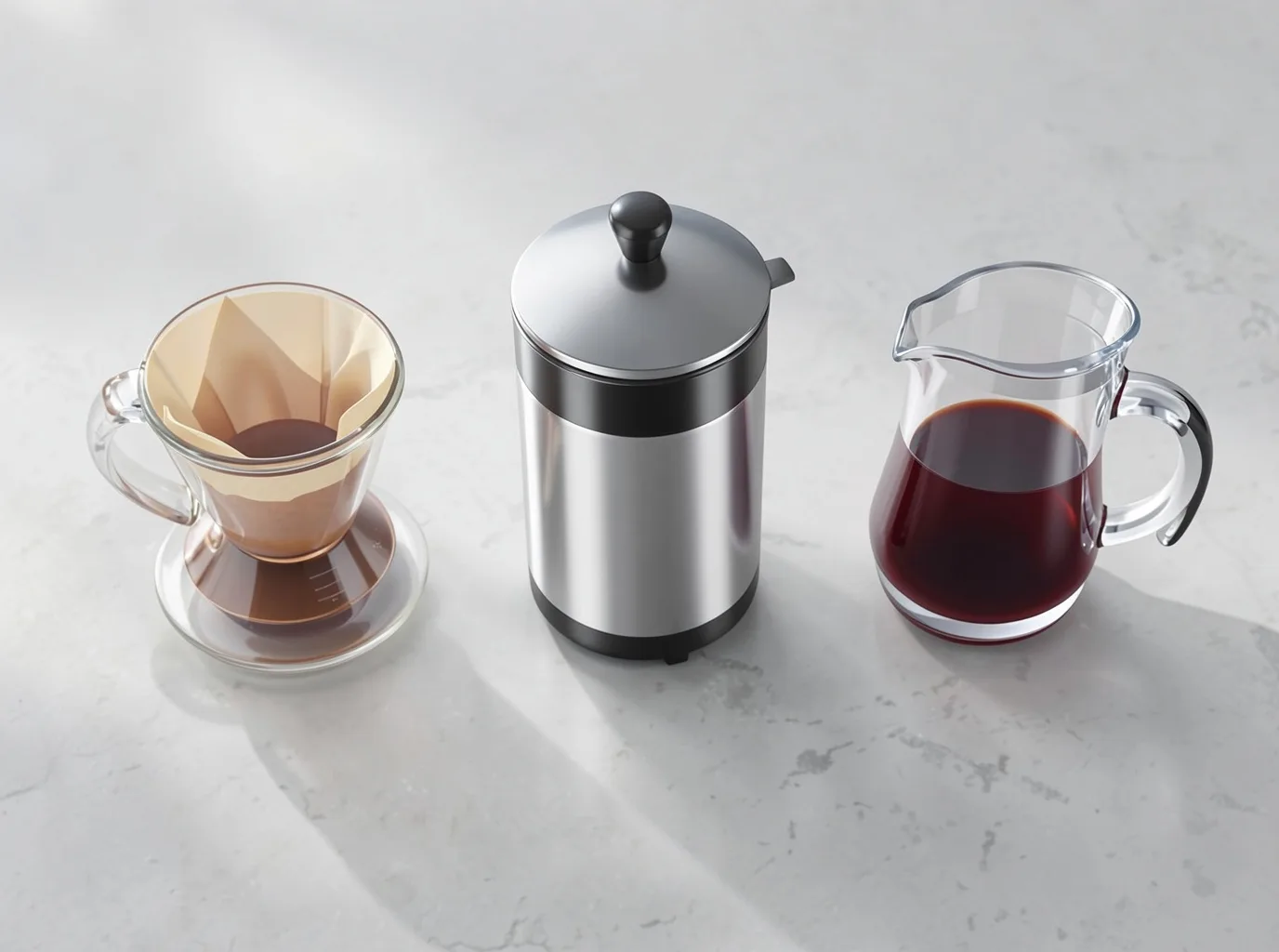
Pour over favors light to medium‑light roasts that preserve floral, citrus, and tea‑like acidity. Classic choices: Ethiopia Yirgacheffe, Kenya AA, Panama Geisha.
#Cold Brew
Cold brew works best with medium‑dark to dark roasts; the long, cold extraction softens bitterness and highlights chocolate, nut, and caramel sweetness. See the guide on How to Make Cold Brew at Home: Golden Ratios, 3 Gear Comparisons & Pitfall Guide.
#Espresso
Espresso needs medium‑dark to dark roasts with ample oils and body to produce a stable crema. Brazil, Colombia, and Sumatra Mandheling are common components of espresso blends.
#French Press / Cold Drip
French press suits medium roasts that keep oils and fine particles; cold drip prefers light roasts for bright acidity.
#How Roast Level Shapes Flavor
- Light roast: pronounced acidity, floral/fruit notes, low body — ideal for pour over, siphon.
- Medium roast: balanced acidity and sweetness, caramel and nut tones — versatile all‑rounder.
- Dark roast: dominant bitterness, chocolate, smoke, heavy body — suited for espresso, French press.
Roast curves determine the extraction yield and TDS (total dissolved solids) window; aim for the 18–22 % extraction yield sweet spot.
#Flavor Map & Terroir: From Ethiopia to Colombia
| Origin | Typical Process | Core Flavor‑Wheel Keywords | Suggested Roast |
|---|---|---|---|
| Ethiopia (Yirgacheffe, Sidamo) | Washed / Natural | Citrus, jasmine, black tea, berry | Light – Medium‑Light |
| Kenya | Washed | Blackcurrant, tomato, bright acidity | Light – Medium‑Light |
| Colombia | Washed / Honey | Caramel, red apple, nut, balanced acid‑sweet | Medium |
| Brazil | Natural / Pulped Natural | Chocolate, peanut, low acidity, high body | Medium‑Dark – Dark |
| Indonesia (Mandheling) | Wet‑Hulled | Earth, spice, heavy body, low acidity | Dark |
Processing (natural, washed, honey) controls mucilage retention, directly influencing sweetness and fermentation character.
#Practical Steps: Four Steps to Your Ideal Bean
- Identify your brew method — pour over, cold brew, espresso, French press, etc.
- Pick a roast preference — acidity lovers choose light; body seekers choose dark.
- Consult the flavor map — match flavor‑wheel keywords to your taste memory.
- Buy small test lots — 100–200 g packs, record cupping notes (aroma, acidity, sweetness, body, aftertaste).
Tip: Beginners can review the Essential Beginner Knowledge About Coffee Beans for visual green‑bean selection cues.
#Comparison Table: Brew Method × Recommended Roast × Typical Flavors
| Brew Method | Recommended Roast | Typical Flavor Keywords |
|---|---|---|
| Pour Over | Light – Medium‑Light | Floral, citrus, tea‑like |
| Cold Brew | Medium‑Dark – Dark | Chocolate, nut, caramel |
| Espresso | Medium‑Dark – Dark | Caramel, smoke, thick crema |
| French Press | Medium | Nut, cocoa, rounded acidity |
| Cold Drip | Light | Bright acidity, fruit aroma |
#Closing Thought: One Cup, One Lifestyle
Choosing beans is a quiet ritual — grinding at dawn, hearing water kiss the grounds, watching the bloom. That moment of focus transcends caffeine; it crafts a personal third space where each sip becomes a small bittersweet triumph.
#FAQ
#What are the best coffee beans for pour over?
Light to medium‑light single‑origin beans such as washed Ethiopia Yirgacheffe or Kenya AA deliver vivid floral, citrus, and tea‑like notes in a pour over.
#Which coffee beans are best for cold brew?
Medium‑dark to dark roasts with low acidity and high body — Brazil natural, Sumatra Mandheling, or a medium‑dark Colombia — produce chocolate, nut, and caramel sweetness in cold brew.
#How to choose high quality coffee beans?
Look for single‑origin labeling, clear processing method, roast date within 2–4 weeks, SCA score ≥ 80, and uniform green‑bean appearance without defects.
#Does roast level affect caffeine content?
Roast level has negligible impact on caffeine; dark roasts lose a tiny amount of mass, so by weight the caffeine is virtually unchanged.
#How should caffeine‑sensitive drinkers select beans?
Opt for naturally low‑caffeine varieties (e.g., Laurina) or decaffeinated lots, and consider cold brew’s lower extraction temperature which yields less caffeine per volume.


Comments