
Coffee Shop Business Plan: From Site Selection to Financial Model
TL;DR: This guide delivers a downloadable dynamic financial model, a site‑scoring card, an equipment whitelist, and a sensitivity analysis built on real‑world data from Luckin, Cotti and an independent boutique, so you can finalize every number before writing your coffee shop business plan.
Legend has it that a ninth‑century Ethiopian goatherd named Kaldi noticed his flock dancing after eating red cherries; monks brewed the fruit and kept vigil through the night. Today, when you decide to open a coffee shop on a city corner, that first extraction—bitter turning sweet—is already written into every assumption of your business plan. From the perspective of a seasoned coffee traveler, we weave site traffic, equipment whitelists, menu pricing, licensing, and financial sensitivity into a single actionable narrative, hoping this guide becomes the cornerstone of your third‑space blueprint.
#How much startup capital does a coffee shop need?
Startup capital splits into one‑time outlays and first‑year fixed costs. One‑time outlays cover fit‑out, equipment, opening inventory, and licences; fixed costs cover rent, labor, utilities, marketing, and a 3‑6 month cash reserve. In a tier‑1 city core district a first store typically lands between US$110k‑US$210k (≈ 80‑150 k CNY).
#Startup capital breakdown steps
- Estimate first‑year fixed costs (rent, labor, utilities, marketing)
- Calculate one‑time outlays (fit‑out, equipment, opening stock, licences)
- Reserve 3‑6 months of operating cash
- Sum the ranges to get your total envelope
Our coffee origin flavor map deep‑dive helps you pick high‑margin beans while you budget.
#How to calculate foot traffic and rent ratio for site selection?
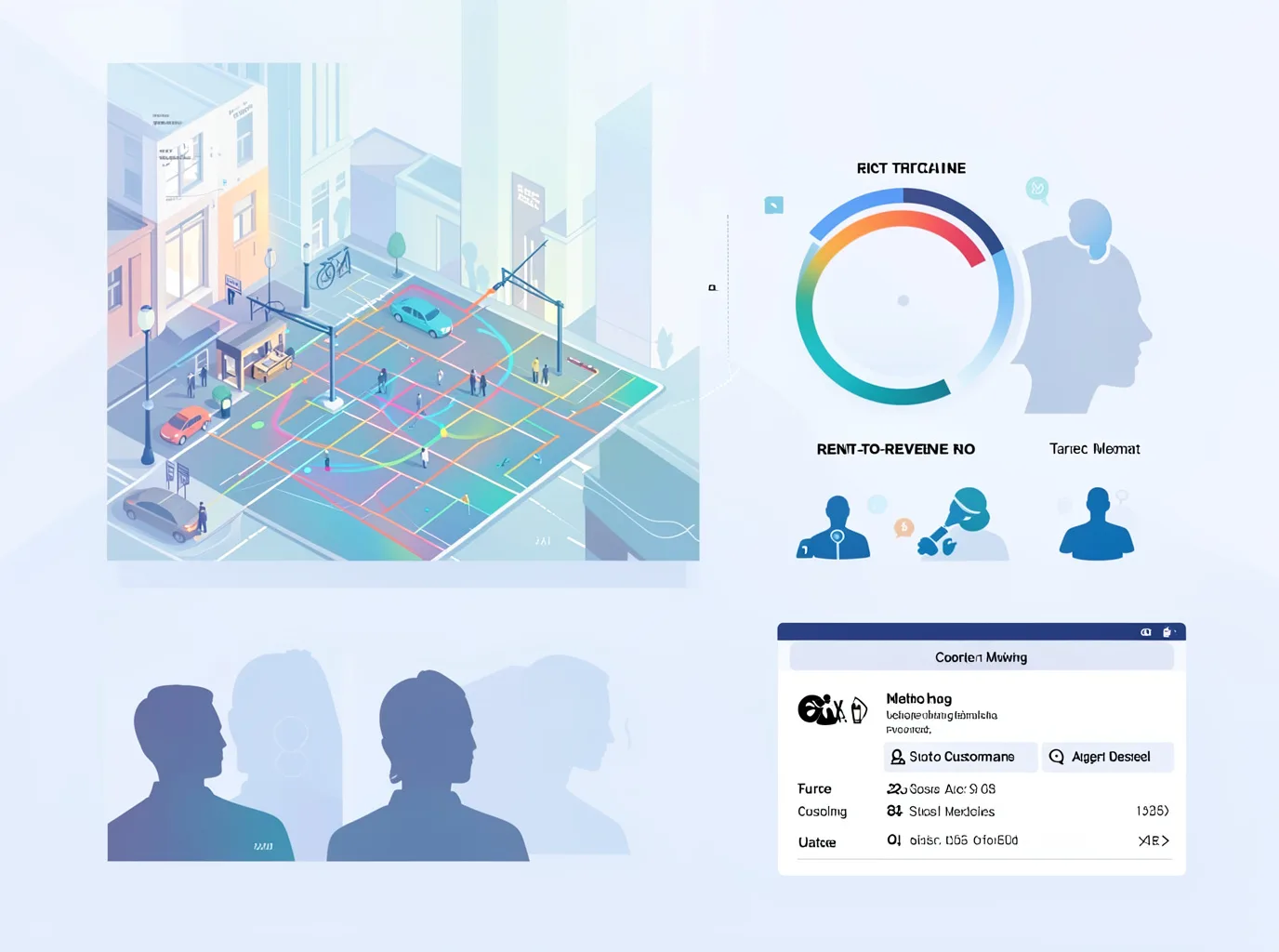
Turn raw footfall into a rent‑affordability metric. Count daily passers‑by (manual tally or heat‑map tool), project monthly revenue, then compute Rent ÷ Projected Monthly Revenue. Keep the ratio ≤ 12 % for a healthy margin.
#Site‑scoring card core metrics
- Average daily footfall (people)
- Rent‑to‑revenue ratio (target ≤ 12 %)
- Competitor density
- Target‑audience match
- Transport accessibility
| Metric | Weight | Scoring guide |
|---|---|---|
| Daily footfall | 30% | >800 = 5, 500‑800 = 3, <500 = 1 |
| Rent ratio | 25% | ≤10% = 5, 10‑12% = 3, >12% = 1 |
| Competitor density | 20% | 0‑1 = 5, 2‑3 = 3, >3 = 1 |
| Audience match | 15% | Strong = 5, Moderate = 3, Weak = 1 |
| Transport | 10% | Metro/main road = 5, Secondary road = 3, Remote = 1 |
Discover why Australian cafés are taking over the world for a cultural perspective on third‑space design: 5 Reasons Why Australian Cafés Are Taking Over the World! Also the Country Where Starbucks Failed Most.
#Equipment list and budget: how to build it?
Follow three rules: core performance stability, easy service network, future‑proof expandability. The table below is a whitelist example with install‑and‑first‑year‑maintenance budgets.
#Equipment whitelist (example)
| Category | Recommended model | Budget range (USD) | Key spec |
|---|---|---|---|
| Espresso machine | La Marzocco Linea PB | 17,000‑21,000 | Dual boiler, PID stability |
| Grinder | Mahlkönig EK43 | 4,300‑5,000 | Uniform particle distribution |
| Pour‑over station | Hario V60 kit | 300‑450 | Ceramic dripper, scale |
| Refrigerated display | Fukoku 4‑door | 3,600‑4,300 | ±1 °C temperature control |
| POS system | Meituan / Kering | 700‑1,100 per yr | Membership & inventory modules |
Master the pour‑over coffee tutorial stylesheet to align equipment choices with your menu ratios: Pour Over Coffee Tutorial: Master the "Coffee Stylesheet" for Café‑Quality Brews at Home.
#Menu pricing formula and gross margin calculation
Unit cost = (Ingredient cost + Cup & lid + Allocated utilities) ÷ Projected daily cups. Price = Unit cost ÷ (1 – Target gross margin). For a 65 % margin, a 12 CNY cost yields ≈ 34 CNY retail.
#Pricing step example
- Tally ingredient cost per cup (12 g beans × price, 180 ml milk × price)
- Add cup, lid, utilities, labor allocation
- Set target margin 65 % → Price = Cost / 0.35
- Benchmark against competitors and psychological price points
#How to apply for a food business license and catering permit?
Licensing follows a “license‑first, permit‑second” sequence; the full cycle runs 30‑45 days. Key milestones: name pre‑approval → Business licence → Food operation permit → Fire safety inspection → Public‑place hygiene permit → Environmental registration.
#Licence timeline (example)
| Licence | Authority | Estimated lead time |
|---|---|---|
| Business licence | Market Supervision | 3‑5 business days |
| Food operation permit | Market Supervision | 7‑10 business days |
| Fire safety sign‑off | Fire Brigade | 10‑15 business days |
| Public‑place hygiene permit | Health Commission | 5‑7 business days |
#Real‑case sensitivity analysis: Luckin, Cotti, independent shop
Stress‑test the three archetypes to produce “worst / base / best” financial forecasts for your plan.
#Sensitivity comparison
| Variable | Luckin (corporate scale) | Cotti (franchise) | Independent boutique |
|---|---|---|---|
| Daily cups per store | 800‑1,200 | 400‑600 | 150‑250 |
| Rent % of revenue | 8% | 10% | 12% |
| Gross margin on goods | 68% | 65% | 70% |
| Labor % of revenue | 18% | 20% | 22% |
| Break‑even month | 6‑8 | 9‑12 | 12‑18 |
Plug these bands into the dynamic financial model to instantly generate cash‑flow, payback, and IRR sensitivity curves.
#Closing: Turn the plan into a “third space” blueprint
A great business plan isn’t a sterile spreadsheet—it’s a rehearsal of every future cup, every guest who walks through the door, every morning light and evening glow. Download the dynamic financial model, site‑scoring card, and equipment whitelist; calibrate assumptions with the real cases above; let the numbers pave the way for your own third space. May the bitterness of extraction lead you to the sweetness of emotional customization.
#FAQ
#How much startup capital does a coffee shop need?
In a tier‑1 city core district a first store typically requires US$110k‑US$210k (≈ 80‑150 k CNY), covering fit‑out, equipment, opening stock, licences, and a 3‑6 month cash reserve.
#How to calculate foot traffic and rent ratio for site selection?
Count daily footfall manually or via heat‑map tools, project monthly revenue, then compute Rent ÷ Projected Monthly Revenue; aim to keep the ratio at or below 12 %.
#Equipment list and budget: how to build it?
List five core categories—espresso machine, grinder, pour‑over station, refrigeration, POS—use the whitelist models and budget ranges, and add a 10 % contingency buffer.
#Menu pricing formula and gross margin calculation?
Unit cost = (ingredients + cup/lid + allocated utilities) ÷ projected daily cups. Price = Unit cost ÷ (1 – target gross margin). Example: 65 % margin on a 12 CNY cost → ≈ 34 CNY retail.
#How to apply for a food business license and catering permit?
Start with name pre‑approval, obtain the business licence, then apply for the food operation permit while simultaneously pursuing fire safety sign‑off and public‑place hygiene permit; the full process usually takes 30‑45 days.