
How to Do a Coffee Pour Over: Zero‑Base 15‑Minute Start‑Up, One Flowchart + Three‑Step “Golden Pour” + 5 Common Flavor Defects Troubleshooting
TL;DR: To do a coffee pour over you need a dripper, filter, scale, temperature‑controlled kettle and fresh beans; use a 1:15.5 ratio, 93 °C water, and a three‑stage pour (bloom 30 s, main pour, finish) for a balanced cup in about 15 minutes.
A Whisper of Legend: It is said that on an Ethiopian plateau, a goatherd named Kaldi once watched his flock dance through the night after eating crimson berries; monks brewed the fruit and found their prayers sustained until dawn. In that moment, coffee entered human story as a parable of patience and anticipation — bitter at first, sweet in the finish.
#How to Do a Coffee Pour Over: Essential Gear
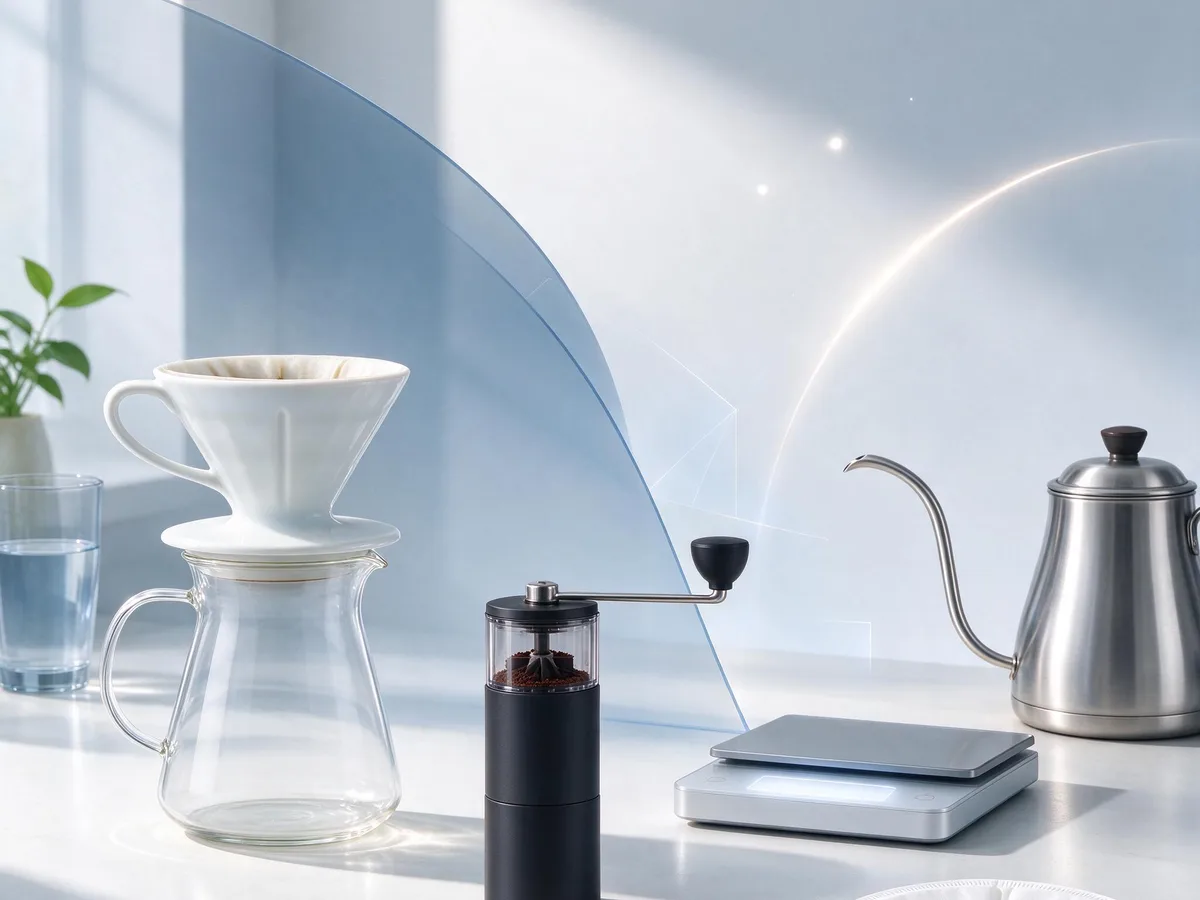
Pour‑over equipment need not be expensive, but each piece serves a clear purpose.
- Dripper – V60, Kalita Wave, or a collapsible dripper; geometry guides water flow.
- Filter paper – Match the dripper, rinse with hot water to remove paper taste.
- Digital scale – 0.1 g resolution, displaying weight and time simultaneously for ratio control.
- Temperature‑controlled kettle – Gooseneck spout, lockable at 92‑94 °C.
- Freshly roasted beans – 3‑14 days post‑roast for peak flavor window.
Tip: A complete beginner gear checklist is available in the Beginner Coffee Gear Checklist: 4 Budget Tiers (USD 70/210/420/700) with Must‑Buy, Optional & Skip Lists and the Pour Over Coffee Tutorial: Master the “Coffee Stylesheet” for Café‑Quality Brews at Home.
#What Is the Golden Ratio and Ideal Water Temperature for Pour Over?
The golden ratio refers to the mass ratio of coffee to water; 1:15.5 (e.g., 15 g coffee to 232.5 g water) is the widely adopted baseline. Water temperature at 93 °C extracts aromatic compounds without pulling excessive bitterness. Higher temperatures risk over‑extraction; lower temperatures leave the brew under‑extracted and thin.
#How Do I Bloom Coffee Properly?
Blooming is the first pour stage, allowing trapped CO₂ to escape so subsequent water penetrates evenly.
- Place coffee in the rinsed filter, give a gentle shake to level the bed.
- Start the timer, pour roughly twice the coffee weight in water (≈30 g for 15 g coffee) in a slow spiral.
- Wait 30 seconds until bubbling subsides.
#Three‑Step “Golden Pour” Technique
#Visual Flowchart
flowchart TD
    A[Start] --> B[Weigh 15 g coffee]
    B --> C[Preheat dripper, rinse filter]
    C --> D[Bloom: pour 30 g water, 30 s]
    D --> E[Main pour: concentric circles to 140 g]
    E --> F[Finish: thin center stream to 232.5 g]
    F --> G[Done: ~2 min 30 s]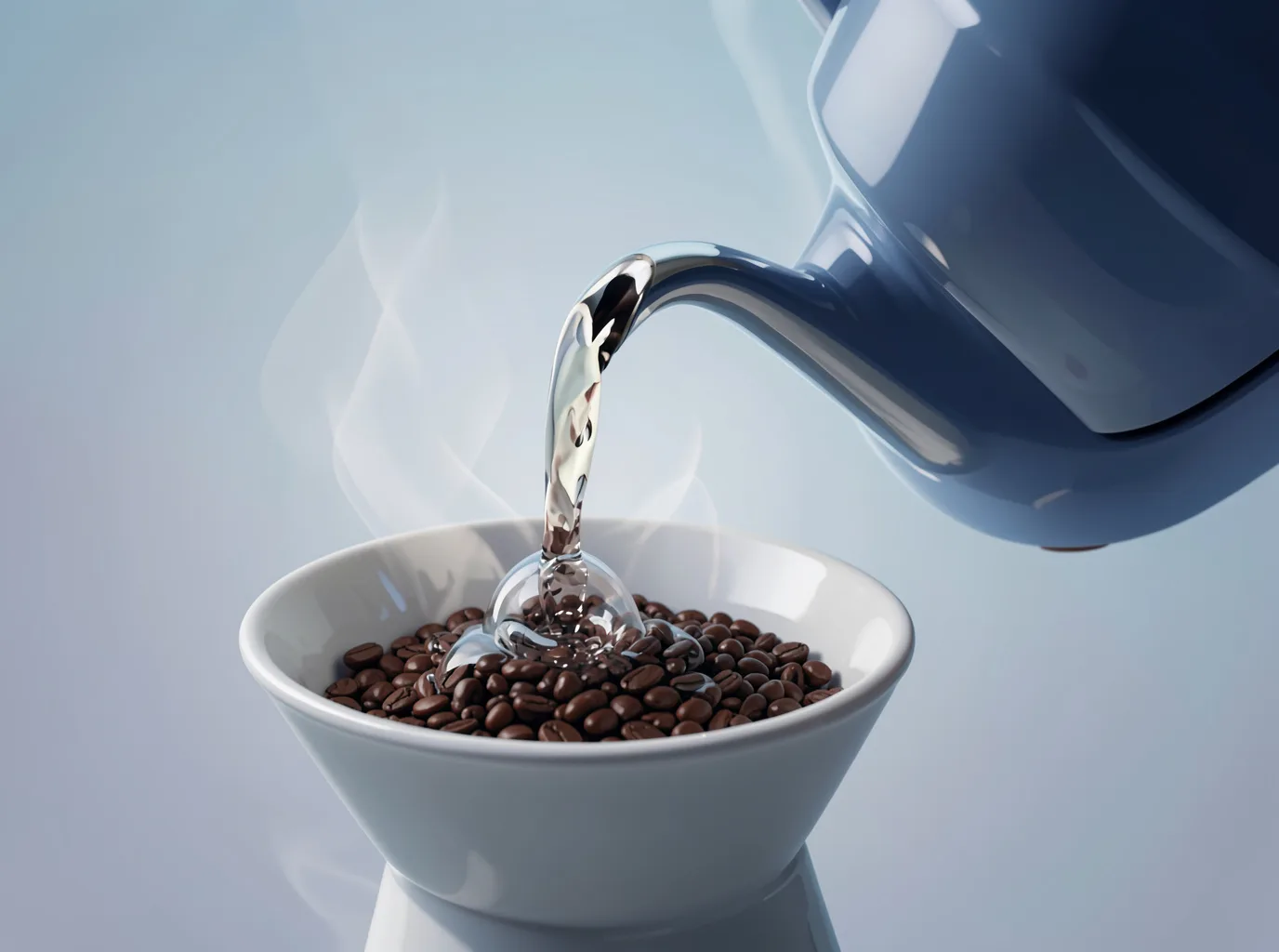
| Stage | Water Amount | Action | Target Time |
|---|---|---|---|
| Bloom | 2× coffee weight | Spiral pour, avoid disturbing the bed | 0‑30 s |
| Main pour | Up to 60 % total water | Steady concentric circles, keep water level stable | 30‑90 s |
| Finish | Remaining water | Thin central stream, end quickly | 90‑150 s |
Total brew time ≈ 2 min 30 s. Monitoring weight in real time keeps the extraction yield in the 18‑22 % window (TDS 1.15‑1.35 %).
#Troubleshooting 5 Common Flavor Defects
| Defect | Likely Cause | Adjustment |
|---|---|---|
| Overly bitter | Water too hot, grind too fine, pour too slow | Lower temp 1‑2 °C, coarsen grind, increase pour speed |
| Excessive acidity | Water too cool, grind too coarse, insufficient bloom | Raise temp, finer grind, extend bloom to 40 s |
| Weak, watery | Ratio too high (too much water), pour too fast, stale beans | Return to 1:15.5, slow pour, use fresher beans |
| Paper/off‑flavors | Unrinsed filter, hard water | Rinse filter thoroughly, use filtered/soft water |
| Flat, no complexity | Single‑stage pour, uneven bed | Adopt three‑stage pour, level bed before bloom |
#Closing: Make the Ritual Yours
Pour‑over is more than extraction; it is a quiet ceremony of patience and anticipation. The sound of water threading through the coffee bed, the amber liquid gathering in the carafe — each sip becomes a note in your daily aesthetic. Our specialty‑coffee origin and flavor maps help you read the terroir behind every bean, while our diverse brewing guides accompany you from pour‑over to espresso, cold brew, and beyond. Next step: grab your scale and kettle, follow the flow above, jot down tasting notes, and begin crafting your own “emotion‑tailored” coffee moments.
#FAQ
#What equipment do I need for pour over coffee?
A dripper, matching filter paper, a 0.1 g digital scale, a temperature‑controlled gooseneck kettle, and freshly roasted beans are the minimum; optional tools include a distribution needle, timer, and water‑quality tester.
#What is the ideal water temperature for pour over?
93 °C (±1 °C) works for most roasts; drop to 90 °C for dark roasts, raise to 95 °C for very light roasts, adjusting to the bean’s character.
#How do I bloom coffee properly?
Pour about twice the coffee weight in water, wait 30‑40 seconds until bubbling largely stops, ensuring CO₂ release before the main pour.
#What's the best pour over dripper for beginners?
V60 01/02 and Kalita Wave 155/185 are both beginner‑friendly; V60 offers faster flow and clearer separation, while Kalita is more forgiving of technique variations.
#Why does my pour over taste bitter or weak?
Bitterness usually stems from too‑hot water, overly fine grind, or a sluggish pour; weakness often comes from a too‑high water ratio, low temperature, or stale beans. Refer to the troubleshooting table and adjust one variable at a time.


Comments