
How to Make Vietnamese Phin Coffee: 30s Bloom, 2:30 Drip, 1:4 Condensed Milk Ratio
TL;DR: Vietnamese phin coffee hinges on three numbers: 30-second bloom, 2:30-minute total drip, 1:4 condensed-milk-to-coffee ratio. Use 20 g dark-roast Robusta blend, 92 °C water, tighten the press plate to fingertip resistance, stop at 2:30 even if drops remain, then stir 15 g condensed milk into 60 g coffee.
#How tight should I screw the Phin press plate?
The Phin consists of a brew chamber, press plate, lid, and saucer. Plate tightness controls flow resistance:
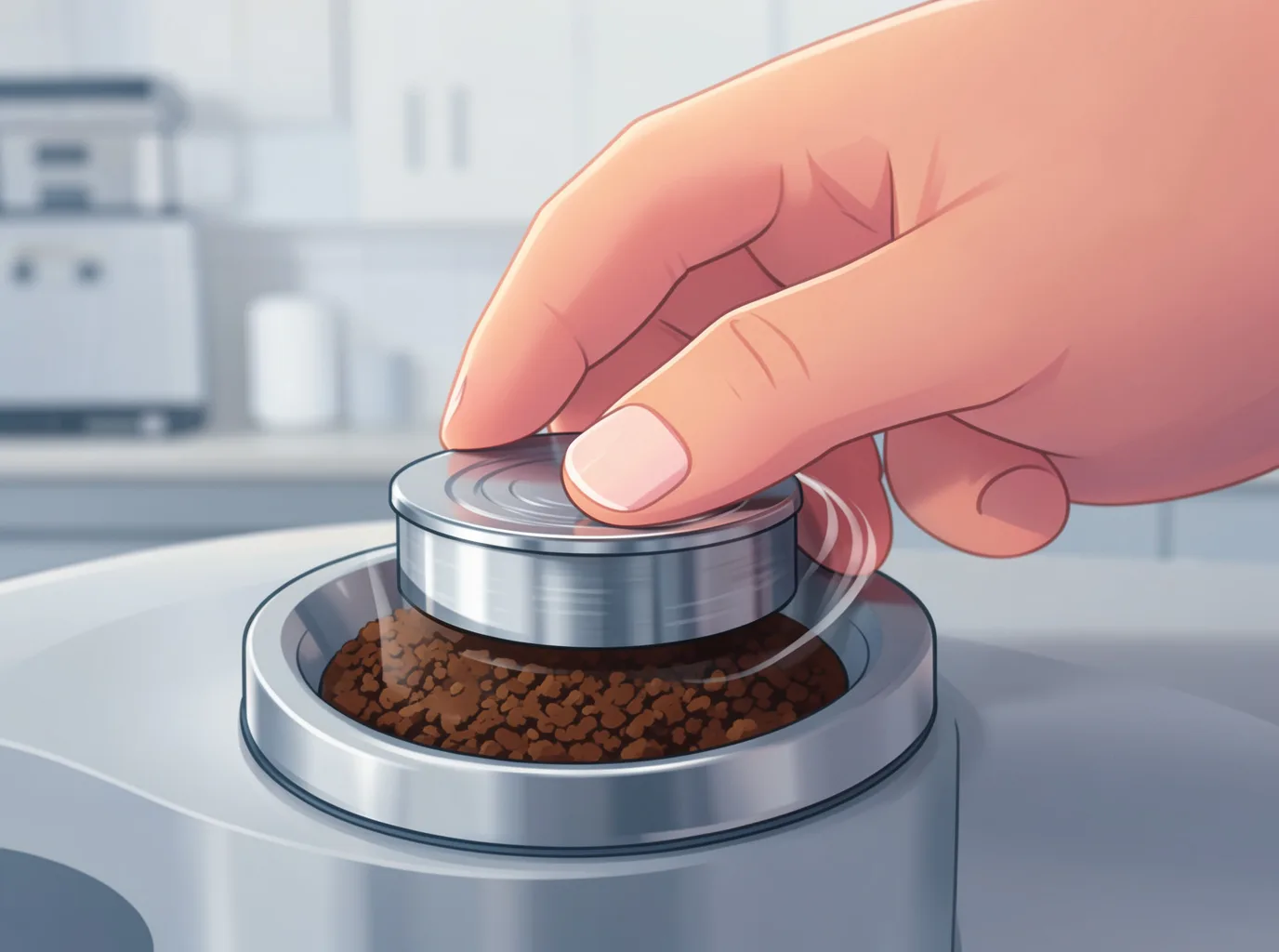
- Too loose: Water rushes through in under a minute, extraction below 15 %, thin and sour.
- Too tight: Flow stalls, brew exceeds four minutes, harsh bitterness dominates.
- Sweet spot: Turn the plate with fingertips until you feel distinct resistance but could still turn half a turn more. This yields ~30–35 kgf/cm² bed compression and a steady "pearl-drop" rhythm of 1.2–1.5 seconds per drop after bloom.
💡 Slow-motion comparison: loose = continuous thin stream; tight = intermittent drips or stall; correct = even pearl drops.
#How much condensed milk is authentic?
Street-standard ratio is condensed milk : coffee liquid = 1 : 4 by weight.
| Item | Single-serve | Notes |
|---|---|---|
| Coffee | 20 g | Dark-roast Robusta dominant, 10–20 % Arabica optional |
| Total water | 80 g (ml) | Includes 15 g bloom |
| Target yield | 60–65 g | Absorption ~1.8 g/g |
| Condensed milk | 15–16 g | ~1 tbsp, placed in glass first |
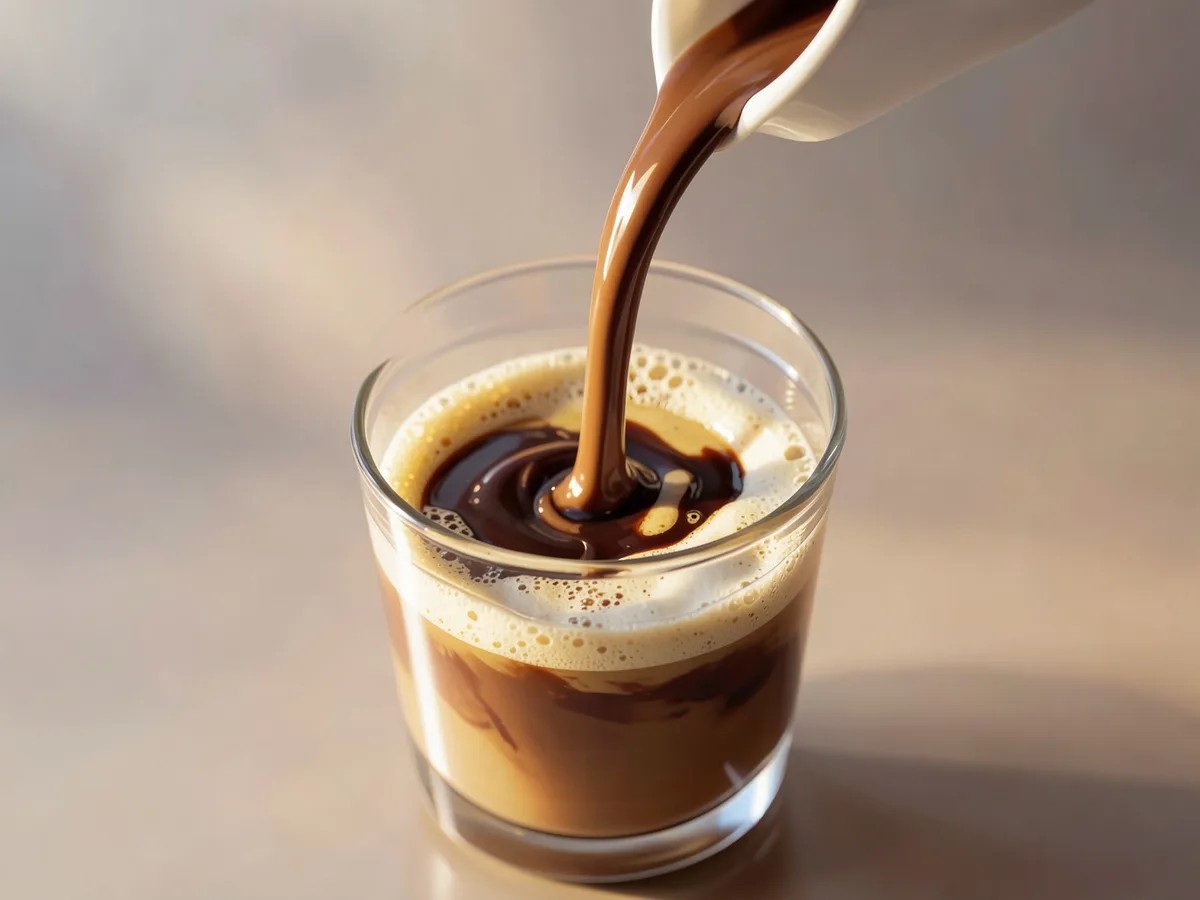
Sequence: condensed milk in glass → Phin on saucer → drip finishes → remove Phin → stir 15 circles bottom-up to form the signature amber swirl.
#What is the difference between iced and hot drip?
| Aspect | Hot Drip | Cold Drip |
|---|---|---|
| Water temp | 92–96 °C | Ambient/ice water 5–10 °C |
| Bloom time | 30 s | 60–90 s |
| Total time | 2 min 30 s | 3–4 h (fridge) |
| Flavor | Caramel, dark chocolate, smoke, high body | Nutty, cocoa sweetness, silkier, low bitterness |
| Occasion | Morning wake-up, after dessert | Afternoon refresh, picnic |
💡 Pour hot drip over large ice cubes for Cà phê sữa đá—the ubiquitous street version that sits between both profiles.
#Which roast level works best?
Vietnam produces 90 %+ Robusta. Traditional flavor relies on dark/charcoal-roast Robusta:
- Keywords: dark chocolate, tobacco, caramel, low acidity, high body, ~2× Arabica caffeine.
- Blend tip: Single-origin dark Robusta (Buôn Ma Thuột) or 80 % Robusta + 20 % medium-dark Arabica for balance.
- Avoid: Light roasts—prolonged contact amplifies sourness; single-origin light Arabica loses the classic Vietnamese signature.
For origin context, see "Vietnamese Coffee: From French Colony to the World's Second-Largest Exporter, a Rich Legend".
#How do I prevent over-extraction bitterness?
Over-extraction comes from fines + high temp + long contact. Three guards:
- Grind lock: Hand grinder ~18–22 clicks (Commandante C40 ref), coarse sea-salt texture, fines < 5 %.
- Temp taper: 92 °C bloom 30 s, second pour 88 °C slow spiral to 80 g; falling temp suppresses late-bitterness.
- Hard stop: At 2:30 lift lid and remove Phin instantly—even if drops remain. That "negative space" is Vietnamese coffee wisdom.
#Advanced twists: Coconut, Egg, Salt Coffee
Once the golden ratio is muscle memory:
- Coconut coffee: Reduce milk to 10 g, blend 30 g coconut cream + 50 g crushed ice to snow foam.
- Egg coffee: 1 yolk + 15 g condensed milk + dash vanilla, whip to stiff peaks, float on hot coffee.
- Salt coffee: 0.5 g sea salt dissolved in milk; sodium blocks bitter receptors, amplifies perceived sweetness.
More cold-brew and specialty ideas in "Cold Brew Coffee Recipe: 5 Methods Compared & Golden Ratios by Roast Level" and "Beginner Guide to Pour Over Coffee: Golden Ratio 1:15.5 & Staged Pouring Visualized".
#Closing: One drip, one slow moment
When the last amber drop hits condensed milk and the spoon kisses glass, 2 minutes 30 seconds stretch into a chewable ritual. Vietnamese phin coffee doesn't chase SCA extraction perfection; it seals French colonial echoes, Saigon street smoke, and the breath held during each drop into rough Robusta and sweet milk. Next time you tighten the plate and pour 92 °C water, allow yourself to do nothing but watch that thin line—bitterness yielding to sweetness is life's simplest philosophy.
#FAQ
#What if the Phin filter holes clog?
Grind too fine or bed over-compressed causes clogging. Coarsen to coarse sea salt, leave "half-turn" headroom on the plate. If already clogged, lift plate, gently loosen top bed with a chopstick, replace lid, continue.
#Can I use a pour-over dripper instead of a Phin?
Yes—V60 or Wave works with 25 g coffee, 100 g water, one grind coarser, 4–5 pulse pours to mimic drip rhythm. Expect cleaner, lighter body and loss of the metal-filter oil texture.
#Can I substitute condensed milk with fresh milk + sugar?
No. Condensed milk's Maillard caramel notes and high-viscosity syrup body create the "cling" and amber swirl physics. Fresh milk + sugar yields only ordinary milk coffee.
#How should caffeine-sensitive people drink it?
Robusta has high caffeine. Options: ① cut dose to 15 g; ② use decaf Robusta; ③ cold-brew 12 h (cuts ~30 % caffeine); ④ avoid further caffeine for 6 h after.
#Stainless steel or aluminum Phin?
Food-grade 304/316 stainless resists corrosion, imparts no flavor, slower heat transfer aids stability—best for daily use. Traditional aluminum is light, cheap, conducts heat fast, but acidic coffee may leach trace metals over time; keep for occasional novelty.


Comments