
China Coffee Market Trends: From Rapid Expansion to the Rise of Specialty Coffee Culture
TL;DR: China's coffee market is undergoing a structural shift from scale-driven expansion to value-deepening: Luckin and Starbucks form a duopoly, 10K+ store brands drive lower-tier penetration; specialty coffee moves mainstream with single-origin, light roasts, and pour-over rituals; consumers shift from caffeine-seeking to flavor-mapping and emotional customization, fueling diverse third-place formats.
#Is China's coffee consumption growing rapidly?
Yes, and the pace far exceeds the global average. Over the past five years, China's coffee CAGR has held at 15–20%. Per-capita annual consumption remains under 20 cups (versus 300+ in Japan, 400+ in the West), and this massive “cups-per-capita gap” is the core growth engine.
Three drivers are clear:
- Channel penetration & instant retail: Luckin, Cotti, and other 10K-store brands use “high value + rapid rollout” to reach tier-3/4 cities, turning coffee from a white-collar luxury into a daily staple.
- Instant coffee premiumization: Freeze-dry technology enables “specialty instant” at ¥10–30 per cup, creating new occasions in offices, outdoors, and travel.
- Specialty culture diffusion: Pour-over, cupping, origin-trace content on Xiaohongshu and Douyin has nurtured the first wave of “flavor-literate, ritual-seeking” core users.
Our China Coffee Market Size 2024: Cross-Verified Data from 10+ Reports, 10K-Store Brand Tipping Point & Investment Outlook cross-validated ten reports showing the market surpassed ¥300 billion in 2023 and may hit ¥400 billion by 2025.
#How do Luckin and Starbucks compare in market share?
The two giants have formed an asymmetric “volume-Luckin, margin-Starbucks” duopoly.
| Dimension | Luckin Coffee | Starbucks China |
|---|---|---|
| Store count (mid-2024) | 20,000+ | ~7,300 |
| Core strategy | High-frequency repeat, private-domain C-end, hit-product iteration | High ticket, third-place experience, digital loyalty |
| Store model | Delivery/pickup focused, extreme per-sq-m efficiency | Dine-in focused, strong social attribute |
| Price band (post-coupon) | ¥9.9–19 | ¥25–35 |
| Latest quarterly revenue | >¥10 billion | ~$780 million |
Luckin anchors mass mindshare with ¥9.9 hits like Coconut Latte and Flat White; Starbucks defends its moat with Reserve bars, Reserve Cold Brew, and Teavana—selling the “third place” narrative. They aren’t a zero-sum game: Luckin taught China “coffee can be daily,” Starbucks taught “coffee can be a lifestyle.”
For more brand strategy breakdowns, see Coffee Brand Business Cases: Six Benchmarks & Scale vs. Specialty Strategy Coordinates.
#What is the outlook for specialty coffee in China?
Specialty coffee is moving from “niche circle” to “mass entry,” with three certain trends:
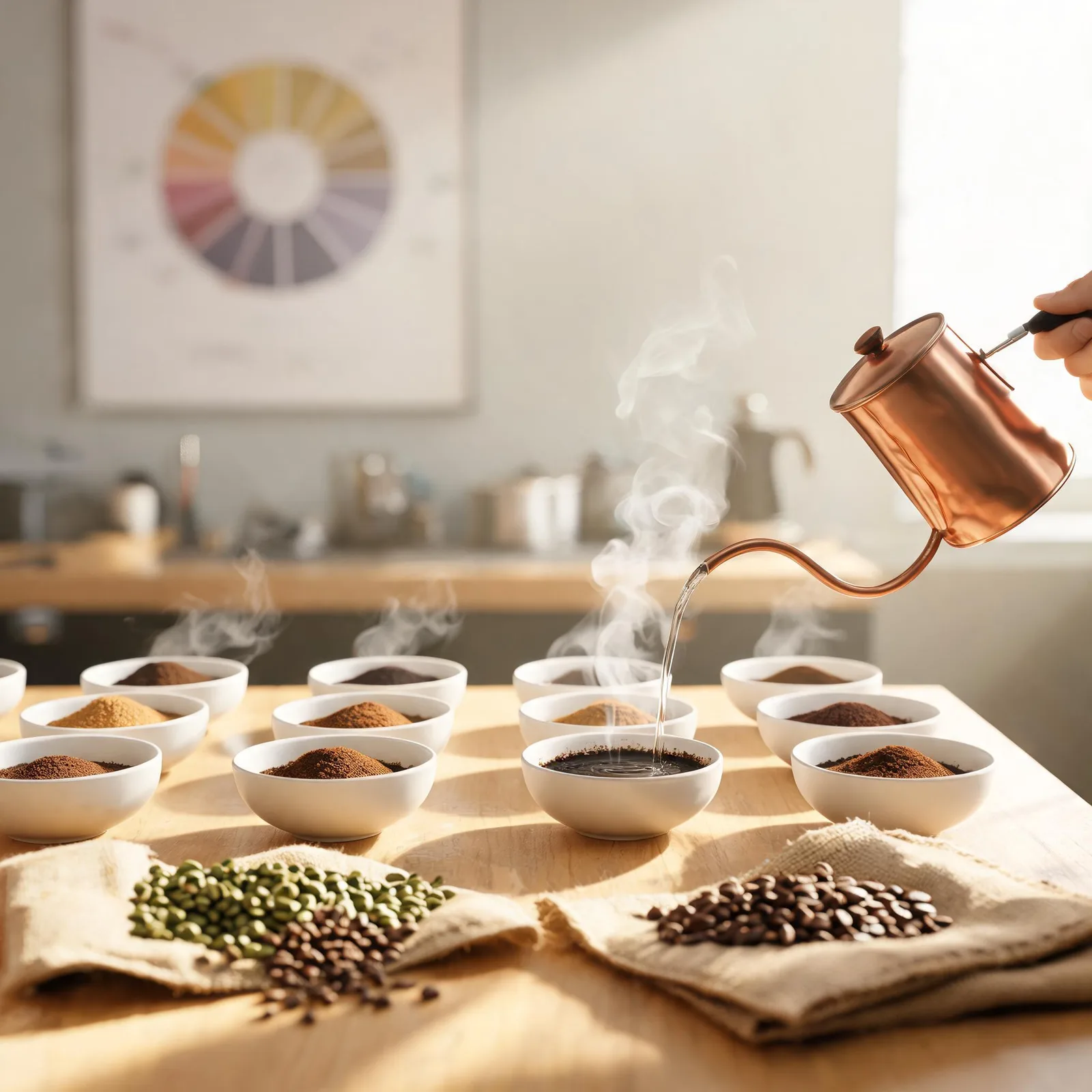
#1. Origin traceability & flavor maps become standard vocabulary
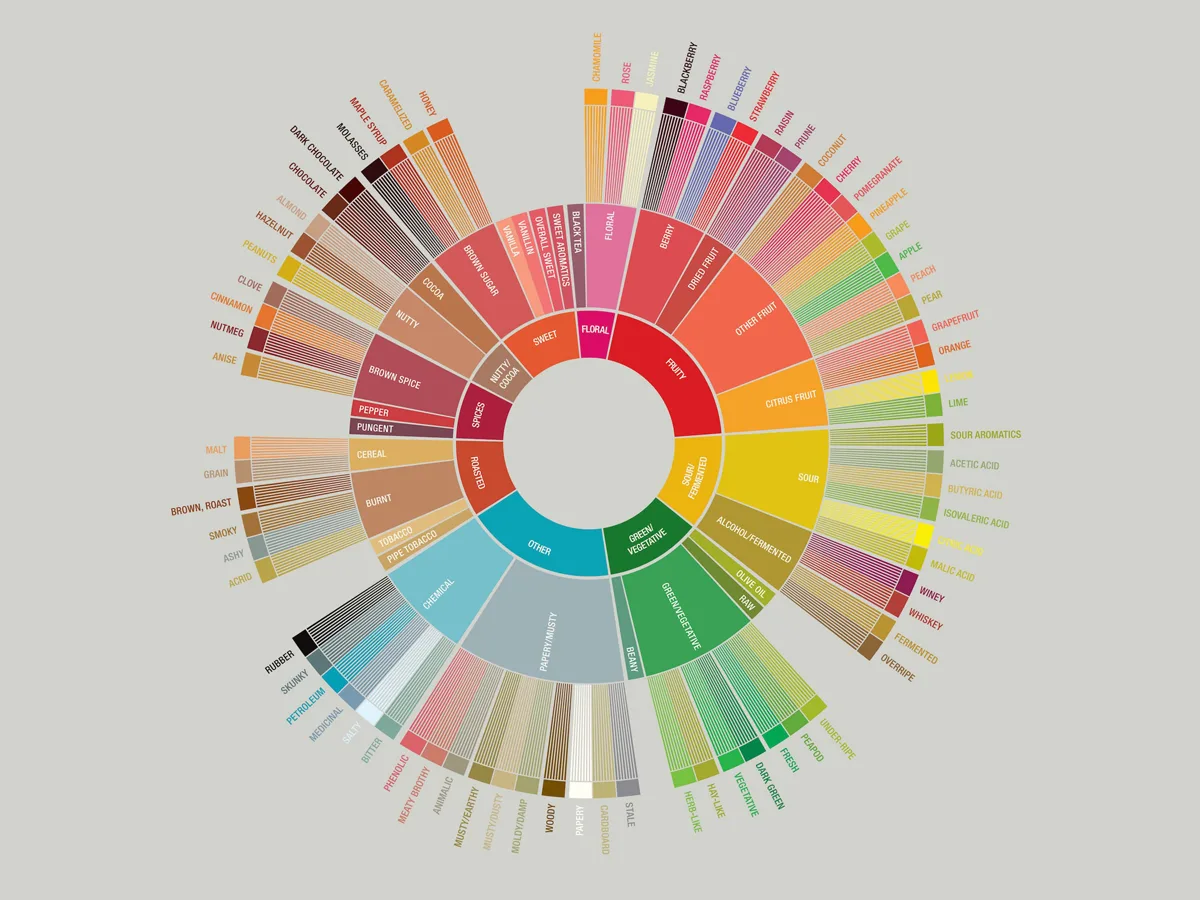
Consumers no longer settle for “bitter/sour/sweet.” They ask: Is this Yirgacheffe’s floral citrus or Panama Geisha’s jasmine-peach? SCA 85+, Cup of Excellence, micro-lot labels are now standard menu footnotes.
#2. Light roasts & diverse brewing reshape sensory experience
Light roasts preserve terroir-driven volatiles. Paired with V60, Kalita Wave, AeroPress, siphon, cold brew, the same bean reveals a dynamic “temperature–flavor” spectrum. As discussed in Is Specialty Coffee Culture US-Dominated?, while specialty coffee’s third wave began in the West, China is writing a new chapter with “Eastern aesthetics + local terroir”—Yunnan’s nut-cocoa base and anaerobic fruit-wine notes now earn international cupping scores.
#3. “Emotional customization” & “ritual” become the premium core
A ¥40–60 pour-over buys not just an 18–22% extraction yield and 1.15–1.35% TDS golden-cup standard, but the barista’s grind micro-adjustments, pour cadence, and the drinker’s full sensory participation. Specialty cafés are pivoting from “selling coffee” to “selling third-place experiences”—public cuppings, origin-owner talks, advanced pour-over workshops—turning expertise into palpable emotional value.
#Lower-tier markets & instant retail: the other growth curve
While tier-1 cafés battle on flavor wheels, tier-3/4 cities follow a different logic:
- Affordable-chain standardization: Cotti, Manner, % Arabica at ¥8.8–15, extreme SOP standardization, mini-app pre-order/pickup, hitting 300–500 cups/store/day.
- Premium instant: Brands like Saturnbird, Seesaw, Yongpu pair freeze-dry tech with specialty-grade green beans, launching “single-origin freeze-dried” SKUs at ¥5–15/cup—perfect for office, camping, travel.
- County-level survival playbook: No blind copying of tier-1 models. “Front café, back roastery” cuts cost; “coffee + bakery/light food” lifts ticket; private-community ops lock in repeat.
#Consumer mindset upgrade: from “functional caffeine” to “sensory exploration”
We see three fluid segments:
| Persona | Core need | Typical behavior | Price sensitivity |
|---|---|---|---|
| Functional drinkers | Energy, convenience, value | Daily 1–2 cups Luckin/Cotti/instant | High |
| Explorers | Flavor ID, brew skills, origin knowledge | Subscribe specialty beans, home pour-over, attend cuppings | Medium |
| Lifestyle aesthetes | Ritual, third place, social currency | Visit Reserve bars, collect limited lots, journal coffee days | Low |
Boundaries are permeable: a functional drinker tasting a single-origin Americano may become an explorer; an explorer mastering the 1:15–1:17 golden ratio may shift to aesthete. This fluidity is the micro-driver of China’s sustained market expansion.
#Supply-chain synergy: a Chinese paradigm from farm to cup
Yunnan’s Baoshan, Pu’er, Dehong regions are undergoing full-chain upgrading:
- Farm level: Introduction of Caturra, Catuai, Geisha; shade-grown, precision fertilization, selective picking.
- Processing: Natural, Washed, Honey, Anaerobic, Wine-barrel fermentation now local—flavor spectrum expands from “nut-chocolate” to “tropical fruit, floral, wine.”
- Roasting: Domestic roaster brands rise; roast curves precisely lock flavor windows; light-roast share jumps from 5% to 30%+.
- Brewing: SCA Golden Cup Standard localized; TDS meters, extraction calculators, Chinese Flavor Wheels make “replicable good coffee” lab-to-life.
#Closing: One coffee, one attitude toward life
China’s coffee story is fundamentally about time and choice. From a ¥9.9 instant lift to a ¥50 slow pour-over; from standardized Flat White to micro-lot Geisha; from office delivery cup to a weekend corner third place. Every choice is a vote for one’s own quality of life.
We track the data pulse in China Coffee Market Overview: Strong Growth Expected, but we’d rather invite you to feel it: next café visit, ask “What single-origin do you recommend today?” Smell the dry and wet aroma, watch the amber extraction, taste the flavor layers as temperature drops. In that moment, coffee ceases to be a commodity and becomes a savorable slice of time—bitter to sweet, just like life itself.
#FAQ
#Is China's coffee consumption growing rapidly?
China's coffee market has maintained a 15–20% CAGR over the past five years. Per-capita consumption is still under 20 cups annually—far below mature markets—leaving massive headroom for sustained growth.
#How do Luckin and Starbucks compare in market share?
Luckin leads on volume with 20,000+ stores, a ¥9.9 price anchor, and a pickup/delivery model. Starbucks holds ~7,300 stores, a ¥30 ticket, and the “third place” experience, creating a “volume-Luckin, margin-Starbucks” duopoly.
#What is the outlook for specialty coffee in China?
Specialty coffee is going mainstream: origin traceability, light roasts, diverse brewing, and cupping education are spreading. Consumers pay premiums for flavor maps, ritual, and third-place experiences, while Yunnan’s rise provides local supply-chain support.
#What distinguishes specialty coffee from commercial coffee?
Specialty coffee scores 80+ on SCA cupping, has zero defects, and is traceable to a single origin/estate/micro-lot. Commercial coffee uses blended, dark-roasted beans for consistent, scalable flavor profiles rather than distinct terroir expression.
#How can a regular consumer start exploring specialty coffee?
Begin with a single-origin (SOE) Americano to taste differences. Then get a starter pour-over kit (V60, filters, scale) and brew at a 1:15–1:17 golden ratio. Note roast dates (best 7–21 days post-roast) and gradually build your flavor vocabulary.



Comments