
Difference Between Flat White and Latte: Texture, Ratio & Flavor Profiles Explained
TL;DR: A flat white uses a double shot of espresso with 0.3–0.5 cm microfoam in a 150–180 ml cup, highlighting coffee clarity. A latte typically uses a single shot with 1–1.5 cm foam in a 240–300 ml cup, delivering a milk-forward, rounded mouthfeel. The core differences are espresso dose, foam texture, and cup volume.
Legend tells of ninth‑century Ethiopian goatherd Kaldi, whose flock grew lively after eating red coffee cherries; monks brewed the beans and stayed awake through the night — thus coffee entered human story. Today, when you cradle a flat white or a latte, you’re not just choosing a ratio of espresso to milk, you’re choosing how you meet the moment. At CoffeeStyle we believe: one cup, one attitude.
#Difference Between Flat White and Latte: Core Definitions & Origins
Flat White — born from the Australia–New Zealand rivalry — is defined by a double shot of espresso (30–36 g liquid weight) poured into a 150–180 ml ceramic cup, topped with a mere 0.3–0.5 cm of microfoam. The milk-to-espresso volume ratio sits around 1:2–1:3, designed to put the coffee’s origin character front and center.
Caffè Latte — Italian for “coffee with milk” — commonly uses a single shot (18–22 g) or sometimes a double, stretched to 240–300 ml with 1–1.5 cm of dense foam. The milk-to-espresso ratio reaches 1:4–1:6, creating a smooth, milk-sweetened embrace.
Glossary: Double Shot / Microfoam / Milk-to-Espresso Ratio
#Core Differences: Espresso Dose, Foam Texture & Cup Volume
| Dimension | Flat White | Latte |
|---|---|---|
| Espresso base | Double shot (standard) | Single or double shot |
| Liquid yield | 30–36 g | 18–22 g (single) |
| Foam depth | 0.3–0.5 cm microfoam | 1–1.5 cm dense foam |
| Cup capacity | 150–180 ml | 240–300 ml |
| Milk:espresso volume | ~1:2–1:3 | ~1:4–1:6 |
| Typical vessel | Small ceramic (Tulip / Gibraltar) | Tall glass / wide ceramic bowl |
| Flavor focus | Espresso clarity upfront | Milk-integrated roundness |
#Why Espresso Dose Sets the Flavor Baseline
A double shot delivers higher total dissolved solids (TDS) and extraction yield, so the flat white opens with vivid origin notes — think berry acidity and florals from an Ethiopian natural, or dark chocolate and nut tail from a Brazilian dark roast. The latte’s larger milk volume dilutes those same notes, shifting the sensory center toward lactose sweetness and milk-fat richness.
#Foam Geometry: Microfoam vs. Dense Foam
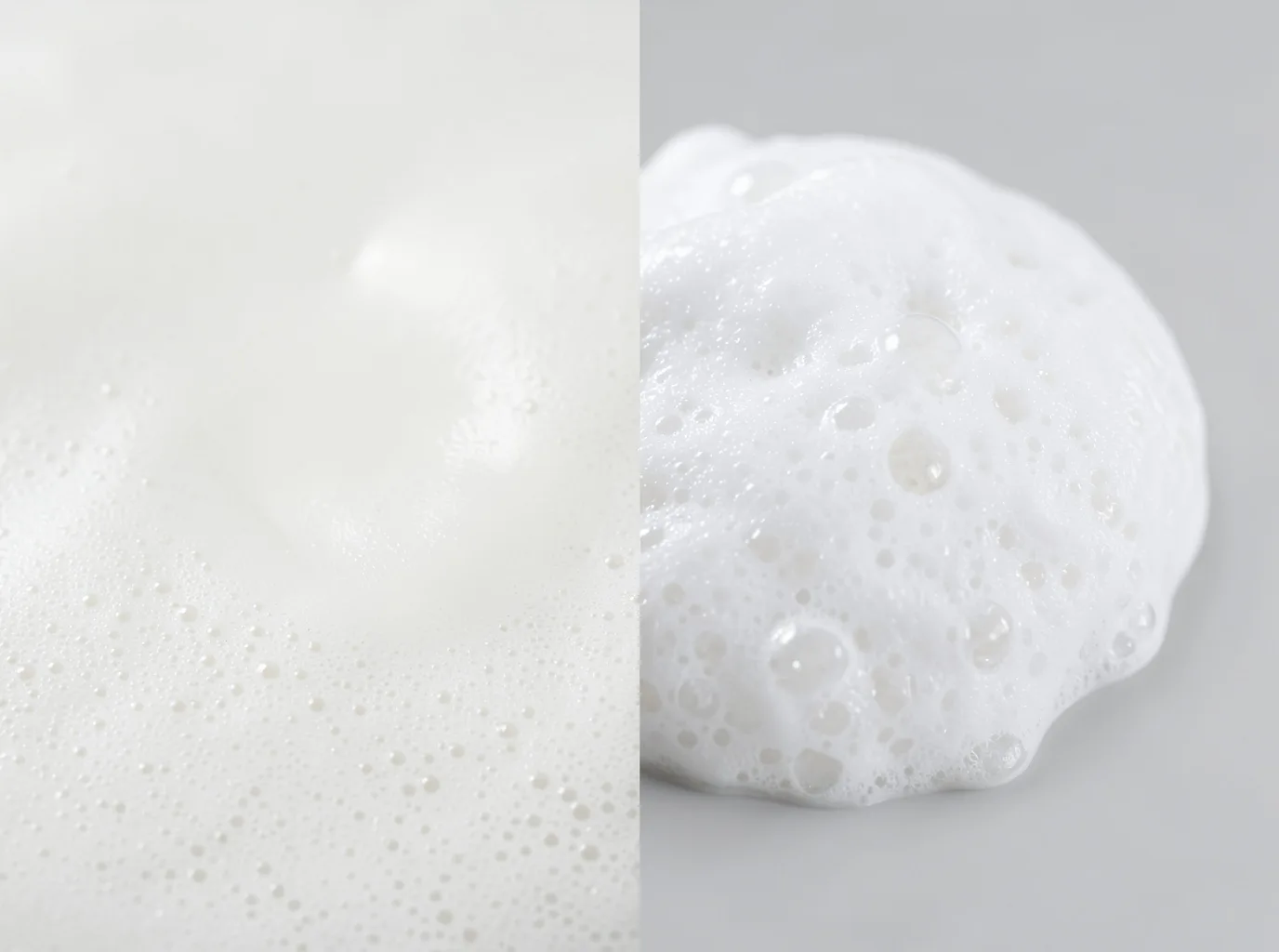
Microfoam is created by introducing steam at 1–2 mm below the milk surface for just 3–4 seconds, then submerging the wand to spin the bubbles into a seamless, glossy silk. It merges with espresso without a visible layer. Dense foam welcomes more air (5–7 seconds of stretching), building a 1 cm+ foam cap that sits atop the drink — great for latte art, but it softens the coffee’s leading edge.
#Is a Flat White Stronger Than a Latte?
Caffeine-wise, a standard double-shot flat white carries ~120–150 mg; a single-shot latte ~60–80 mg (double-shot latte matches the flat white). Yet perceived “strength” goes beyond caffeine: the flat white’s higher TDS and lower milk ratio amplify flavor intensity, while the latte’s extra milk buffers bitterness for a gentler body.
Health note: Caffeine-sensitive drinkers should request a single shot or decaf; pregnancy guidance suggests ≤200 mg/day.
#How Foam Texture Changes the Drinking Experience
- Microfoam (flat white) — no visible separation; the first sip delivers an emulsified blend of espresso oils and milk fats, sharp flavor contours, distinct layers.
- Dense foam (latte) — foam hits the palate first with airy sweetness, then the coffee follows, creating a “milk-then-coffee” gradient.
Practical tip: At home, steam flat-white milk to 60–65 °C with 3–4 s aeration; latte milk to 65–70 °C with 5–7 s aeration for stable art.
#Cup Aesthetics & the Third-Space Ritual
Flat whites often live in 150 ml ceramic cups (Gibraltar style), warming the palms like a tiny planet. Lattes prefer 300 ml tall glasses or wide bowls, showcasing visual layers for slow sipping and conversation. The vessel is more than capacity — it signals the third-space culture: small cups invite solitary focus; large cups encourage lingering dialogue.
Related reads: Cappuccino vs Latte vs Flat White: Visual Ratio Guide | Difference Between Latte and Cappuccino: Foam Thickness, Flavor Radar & Calorie Calculator
#Extended Comparison: Adding Cappuccino & Mocha
| Drink | Espresso | Foam Depth | Milk:Espresso | Signature Flavor Tags |
|---|---|---|---|---|
| Flat White | Double | 0.3–0.5 cm | 1:2–1:3 | Espresso-forward, velvet texture |
| Latte | Single/Double | 1–1.5 cm | 1:4–1:6 | Milk-led, rounded sweetness |
| Cappuccino | Single/Double | 1.5–2 cm | 1:3–1:4 | Airy foam, distinct wet/dry layers |
| Mocha | Single/Double | 0.5–1 cm + chocolate | 1:3–1:5 | Cocoa notes, higher sweetness |
More visual guides: Cappuccino, Mocha, Latte | Illustrated Guide | Classic Coffee Drink Recipes & Ratios
#Choosing by Mood & Moment
- Morning focus, solo work — Flat white: double shot wakes the palate, microfoam stays transparent.
- Afternoon catch-up with pastry — Latte: milk sweetness balances rich desserts.
- Craving foam texture — Cappuccino: dry/wet layers add tactile dimension.
- Chocolate comfort — Mocha: dual richness of cocoa butter and milk fat.
Bean tip: Flat whites shine with light-medium single origins (Panama Geisha, Kenya SL28) to express terroir; lattes pair well with medium-dark blends (Brazil + Colombia) for stable caramel-nut base.
#Closing: One Cup, One Attitude
The divide between flat white and latte is ultimately a negotiation of golden ratios — and a reflection of how we want to meet the moment. When you cradle that small ceramic cup, feeling warmth bloom through your fingertips, watching microfoam dissolve and espresso oils unfold on the tongue — that is your ritual, your emotional customization. Next time at the bar, try: “Double-shot flat white, today’s natural Yirgacheffe.” Let the flavor map flow in the cup; bitterness resolves into sweetness, and the answer is already there.
#FAQ
#Is a flat white stronger than a latte?
A standard double-shot flat white contains ~120–150 mg caffeine versus ~60–80 mg for a single-shot latte. Perceived strength also comes from higher TDS and lower milk ratio, which amplify flavor intensity rather than just caffeine content.
#What is the milk texture difference?
Flat white targets 0.3–0.5 cm microfoam — bubbles invisible to the eye, texture like liquid silk. Latte keeps 1–1.5 cm dense foam with larger bubbles, creating a pillowy, layered mouthfeel.
#What is the difference between a latte and a cappuccino?
Cappuccino has thicker foam (1.5–2 cm) and a tighter milk-to-espresso ratio (~1:3–1:4), showing distinct dry/wet layers. Latte uses thinner foam (1–1.5 cm) and more milk (~1:4–1:6) for a blended, mellow profile. See Difference Between Latte and Cappuccino.
#Key parameters for making a flat white at home?
Double shot 30–36 g, milk temp 60–65 °C, 3–4 s aeration for microfoam, 150 ml ceramic cup, milk-to-espresso volume 1:2–1:3.
#How should caffeine-sensitive people choose?
Request a single-shot base, opt for decaf beans, or pick a higher-milk drink like a latte to dilute caffeine concentration; pregnancy limit ≤200 mg/day.





Comments