
Recipe for Cold Brew Coffee: Mastering Golden Ratios & Steeping Science
TL;DR: The cold brew coffee recipe hinges on a 1:10–1:15 coffee-to-water ratio, coarse sea-salt grind, and 12–24 hour steep at 4–20 °C. Master these variables to consistently produce low-acid, naturally sweet, full-bodied cold brew at home.
#What Is the Science Behind a Cold Brew Coffee Recipe?
Cold brew is not merely "coffee grounds soaked in cold water"; it is an art of temperature–time substitution. Hot-water extraction uses 90–96 °C to force oils, acids, and bitter compounds out in 2–3 minutes. Cold brew drops the temperature to 4–20 °C and extends contact to 12–24 hours, allowing water molecules to selectively dissolve readily soluble sugars, amino acids, and volatile aromatics while strongly suppressing chlorogenic acids, caffeine, and high-molecular-weight bitter agents.
This low-temperature slow extraction mechanism creates cold brew's signature profile: muted acidity, pronounced sweetness, high body, and a clean finish. Once you grasp this physicochemical principle, you can adjust each variable with confidence instead of memorising rigid numbers.
#Golden Ratios: How Coffee-to-Water Ratio Shapes Strength & Balance
The coffee-to-water ratio is the backbone of any cold brew recipe. CoffeeStyle recommends a core range of 1:10–1:15 (coffee g : water ml):
| Ratio | Best For | Flavour Tendency | Typical TDS* |
|---|---|---|---|
| 1:10 | Straight drinking / concentrate base | Rich, intense sweetness, long aftertaste | 1.8–2.2% |
| 1:12 | Universal standard | Balanced, clear layers, milk-friendly | 1.4–1.7% |
| 1:15 | Light body / large ice dilution | Refreshing, tea-like, bright fruit acidity | 1.0–1.3% |
*TDS (Total Dissolved Solids) is a reference; actual values vary with bean, roast, and grind.
Practical tips:
- Weigh coffee and water to 0.1 g precision.
- Start at 1:12 for your first batch, then nudge ±1 unit by taste.
- For cold brew concentrate (later diluted 1:1 with water/milk), use 1:5–1:8 — see "Cold Brew Coffee Recipe Ratio: Scientific Formulas & Golden Ratios Guide".
#Grind Size: Why Coarse Sea Salt?
Grind size dictates specific surface area and extraction resistance. During a long steep, too-fine a grind (e.g., pour-over finesse) over-extracts bitter astringency and clogs filtration; too coarse under-extracts, yielding thin flavour.
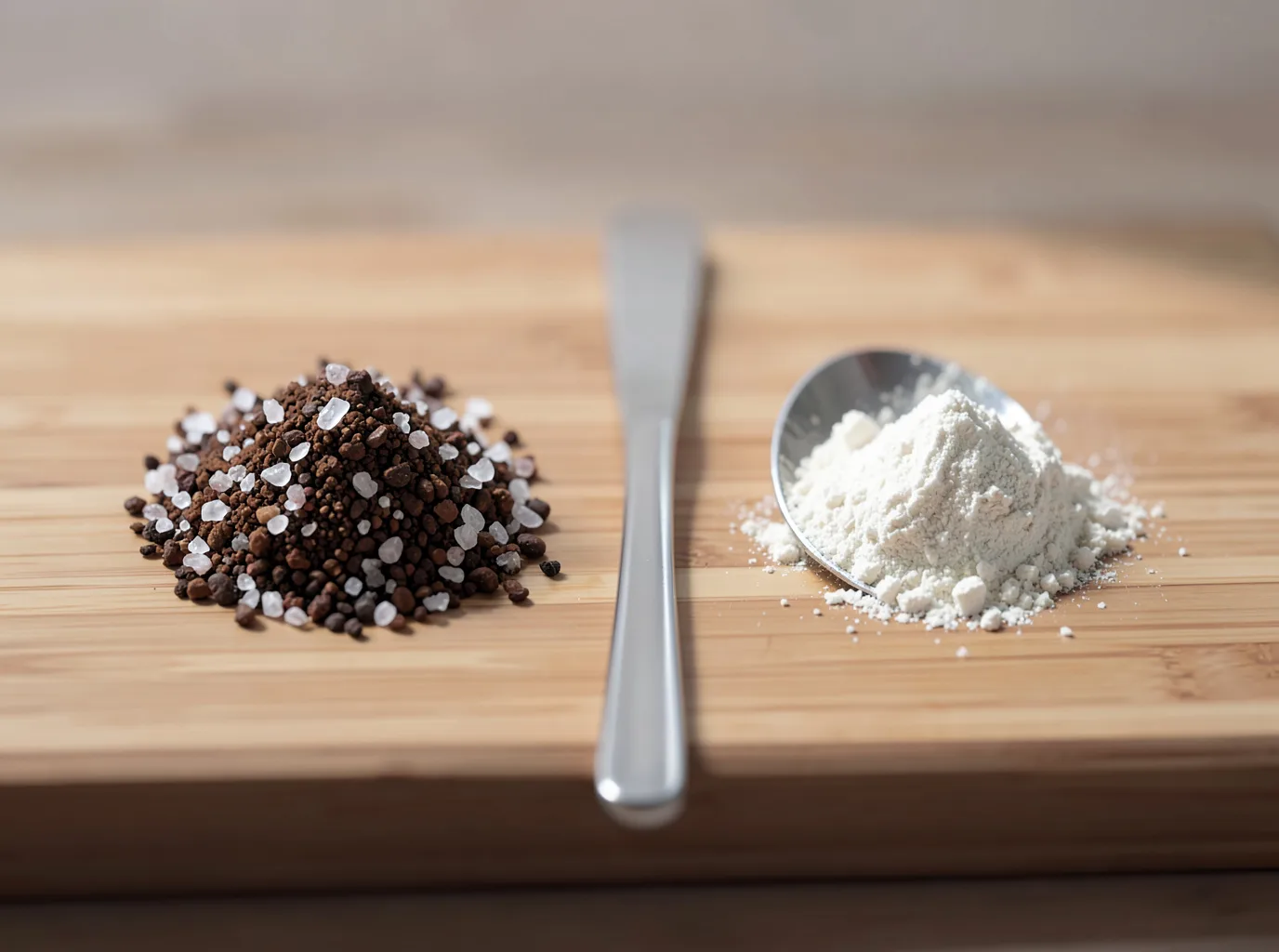
Standard cold brew grind = coarse sea salt / French press coarse (≈ 800–1000 μm). Uniform particles with minimal fines ensure even water penetration throughout the extended steep, producing a smooth extraction curve. On a hand grinder, dial to the coarsest end, then back off 1–2 clicks.
#Steep Time: 12 Hours or 24 Hours?
Time is cold brew's "invisible flavour architect".
- 12–16 h (room temp or fridge): Bright flavours, preserves floral/fruit notes; ideal for light-roast, natural-process beans.
- 18–24 h (fridge only): Maximises body and sweetness while keeping bitterness low; suits medium-dark roast, washed-process beans.
- >24 h: Diminishing returns; woody astringency rises — not recommended for routine use.
Key interaction: Refrigeration (4 °C) safely extends the upper limit to 24 h; room temperature (20–25 °C) should cap at 16–18 h to avoid microbial growth.
#Gear Choice: French Press, Dedicated Brewer, or Mason Jar?
| Gear | Pros | Cons | Best For |
|---|---|---|---|
| French Press | Already in kitchen, easy press-filter, good seal | Coarse mesh lets fines through | Beginners, occasional batches |
| Dedicated Cold Brewer | Fine mesh/paper filter, clear liquor, marked volumes | Single-purpose, storage footprint | Frequent users, clarity seekers |
| Mason Jar + Paper/Cloth Filter | Near-zero cost, flexible volume | Secondary filtration needed, fiddly | Minimalists, tiny test batches |
FAQ: Can I make cold brew with a French press? Absolutely. Add coffee and water at ratio, place lid without plunging, refrigerate for target time, then plunge slowly. For a cleaner cup, pass the liquor through a V60 paper filter afterwards. More in "How to Make Cold Brew at Home: Golden Ratios, 3 Gear Comparisons & Pitfall Guide".
#Step-by-Step SOP: From Weighing to Serving
- Prep: Scale, grinder, vessel, filter media, quality water (TDS 50–150 mg/L, pH 6.5–7.5).
- Dose: At 1:12, weigh 60 g coffee + 720 g water (~8 cups).
- Grind: Set to coarse sea salt; grind fresh.
- Pour: Slow spiral pour to fully saturate bed; avoid dry clumps.
- Seal & Chill: Lid/film on, into 4 °C fridge for 16 h (medium-dark roast up to 20 h).
- Filter: French press gentle plunge → secondary paper filter; or jar → filter basket → paper/cloth.
- Clarify: Let filtrate settle 30 min; decant clear top layer, discard bottom fines.
- Store: Fridge 3–5 days peak flavour; consume within 48 h for best.
- Serve: Large ice cube in rocks glass; neat or 1:1 with oat/whole milk.
#Advanced Variables: Roast, Process & Water Tweaks
- Light roast / Natural: 1:12, grind one notch finer, 14 h — captures high floral/fruit notes.
- Medium-dark / Washed: 1:10, standard coarse, 20 h — amplifies caramel/chocolate sweetness.
- Water: Soft water (<50 mg/L) under-extracts → extend 2 h or grind slightly finer. Hard water (>200 mg/L) adds metallic notes → use softened or bottled spring water.
For deeper roast/process flavour mapping, see "Cold Brew Coffee Recipe: 5 Methods Compared & Golden Ratios by Roast Level".
#Health & Safety Notes
- Caffeine content: High coffee-to-water ratio and long steep push single-serve caffeine to 200–300 mg, often above hot Americano. Caffeine-sensitive drinkers should dilute 1:15 or choose decaf beans.
- Microbial risk: Room-temp steep >18 h, unsanitised gear, or cross-contamination can spike bacteria. Full refrigeration and clean workflow are non-negotiable.
- Acid reflux friendly: Low chlorogenic acid makes cold brew gentler on the stomach, but individual response varies — sip a small amount first.
#Closing: Brewing Time into a Life Philosophy
A cold brew coffee recipe is fundamentally a contract with patience. You calibrate ratio, grind, and steep, then hand the rest to the quiet hours in the fridge. What returns is an amber liquor stripped of sharp bitterness, leaving only rounded sweetness and layered aftertaste.
This ritual matters not because the gear is exquisite or the beans rare, but because you chose to slow down the night before — weigh, pour, seal, whisper goodnight — for the certainty of a delicious morning cup.
When ice clinks against glass and that first silky sip coats your palate, you taste more than coffee: you taste bitterness turned to sweetness, a corner of your own third space.
Next step: start with 1:12, 16 h, coarse sea salt; keep a week of flavour notes; discover your personal golden ratio.
#FAQ
#How long should cold brew steep?
Refrigerate 12–24 hours. Light roasts shine at 12–16 h; medium-dark roasts peak at 18–24 h. At room temperature, cap at 16–18 h for food safety.
#What is the best coffee-to-water ratio for cold brew?
The universal sweet spot is 1:10–1:15 (coffee g : water ml). Drink straight at 1:12; make concentrate at 1:5–1:8 for later 1:1 dilution; go to 1:15 for a tea-like light body.
#Can I make cold brew with a French press?
Yes. Combine coffee and water in the French press, lid on without plunging, steep in fridge, then plunge slowly. For fewer fines, filter again through a pour-over paper.
#Is cold brew higher in caffeine?
Typically yes. The high ratio and long steep yield 200–300 mg per cup, often exceeding hot Americano. Sensitive individuals should dilute or opt for decaf beans.
#How long does cold brew last in the fridge?
Peak flavour 3–5 days sealed; best consumed within 48 h. Beyond 7 days flavour fades and microbial risk rises — discard.


Comments