
Vietnamese Coffee Recipe with Condensed Milk: Authentic Phin Brewing Guide & Golden Ratio
TL;DR: Authentic Vietnamese iced coffee hinges on dark-roast Robusta, a stainless-steel phin filter dripping at ~1 drop/second, and a condensed-milk-to-coffee weight ratio of 1:0.6–0.75. Brew 20 g fine-ground coffee with 40–50 g water at 92–96 °C for 4–5 minutes, stir into 25–30 g condensed milk, then pour over large ice cubes for the classic Saigon experience.
#What Is Vietnamese Condensed Milk Coffee?
Vietnamese condensed milk coffee (Cà Phê Sữa Đá) is a ritual of time and patience. When French colonists introduced coffee to the Annamite Range in the mid-19th century, fresh milk was scarce and the climate tropical. Locals substituted sweetened condensed milk and paired it with a gravity-fed metal dripper—the phin—accidentally creating an iconic cup where bitterness yields to sweetness.
Unlike espresso’s 9-bar pressure, the phin relies on gravity and a compacted fine-powder bed. The resulting brew reaches 2.5–3.5 % TDS (Total Dissolved Solids), far above pour-over’s 1.2–1.5 %. That intensity meets the viscous condensed milk to produce a signature flavor map: caramel-smoke top notes, dark-chocolate-cocoa mid-palate, and a lingering creamy finish.
#Core Gear: How to Use a Phin Filter
A phin consists of four parts: base plate, brewing chamber, press disc, and heat-retention lid. Stainless steel is preferred—heat-stable and non-absorbent.
#Step-by-Step Brewing Guide
- Pre-heat: Rinse phin and serving glass with boiling water; keep the lid on.
- Set the Golden Ratio:
- Coffee: 20 g (grind like fine caster sugar—finer than pour-over, coarser than espresso)
- Condensed milk: 25–30 g (place in glass first)
- Water: 92–96 °C, split into two pours totaling 40–50 g
- Dose & Tamp: Add coffee, level with a gentle shake, then twist the press disc clockwise until it hits the groove (≈ 5–8 kg force) for an even resistance bed.
- Bloom 30 s: Pour 20 g water to saturate, cover, and let CO₂ escape.
- Main Drip 4–5 min: Add remaining water; total drip time 4:30–5:30 at ~1 drop/second.
- Emulsify: Remove phin, stir vigorously until the mixture turns a glossy amber.
Troubleshooting: Too loose → channeling, fast flow, thin flavor. Too tight → stalled drip, over-extraction, burnt notes.
#What Coffee Beans Are Best for Vietnamese Coffee?
Authenticity demands dark-roast Robusta (Coffea canephora). Vietnam’s Central Highlands (Gia Lai, Đắk Lắk) sit on volcanic red basalt soils that yield naturally low-acid, high-caffeine (1.8–2.5 %) beans with intense chocolate-nut character.
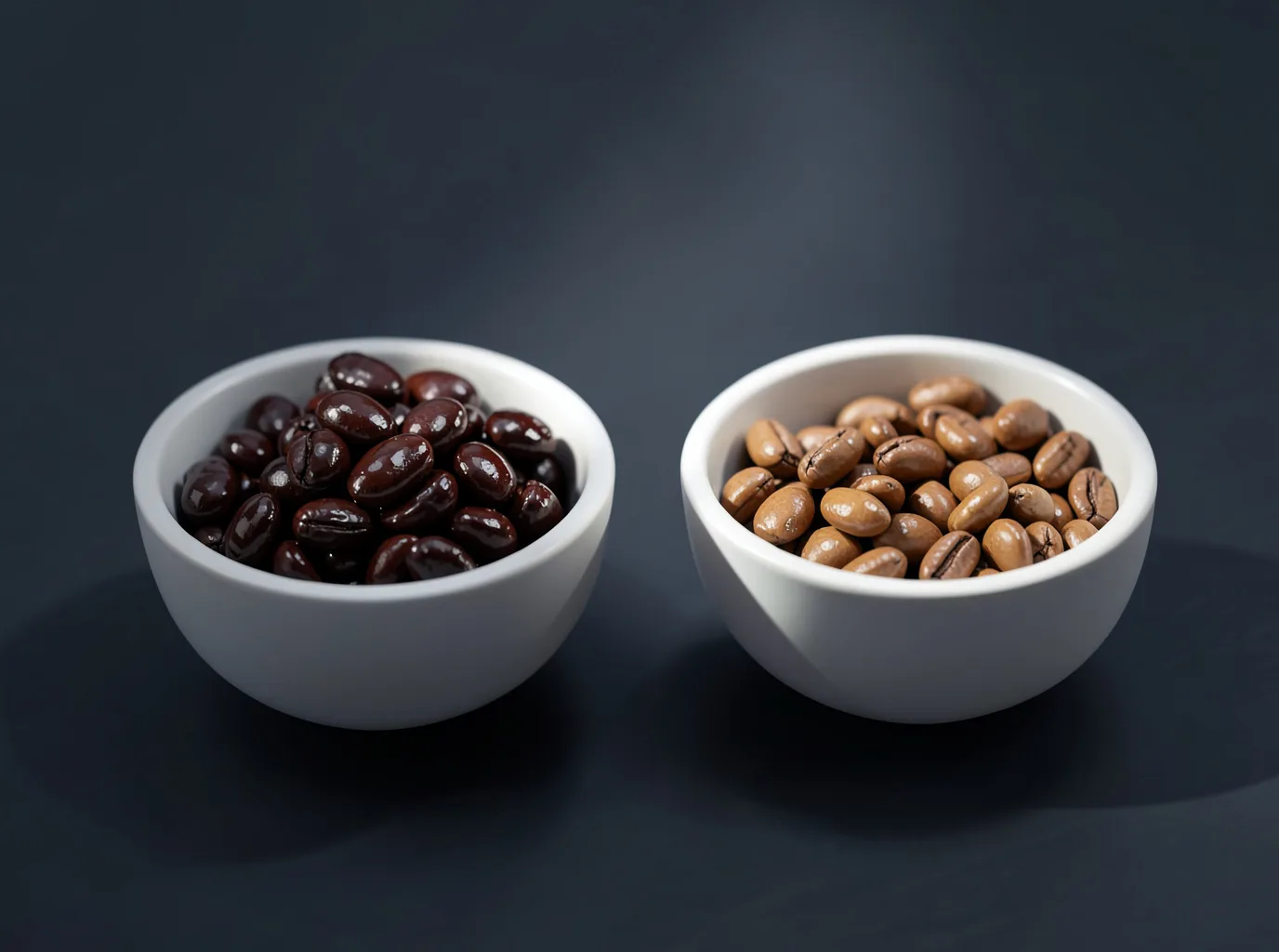
| Dimension | Traditional Dark-Roast Robusta | Specialty Arabica (Comparison) |
|---|---|---|
| Caffeine | ~2.2 % avg | ~1.2 % avg |
| Acidity | Near zero | Bright citrus/floral |
| Body | Syrupy, heavy | Medium, tea-like or silky |
| Roast Level | Very dark (Agtron 35–45) | Light–medium dominant |
| Typical Notes | Smoke, dark chocolate, caramel, spice | Fruit, florals, tea |
For more complexity, try a 70/30 Robusta-Arabica blend—keeps the body while adding fruit brightness. Our deep-dive Vietnamese Coffee: From French Colony to the World's Second-Largest Exporter explores terroir and varietal evolution.
#How to Make It Iced (Cà Phê Sữa Đá)
The iced version adds only two steps: rapid chill and dilution compensation.
- Complete the hot brew to yield ~40 g concentrate.
- Flash-chill: Pour into a cocktail shaker packed with large (2.5 cm) ice cubes. Shake hard 10 s to drop below 5 °C while melting ~15 % water back in.
- Serve: Strain into a pre-chilled glass; a fine foam cap should form.
Key Detail: Large cubes are essential—crushed ice melts too fast, over-diluting the flavor. No shaker? A wide-mouth jar with a tight lid works.
#Dialing the Condensed Milk Golden Ratio
“Golden ratio” is a zone, not a fixed number: brew weight : condensed milk weight = 1 : (0.6–0.75).
- Classic Saigon: 1 : 0.75 (40 g coffee : 30 g milk)—rich, sweet, street-vendor faithful.
- Balanced Enthusiast: 1 : 0.6 (40 g : 24 g)—preserves caramel tail, suits specialty palates.
- Low-Sugar Experiment: 1 : 0.4 with a medium-dark Arabica—explores “less sugar, same body.”
Use Vietnamese brands like Longevity or Vinamilk (≥ 8 % milk fat, ≥ 2.8 % protein) for the most stable emulsion.
#Common Myths & Pro Tips
#Myth 1: Moka Pot or Espresso Machine Can Replace the Phin
Moka pots run ~1.5 bar, espresso 9 bar—both extraction dynamics differ fundamentally from gravity drip. The result tastes like “espresso + condensed milk,” not Vietnamese phin coffee.
#Myth 2: Pour-Over Grind Works Fine
Pour-over grind lacks bed resistance; flow hits 3–4 drops/sec, extraction falls below 16 %, liquor turns watery, and condensed milk won’t emulsify properly.
#Pro Move: Cold-Brew Concentrate Base
Following our Cold Brew Coffee Recipe: 5 Methods Compared & Golden Ratios by Roast Level, brew 1:8 coffee-to-water at 4 °C for 18 h. Dilute 1:1 with condensed milk for a rounder, lower-bitterness cup—gentler on caffeine-sensitive drinkers.
#Caffeine & Health Note
A 20 g Robusta phin brew delivers ~180–250 mg caffeine, nearing the 200 mg single-serving guideline for adults. Pregnant individuals, anxiety sufferers, or chronic insomnia patients should consider:
- Halving the dose (10 g) or switching to decaf
- Shortening drip to 3 minutes
- Choosing an Arabica blend
Evidence-based details live in our Essential Beginner Knowledge About Coffee Beans.
#Closing: One Cup, A Slow-Life Philosophy
When the last drop of mahogany liquor spirals into condensed milk, an amber vortex blooms—time stretches. This is more than a caffeine hit; it’s an “emotional customization” ritual, five minutes of deliberate waiting and stirring in a frantic city.
Next brew, log: origin, roast date, grind setting, drip time, milk weight. Build your personal Vietnamese coffee flavor map. As we say in Top 10 Coffee Origins in the World — How Many Do You Know?, specialty coffee begins not with expensive gear but with the willingness to understand every flavor’s provenance.
#FAQ
#My phin drips too fast / too slow—what now?
Adjust grind and tamp pressure. Too fast (<3 min): grind finer, tamp harder. Too slow (>6 min): grind coarser, tamp lighter. Target 1 drop/sec, 4:30–5:30 total.
#Can I use a French press instead of a phin?
Yes, but flavor differs. French press: 4 min immersion, 1:12 ratio, press, then add condensed milk. Body is similar yet lacks the phin’s signature high-concentration drip texture and foam layer.
#Can I substitute sweetened condensed milk with fresh milk + sugar?
No. Condensed milk’s vacuum concentration creates Maillard caramel notes, and its high sugar/viscosity enables the stable emulsion. Fresh milk dilutes TDS and won’t yield the iconic amber gloss.
#How should I store Vietnamese coffee beans?
Dark roasts degas fast. Consume 7–21 days post-roast. Keep in a one-way-valve foil bag, cool and dark—avoid freezer (thaw condensation damages oil structure).
#How do I know extraction is on target without a refractometer?
Visual cues: deep reddish-brown clarity, drops form a continuous unbroken thread, no visible separation after 1 min rest. For precision, aim 2.5–3.5 % TDS with a refractometer.





Comments