Global Coffee Origins: Vietnam
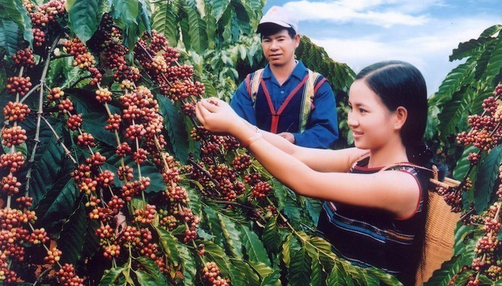
Including Vietnam in a book detailing high-quality specialty coffee is indeed unusual, since Vietnam primarily produces the Robusta variety. However, Vietnam's position in the coffee industry is extraordinary, because coffee from this region has a significant impact on every coffee-producing country, making it well worth including in the book so readers can gain an understanding of this nation.
Coffee was introduced to Vietnam by the French in 1867. Initially cultivated on a plantation model, it did not reach a commercial scale until 1910. Coffee cultivation in the Buon Ma Thuot district of the Central Highlands was interrupted during the Vietnam War. After the war ended, the coffee industry became consolidated, and both output value and volume dropped sharply. Over the next 25 years, the land area used for coffee cultivation increased 25-fold, while total national production grew 100-fold.
Such growth rates are owed to the 1986 Đổi Mới reform policy that allowed private enterprises to produce commercial crops. By the 1990s, a large number of new companies emerged in Vietnam, many focusing on large-scale coffee production. During that period, especially between 1994 and 1998, coffee prices remained high, prompting the industry to push for higher production volumes. From 1996 to 2000, Vietnam's coffee output doubled, significantly affecting global coffee prices. Vietnam became the world's second-largest coffee producer, leading to a global oversupply and a price collapse.
Even though Vietnam produces more Robusta than Arabica, this still affected Arabica prices, because many large-scale buyers prioritize quantity over quality, so the oversupply of low-priced coffee fit their needs perfectly.
In 2000, peak coffee production reached 900,000 metric tons, after which output fell sharply. However, when coffee prices returned to normal levels, Vietnam's production rebounded to previous levels. In recent years, output has surged further, reaching approximately 1.3 million metric tons in 2012 and 2013, continuing to exert a massive influence on the global industry. Today, market demand for Vietnamese Arabica is growing, but the lack of high-altitude terrain makes producing high-quality coffee a persistent challenge.
#Traceability
Vietnam has a number of large estates, most controlled by multinational corporations. Therefore, tracing a coffee's provenance is possible, but finding high-quality coffee is not easy.
#Flavor Profile
High-quality coffee is rare; most cups are quite flat, with woody notes, lacking sweetness or distinct character.
#Growing Regions
Population: 89,709,000
2018/2019 Production (60 kg/bag): 30.4 million bags
Because there is little market demand for traceable coffee, the country lacks the clearly defined growing-region standards that coffee roasters commonly use.