
Coffee Catering for Events: Complete Guide from Bean Selection to Execution
TL;DR: Coffee catering for events delivers tailored specialty coffee experiences for conferences, weddings, and brand launches. The core lies in matching bean menus—from single-origin pour-over to espresso-based signatures—to event scale, audience profile, and budget, deployed via mobile coffee carts or modular bar stations. Certified baristas dial in extraction parameters on-site to keep yield in the 18–22% golden range and TDS within SCA Gold Cup standards, creating a third-space experience that blends flavor-map depth with ritual aesthetics.
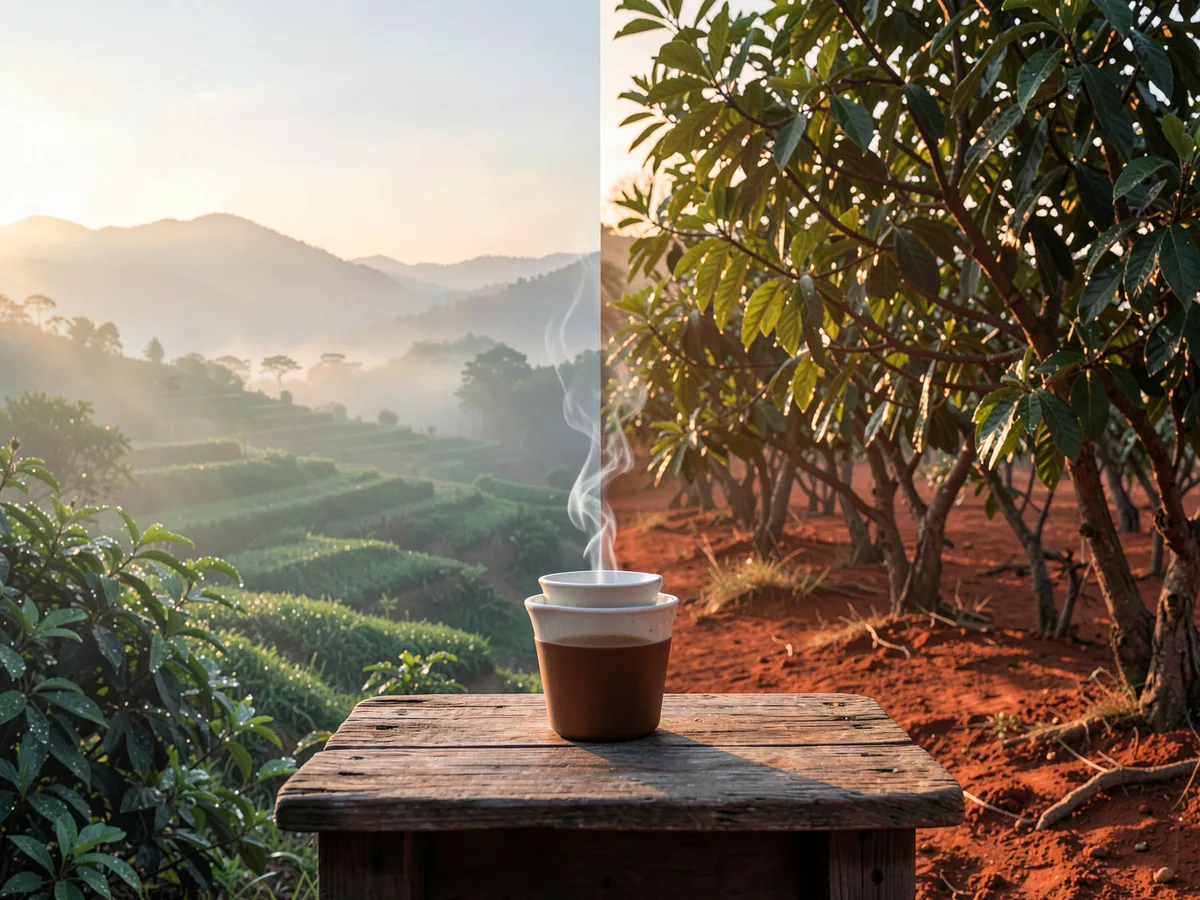
If you love coffee, the name Ethiopia will be familiar. Legend has it that in the ninth century, a goatherd named Kaldi noticed his flock dancing after eating red cherries; monks brewed the fruit and stayed awake through the night—coffee was born in myth. Today, the floral citrus of Yirgacheffe at 2,000 meters, the tea-like acidity of Sidamo, the winey notes of Harar still tell terroir stories in the cup. We quantify aroma and body with SCA cupping forms, lock extraction yield into the 18–22% golden window, yet never forget: every cup begins as a ritual of patience and anticipation. Whether you chase bright florals with a V60 pour-over or wait for fortune-telling patterns in a copper cezve, coffee gives not merely caffeine but a slice of time worth savoring.
#What Is Coffee Catering for Events?
Coffee catering for events provides an end-to-end coffee solution—bean sourcing, roasting, equipment setup, on-site brewing, and service flow—for specific occasions such as corporate conferences, private weddings, brand pop-ups, and art exhibitions. Unlike a fixed café operation, it emphasizes mobility, customization, and scene adaptability. Providers bring professional-grade espresso machines, grinders, pour-over stations, and water-treatment systems, deploying and calibrating within 2–4 hours to ensure every cup hits an extraction yield of 18–22% and a TDS (Total Dissolved Solids) concentration that meets SCA Gold Cup standards.
The essence of this service is condensing the ease of a "third space" and the weight of "ritual" into the few hours of an event. Whether it's a bright Yirgacheffe pour-over for an early-bird conference or a silky Flat White after a gala dinner, each cup carries the host's nuanced emotional design for the audience.
#What Are the Core Service Models?
#1. Full-Service Specialty Coffee Station
The most complete model: 2–3 certified baristas (SCA or equivalent) with a dual-boiler espresso machine, precision scales, temperature-controlled kettles, and flat-burr grinders with micro-adjustment. Ideal for 100–500-person high-end forums and product launches.
#2. Mobile Coffee Cart / Vintage Tricycle
High visual impact with onboard power, water, and waste systems. Perfect for outdoor festivals, brand activations, and lawn weddings. The cart body often integrates brand identity, becoming a social-media checkpoint.
#3. Modular Pour-Over Bar
Lightweight setup: arrays of V60, Kalita Wave, Origami drippers rotating single-origin menus. Suits 30–80-person salons, book clubs, designer meet-ups, highlighting the theater and interaction of "slow coffee."
#4. Cold-Brew / Nitro Pre-Batch Station
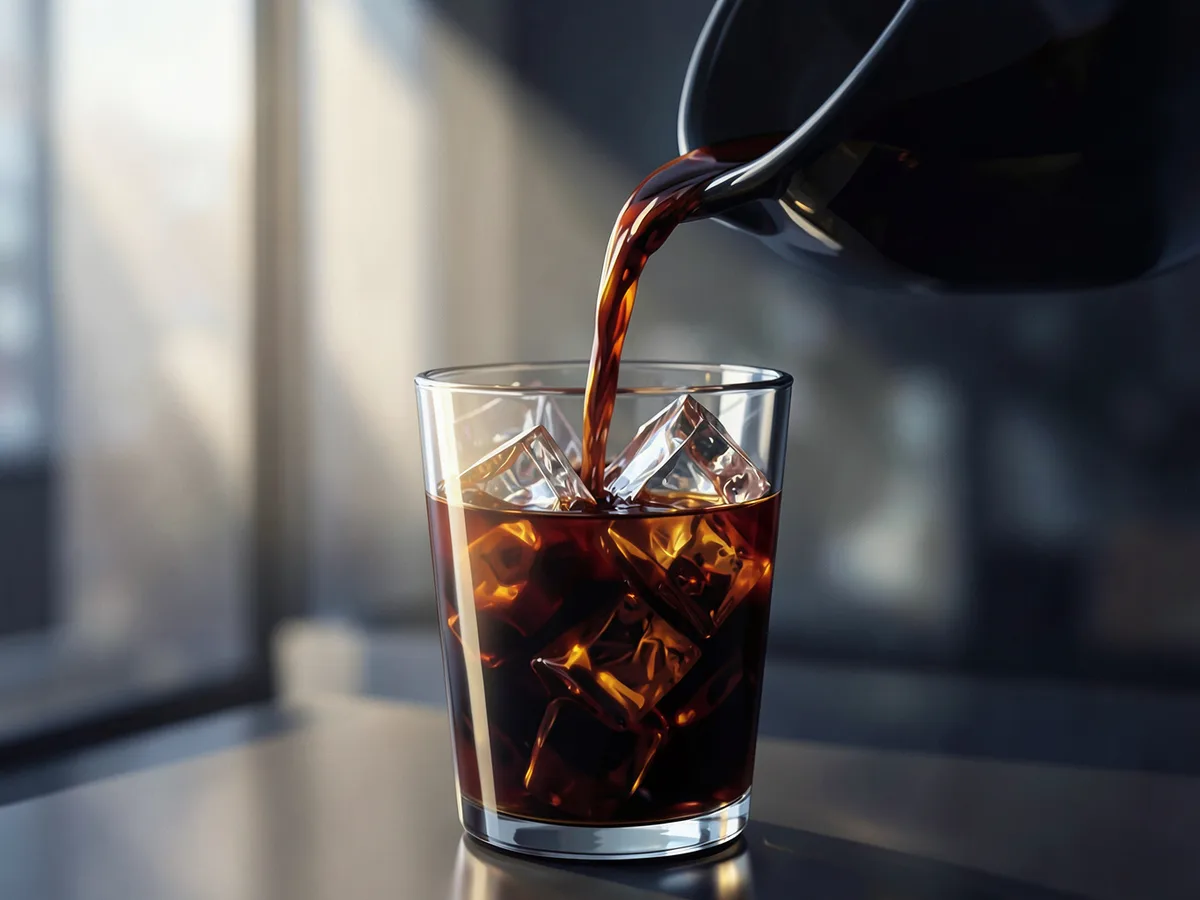
Steeped 18–24 hours at low temperature, served via nitro tap for creamy texture. Fits summer outdoor expos and marathon aid stations; single-hour output can exceed 200 cups with minimal labor.
#How to Design a Bean Menu by Event Type
Bean-menu design follows a "Scene–Audience–Flavor" triangle:
| Event Type | Audience Profile | Flavor Direction | Sample Menu |
|---|---|---|---|
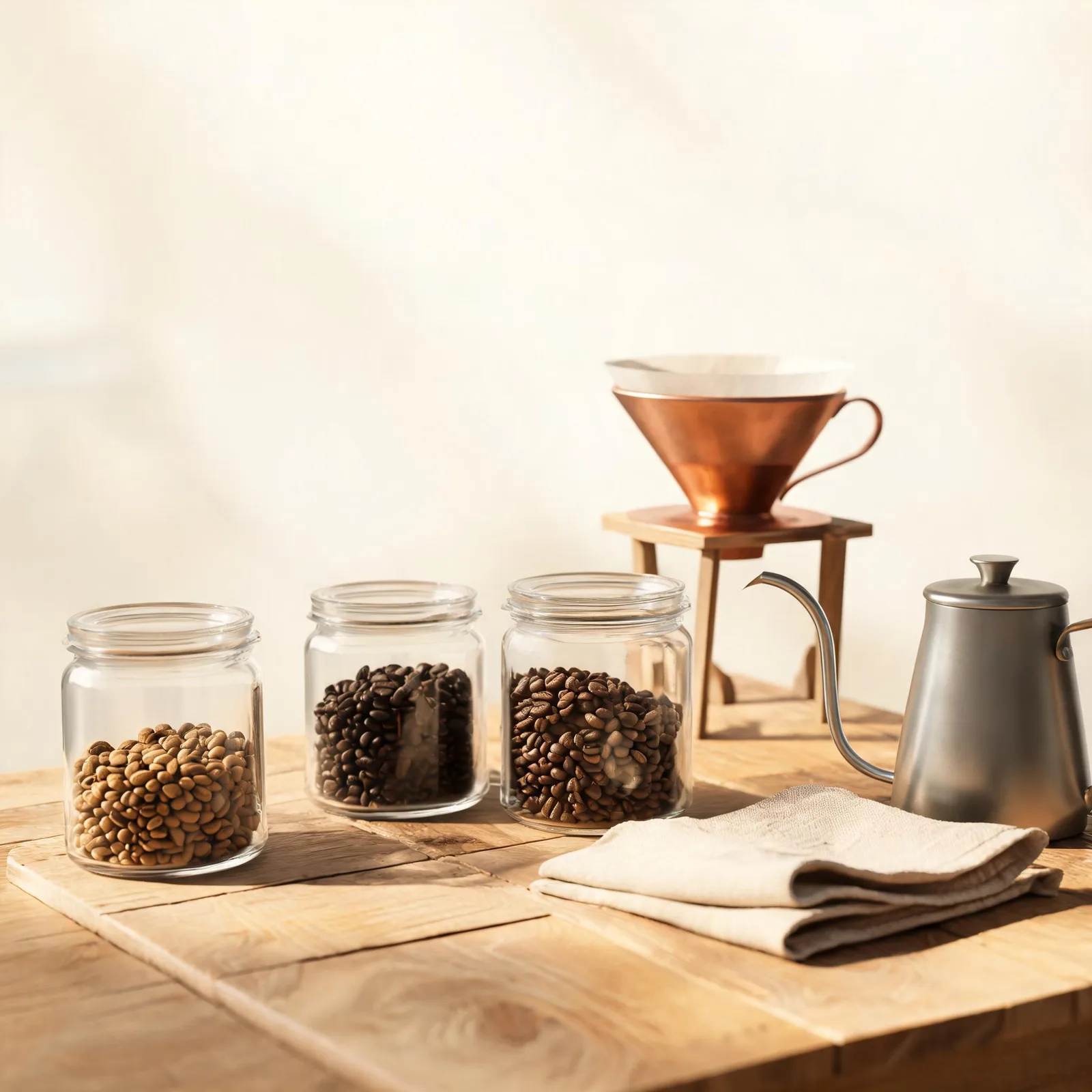
| Early-bird conference / Training | Professionals, high cognitive load | High aroma, bright acidity, low bitterness | Ethiopia Yirgacheffe Washed (floral citrus), Kenya SL28 (blackcurrant tomato acidity) |
| Brand launch / Media day | KOLs, press, industry experts | Complex layers, talk-worthy, social-shareable | Panama Geisha Natural (jasmine lychee), Colombia Honey (red wine berry), signature Flat White |
| Wedding / Private party | Couples, families, elders | Balanced body, low-caffeine options, visual appeal | Brazil Dark Roast (chocolate nut), Swiss Water Decaf, oat-based signatures, custom latte art |
| Outdoor festival / Market | Young crowds, high volume | Refreshing, cost-effective, fast output | Single-origin cold brew, nitro Americano, iced shake pour-over, coconut cloud latte |
Key Decision Points:
- Single Origin vs. Blend: Single origins showcase terroir flavor maps for pour-over; blends offer stability for high-volume espresso.
- Roast Gradient: Prepare three tiers per event—light (pour-over), medium (espresso base), dark (milk signatures)—to cover preference spread.
- Caffeine-Sensitive Guests: Must offer decaf or non-coffee alternatives (roasted grain drinks, herbal cold brew) with labeled caffeine ranges.
Want to recreate event-grade lattes or mochas at home? See the Perfect Mocha Coffee Recipe: Zero-Barrier Home Guide and the Latte, Mocha, Cappuccino Calories Comparison: Calorie & Macro Breakdown of Three Classic Milk Coffees for golden-ratio milk and syrup formulas.
#Equipment Selection & On-Site Layout Essentials
#Core Equipment Checklist
- Espresso Machine: Dual boiler, PID control, programmable pressure profiling (e.g., La Marzocco Linea PB, Slayer, Synesso).
- Grinder: On-demand, flat burrs ≥64 mm, micro-step ≤0.01 mm (e.g., Mahlkönig E65S, Mazzer Kony S).
- Water Treatment: RO + remineralization targeting TDS 150±20 ppm, alkalinity 40–60 ppm, hardness 50–70 ppm, pH 7.0±0.5.
- Pour-Over Station: Temp-stable kettle (±0.5 °C), 0.1 g scale, timer, dripper rack.
- Cold Chain & Ice: Ice maker, refrigerated display, N₂ tank with regulator.
If budget is tight and the event leans toward pour-over, a French press makes a sturdy backup. Review the Bodum 34oz Brazil French Press: High-Heat Borosilicate Glass, Black, Made in Portugal and the Bodum 34oz Brazil French Press Coffee Maker, High-Heat Borosilicate: In-Depth Review & Brewing Guide for heat-resistant glass construction and extraction consistency.
#Flow Layout Design
- Barista Flow: Grind → Dose → Tamp → Extract → Art → Serve, unidirectional, no cross-traffic.
- Guest Flow: Pickup → Condiment bar → Seating, parallel and separated from barista flow.
- Power: Espresso machine single-phase 32 A / three-phase 16 A, ice maker 10 A—confirm venue distro capacity early.
- Plumbing: 30–50 L/hr water draw; allocate food-grade inlet and grey-water containers.
#Pricing Logic & Budget Allocation
Event coffee catering quotes typically comprise four modules:
- Bean Cost (25–35%): Specialty green $8–25/lb, 12–15% roast loss, 3% packaging/transit loss.
- Labor & Technical Service (30–40%): Barista day rate $200–400, including competition-grade dial-in and SCA cupping calibration.
- Equipment Depreciation & Logistics (15–20%): Daily rental $300–800, inter-city transport with shock-proof packaging and insurance.
- Consumables & Compliance (10–15%): Filters, dairy, oat milk, syrups, compostable cups/lids, food license, public liability insurance.
Indicative Price Ranges (reference only, not a quote):
- Half-day (4 hr) pour-over station ≤50 pax: $1,100–2,100
- Full-day (8 hr) dual-head espresso station 200 pax: $3,500–6,300
- Mobile cart 2-day outdoor expo: $7,000–12,500
Pitfall Alert: Watch for "all-in" quotes hiding venue power-application fees, waste removal, overtime, and weather-contingency costs.
#On-Site Execution: SOP from Load-In to Load-Out
#D-7 to D-1: Prep Phase
- Lock Bean Menu & Roast Batch: Roasted 7–14 days before event, rested to peak flavor window.
- Pre-Calibration: In warehouse, verify espresso pressure curves, grind settings, water mineralization—triple check.
- Contingency Plan: Backup machine, generator, reserve beans, reserve cups/lids, tent reinforcement for extreme weather.
#D-Day: Event Timeline
| Time | Key Action | QC Metric |
|---|---|---|
| T-120 min | Equipment in place, powered, water re-tested | Boiler pressure 1.2±0.05 bar, water 93±1 °C |
| T-60 min | Barista dial-in: grind, yield, time | Double shot 18 g in, 36 g out, 28±2 s |
| T-30 min | Taste sign-off, latte art lock, menu board up | SCA flavor-wheel descriptor match ≥90% |
| During | Re-test TDS, yield, sensory every 30 min | TDS 1.15–1.35%, yield 18–22% |
| Load-out | Backflush, clean, asset audit, data archive | Zero residue, zero loss, zero complaints |
#Barista Competency Requirements
- Produce double shot + latte art in ≤90 seconds.
- Explain terroir, process, tasting notes using flavor-wheel language.
- Hold Food Safety Supervisor cert + SCA Barista Skills Professional or equivalent.
#How to Measure Success of Event Coffee Service
Quantitative metrics paired with qualitative feedback:
Quantitative:
- Peak cups/hour vs. theoretical capacity
- Waste ratio (discarded liquid / total extract) < 5%
- Avg cups per guest
- Organic UGC volume & sentiment on social
Qualitative:
- Depth of barista–guest interaction (proactive origin/process/flavor storytelling)
- Menu resonance with event theme (e.g., "Sunrise Latte" for early conference, "Honeymoon Cold Brew" for wedding)
- Service flow invisibly integrated into event rhythm, never a bottleneck
#Closing: One Cup, One Curated Emotion
The ultimate value of coffee catering for events isn't the number of espressos sold—it's the "tasteable moment" crafted for each attendee in a specific time and place. When Yirgacheffe's florals wake tired nerves between conference sessions, when nitro cold brew's velvet soothes a humid festival night, when custom latte art freezes a couple's initials at a wedding—coffee leaps from beverage to emotion-customization medium.
We believe specialty coffee's boundary isn't the cup rim; it's whether the cup can open a dialogue about terroir, patience, and connection. Next time you plan an event, imagine the coffee station as a flowing "third space," letting every bittersweet sip become a gentle anchor in memory.
Next Step: Outline your event scale, audience profile, and budget band. Draft a first menu using the "Flavor Triangle" above, then benchmark proposals from 2–3 certified providers.
#FAQ
#How far in advance should I book coffee catering for an event?
Book 4–6 weeks ahead, especially when custom roast batches, mobile cart logistics, or venue power applications are involved. Peak expo seasons (Sept–Oct, Mar–Apr) warrant 8 weeks.
#How do you guarantee consistent flavor on-site?
Three locks: Lock the bean (single roast batch, 7–14 days post-roast), Lock the water (on-site remineralization to SCA spec), Lock the parameters (grind, ratio, time, temp digitally monitored throughout). Pros carry portable TDS meters and extraction-yield sheets, re-testing every 30 minutes.
#What if outdoor power or water fails?
Standard kit: silent generator (≤60 dB) + 200 L food-grade water tank + grey-water recovery. Fallbacks: switch to manual pour-over/French press (no power), serve pre-batched cold brew/nitro (zero equipment), deploy backup tents and non-slip matting.
#Can I just rent equipment without a barista to save budget?
Not recommended. Specialty coffee's flavor window is razor-thin—a 0.02 mm grind shift or 2 °C temp drift pushes yield out of the gold zone. A pro barista dynamically compensates for humidity and bean-age drift; hardware alone cannot.
#How do you accommodate caffeine-sensitive or pregnant guests?
Menu must label caffeine ranges (e.g., single shot 60–80 mg, pour-over 120–180 mg). Offer in parallel: Swiss Water decaf (<0.1% residual caffeine), roasted grain drinks (zero caffeine), herbal cold brew, fresh-fruit signatures. Create a dedicated "caffeine-free pickup zone" to avoid cross-contamination.

Comments