
Beginner Guide to Pour Over Coffee: Golden Ratio 1:15.5 & Staged Pouring Visualized
TL;DR: Master pour over coffee by locking three variables — 1:15.5 brew ratio, 92 °C water, staged pouring (30 s bloom → two main pours → 2:15–2:30 total) — and using a flow-rate chart so beginners turn “uncontrolled variables” into repeatable muscle memory.
Legend says a ninth-century Ethiopian goatherd named Kaldi watched his flock dance through the night after eating crimson berries in the Kaffa forest; monks later boiled the fruit to sustain long vigils. Today, when we dose 15 g of Yirgacheffe into a V60 and draw concentric circles with 92 °C water, watching the bed rise like morning mist, we remember: coffee has never been merely caffeine — it is a measurable ritual, a dialogue with terroir. We quantify aroma and body on the SCA cupping form, anchor extraction yield in the 18–22 % gold zone, yet never forget that every cup begins with patience and anticipation.
#What Gear Do You Need for Pour Over Coffee?
Start with this minimum viable kit — the tools that let you converse with origin:
| Gear | Recommended Spec | Buying Tip |
|---|---|---|
| Gooseneck kettle | Narrow spout, flow control, 300–600 ml | Thin, silk-like stream is essential |
| Dripper | V60 01/02, Kalita Wave 155/185, Origami | See comparison table below |
| Filter paper | Matched to dripper, bleached or natural | Pre-rinse with hot water to remove paper taste |
| Scale | 0.1 g resolution, built-in timer | Shows weight & time simultaneously |
| Grinder | Conical or flat burr, hand or electric | Uniformity first; target 600–800 μm peak |
| Timer | Phone or scale timer | Log total brew time & stage marks |
| Hot water source | Variable-temp kettle or boiled water rested 30 s | Target 92 °C ±1 °C |
We provide a printable one-page parameter card in our "Pour Over Coffee Tutorial: Master the "Coffee Stylesheet" for Café-Quality Brews at Home" — stick it on your brew bar. For a deeper beginner roadmap, see "Specialty Coffee Beginner's Guide: 30-Day Roadmap from Novice to Blind-Tasting Flavors".
#What Are the Most Common Beginner Mistakes?
#1. Skipping or Under-dosing the Bloom
Less than 2× coffee weight for bloom leaves CO₂ trapped; water punches channels → thin, astringent cup. The bloom is the rite that wakes the bean's sleeping aromatics — grant it 30 seconds of respect.
#2. Guessing Water Temperature
Boiling water scorches fines; too-cool water under-extracts. Lock 92 °C with a temp-controlled kettle. Temperature is the conductor of extraction; one degree separates brightness from bitterness.
#3. Uncontrolled Pour Height & Flow Rate
High pour agitates bed unevenly; low pour stalls extraction. Inconsistent flow = inconsistent extraction yield. The stream should hang like a silk thread, landing with the steadiness of a heartbeat.
#4. Ignoring Final Bed Geometry
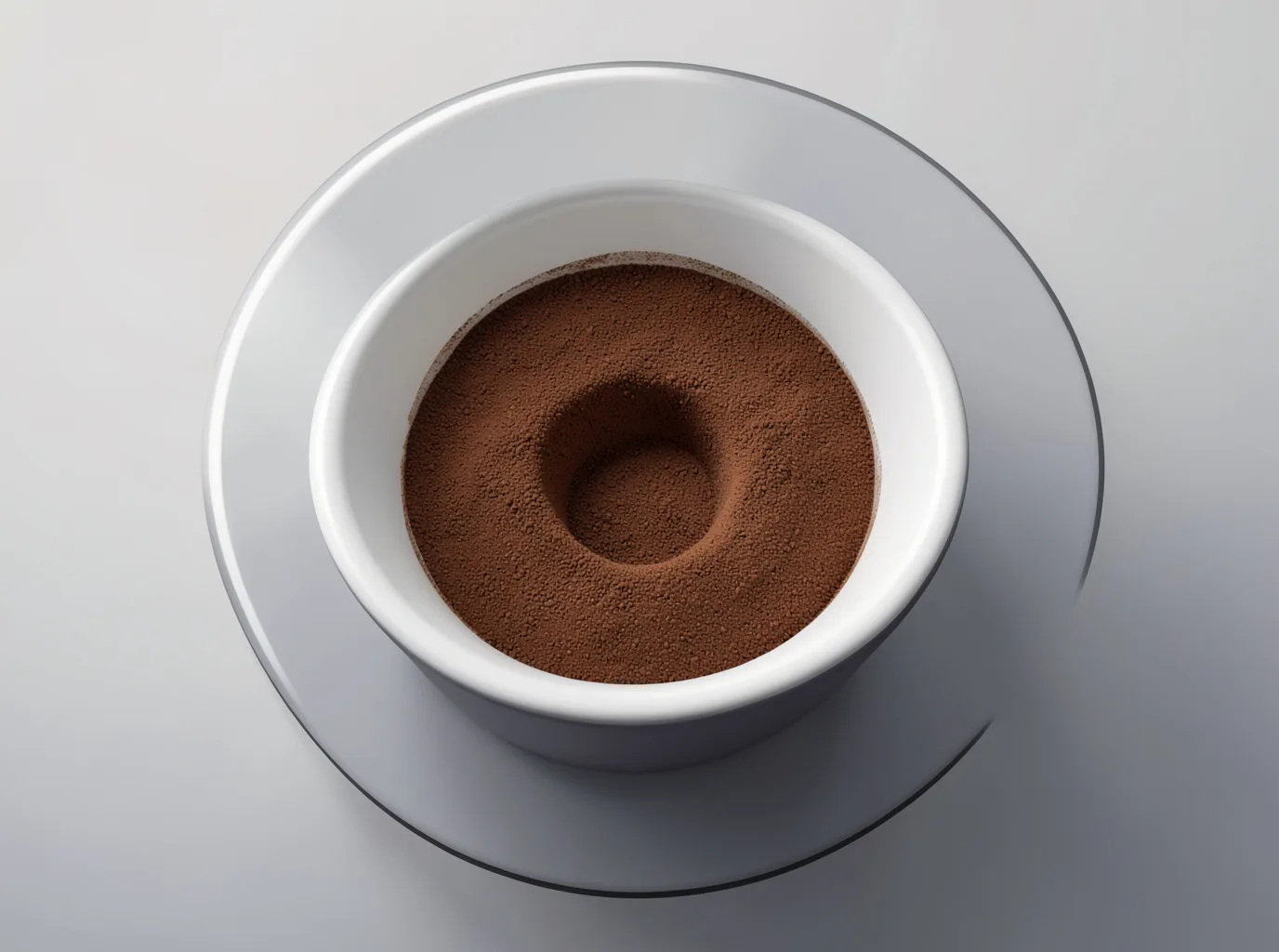
A flat "donut" bed signals even extraction; center mound = center-heavy pour; collapsed edges = edge-heavy pour. The spent bed is an honest diary of extraction — read it, and you read the flavor.
#5. Expecting One Grind Setting Forever
Humidity, roast age, and bean density shift optimal grind. Keep a bean–grind–dripper log sheet. Grind size is not a constant; it dances with bean nature, humidity, and roast level.
#How to Adjust Brew Ratio and Water Temperature?
#The Logic Behind the 1:15.5 Golden Ratio
SCA Gold Cup target (18–22 % extraction yield, 1.15–1.35 % TDS) clusters around 1:15–1:17. We anchor at 1:15.5 — the midpoint distilled from countless cuppings and dawn-to-dusk experiments.
- Light roast / high density → 1:16–1:16.5, longer contact, lighter body, letting floral fruit acidity unfold with grace
- Dark roast / low density → 1:15–1:14.5, shorter contact, avoid harshness, guarding caramel-chocolate warmth
- Personal taste → Adjust in 0.5 ratio steps only; single-variable experiments
#Why 92 °C?
- Hits target extraction yield in the 2:15–2:30 window
- Each 1 °C drop ≈ 0.5–0.8 % lower extraction; compensate with finer grind or longer time
- Above 94 °C risks pyrolysis bitterness
Mnemonic: "Dose locked, ratio set, temp precise, staged pour, watch clock, read bed" — six steps that, in morning light or midnight quiet, become muscle memory.
#How to Choose Among V60, Kalita, and Origami Drippers?
The dripper is the architect of flavor; each geometry rewrites how water meets coffee.
| Dimension | V60 02 | Kalita Wave 185 | Origami AS |
|---|---|---|---|
| Flow character | Fast, technique-sensitive | Slow, forgiving | Medium, swappable papers |
| Flavor profile | Bright, high clarity | Balanced, heavy body | Versatile, mimics both |
| Best for roast | Light, floral/fruit | Medium-dark, nut/choco | All roast levels |
| Beginner friendliness | ⭐⭐ | ⭐⭐⭐⭐ | ⭐⭐⭐ |
| Material tip | Resin/ceramic (heat retention) | Stainless/glass (fast heat) | Ceramic/resin dual |
Quick pick:
- First pourover, want consistency → Kalita Wave 185 stainless, high forgiveness builds confidence
- Love exploring clarity, willing to practice → V60 02 resin, captures the bright soul of light roasts
- One dripper for everything, aesthetics matter → Origami ceramic + both paper types, one dripper, infinite moods
Material impact on thermal stability detailed in "Pour Over Coffee Tutorial: Master the "Coffee Stylesheet" for Café-Quality Brews at Home".
#How to Tell If Extraction Is Even?
#Reading the Flow-Rate Curve
Our "flow-rate vs. time" chart has four phases, turning invisible extraction dynamics into visible rhythm:
- Bloom (0:00–0:30) — Zero flow, 30 g water (15 g × 2), watch even crust rise like dawn's first glow
- First main pour (0:30–1:15) — 2.5–3.0 g/s, water 1 cm above bed, three concentric circles, stream winding through every particle
- Second main pour (1:15–2:15) — 2.0–2.5 g/s, top up to 232.5 g (15 g × 15.5), pause 5 s before finish, a gentle exhale
- Draw-down (2:15–2:30) — Final drips, total time lands in 2:15–2:30 window; when the last drop falls, the ritual completes
#Three-Step Bed Diagnosis
- Shape — Flat donut = even; center peak = center pour; sunken edges = edge pour
- Color — Uniform tone = even; white speckles = channeling; glossy black = over-extracted
- Dry aroma — Caramel/nut = on target; burnt/smoky = over; grassy/peanut = under
#Quick TDS / Extraction Yield Check
With a refractometer:
- TDS × beverage mass ÷ dose = extraction yield %
- Target 18–22 % yield, 1.15–1.35 % TDS
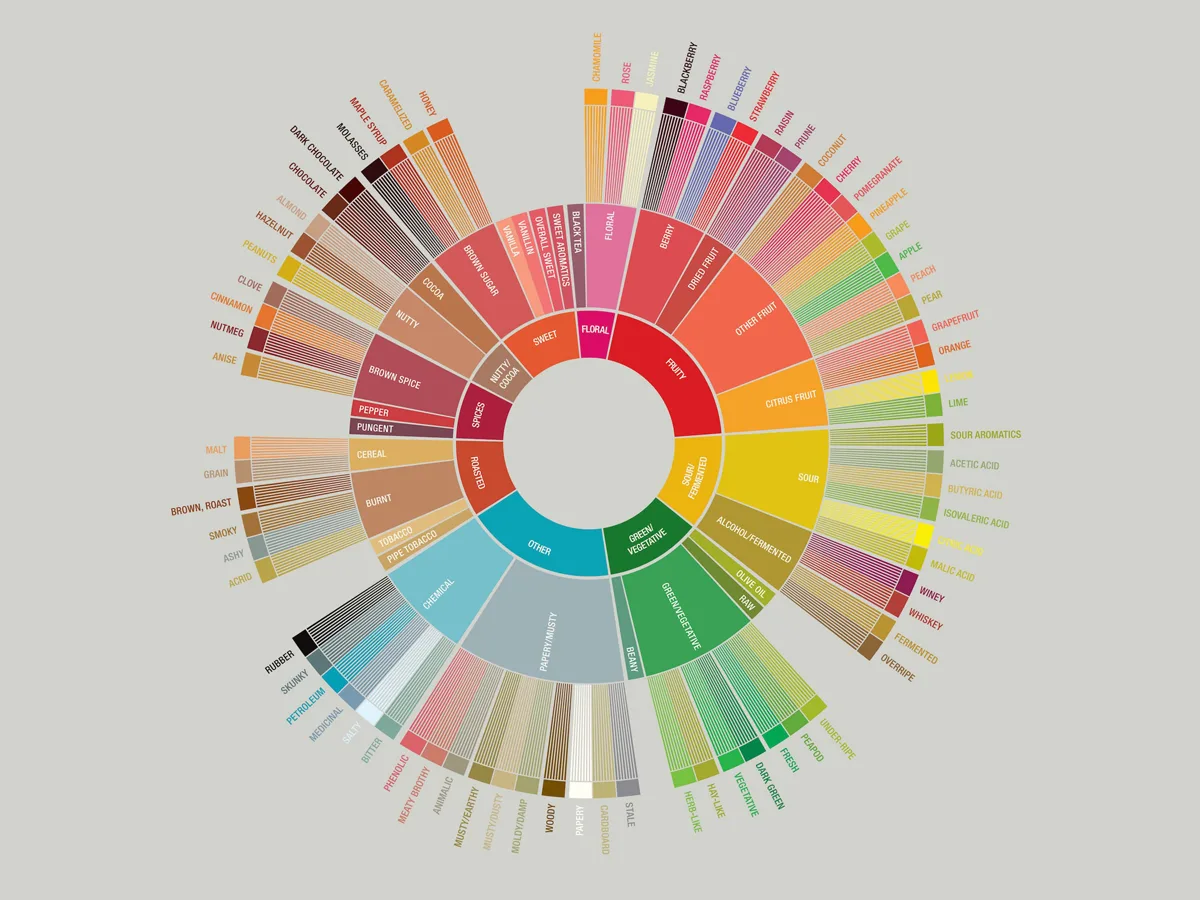
No tool? Map flavors to the flavor wheel: bright sour → under; balanced sweet → target; bitter/dry → over.
#Full Walk-Through: 15 g Coffee × 232.5 g Water Standard Recipe
- Pre-heat — Dripper, paper, server, cups; discard rinse water — warming the vessels is the first promise to flavor
- Dose — 15.0 g coffee (medium-fine, like fine sea salt), gentle shake to level the bed like a mirror
- Bloom — Start timer, pour 30 g 92 °C water in spiral, wait 30 s — listen to the whisper of CO₂ escaping
- First main pour — 2.8 g/s to 130 g (≈ 1:15), steady level, 3 concentric circles, water caressing every grain
- Second main pour — Drop to 2.2 g/s to 232.5 g, pause 5 s before stopping, leaving breath for the tail
- Draw-down — Finish 2:15–2:30, remove dripper, swirl server to marry the layers
- Taste — Sip at ~65 °C: aroma → acidity → sweetness → body → finish — completing a dialogue with origin
Complete parameter card & troubleshooting table in "Pour Over Coffee Tutorial: Master the "Coffee Stylesheet" for Café-Quality Brews at Home"; for a cold-water counterpart, explore "Cold Brew Coffee Recipe: 5 Methods Compared & Golden Ratios by Roast Level".
#Advanced: Turn "Standard Motion" into "Mood Customization"
When you hit 2:20 ±5 s with a perfect donut bed three times in a row, the 1:15.5 / 92 °C staged pour is muscle memory. Now brew for the moment:
- Morning wake-up — Ethiopia natural + 1:16 + 93 °C + faster pour → vivid florals, like sunlight on the palate
- Afternoon focus — Brazil washed + 1:15 + 91 °C + slower pour → nutty chocolate body, companion to settling thoughts
- Late-night solo — Mandheling dark + 1:14.5 + 90 °C + finer grind → caramel spice warmth, embracing solitude with gentleness
CoffeeStyle believes: one cup, one life attitude. When parameters become intuition, pour over stops being a test and becomes a ritual dialogue with terroir — the emotional customization after bitterness yields to sweetness.
#FAQ
#What gear do I need for pour over coffee?
Minimum kit: gooseneck kettle, dripper (V60/Kalita/Origami), matching filters, 0.1 g scale, uniform grinder, temperature-stable hot water. Beginners should start with Kalita Wave 185 stainless for highest forgiveness.
#What are the most common beginner mistakes?
Top five: skipping bloom, guessing temperature, uncontrolled pour height/flow, ignoring bed geometry, expecting one grind setting forever. Keep a bean–grind–dripper log and change one variable at a time.
#How do I adjust brew ratio and water temperature?
Baseline 1:15.5 / 92 °C. Light roast → higher ratio, hotter water. Dark roast → lower ratio, cooler water. Adjust in 0.5 ratio steps or 1 °C increments; single-variable tests only.
#How do I choose between V60, Kalita, and Origami?
V60 = fast, bright, light-roast clarity for practiced hands. Kalita = slow, forgiving, balanced body for beginners & medium-dark roasts. Origami = dual-paper flexibility, all-roast versatility, high aesthetics.
#How do I judge if extraction is even?
Match flow-rate curve to the four-phase standard; check for flat donut bed; smell dry grounds for burnt or grassy notes. With a refractometer, verify 18–22 % extraction yield and 1.15–1.35 % TDS.


Comments