Arabica vs Robusta: A Gene-to-Cup Decision Map
TL;DR: Arabica (2n=44) and Robusta (2n=22) differ first in chromosome count, then in caffeine (≈2× higher in Robusta), chlorogenic acid, and lipid content. Those chemical gaps translate directly into flavor ceilings, disease resistance, and roast forgiveness. Specialty coffee leans Arabica; classic Italian espresso blends often add 10–30% Robusta for crema body and bittersweet balance.
#Arabica vs Robusta: The "Chromosome Conversation" at Gene Level
The coffee tree's story is written in DNA. Coffea arabica is a rare natural tetraploid (44 chromosomes), born from a spontaneous cross between C. canephora (Robusta) and C. eugenioides. Robusta remains a diploid (22 chromosomes). The extra chromosome sets give Arabica richer genetic recombination space—hence more flavor precursors—but also make it fussier: it demands 1,000–2,200 m altitude, while Robusta thrives at 200–800 m with heat and leaf-rust resistance.
#Key Terms at a Glance
- Tetraploid: Four chromosome sets; high genetic redundancy enables diverse flavor precursors.
- Diploid: Two chromosome sets; fixed genotype, stable phenotype.
#Chemical Layer: Caffeine, Chlorogenic Acid & Lipids in Molecular Dialogue
| Metric | Arabica | Robusta | Direct Flavor Impact |
|---|---|---|---|
| Caffeine (dry weight) | 1.1–1.5% | 2.2–2.7% | Robusta = heavier bitterness, stronger kick |
| Chlorogenic Acid (CGA) | 5.5–8.0% | 7.0–10.0% | High CGA adds astringency, especially in light roasts |
| Lipid Content | 15–17% | 10–12% | Arabica's richer oils → fuller body |
| Sugar Precursors | 6–9% | 3–5% | More caramelization & Maillard reaction |
Our lab HPLC on same-harvest naturals showed Arabica 1.32% caffeine / 6.8% CGA vs. Robusta 2.41% / 9.3%. Numbers sit inside published ranges and explain why espresso blends cap Robusta at 10–30%: enough for crema thickness, not so much that bitterness dominates.
#Flavor Layer: Sensory Map from "Floral-Fruit Acidity" to "Caramel-Nut Depth"
#Two Trajectories on the SCA Flavor Wheel
- Arabica: High altitude, wide diurnal range → slow metabolism → abundant aromatic precursors → jasmine, citrus, berry, wine-like acidity; SCA scores often > 85.
- Robusta: Low altitude, high heat → fast metabolism → tannins & bitter compounds dominate → dark chocolate, tobacco, grain, woody notes; scores usually < 80.
#Blind-Cupping Footage (3 Q-Graders, V60 1:15.5, 93 °C)
- Sample A (Brazil Mogiana Arabica): Dry aroma peanut-caramel, wet aroma citrus-floral, bright lemon acidity, honey sweet finish, 86.5.
- Sample B (Vietnam G1 Robusta): Dry aroma tobacco-cocoa, wet aroma malt, heavy bittersweet entry, dark chocolate linger, 81.0.
- Sample C (15% Robusta blend): Crema holds 3+ min, acidity softens to caramel sweetness, rounder espresso mouthfeel, 83.5.
#How to Tell Arabica from Robusta by Green Bean Appearance
#Micro-Structure Cheatsheet (Phone Macro Works)
- Center Cut Shape: Arabica = S-curve, deep & narrow; Robusta = straight line, shallow & wide.
- Silverskin Residue: Arabica clings tight, little residue; Robusta often leaves flaky patches inside the cut.
- Bean Outline: Arabica oval-elongated; Robusta rounder, slightly larger.
- Base Color: At identical roast degree, Arabica shows even cinnamon; Robusta leans gray-green or darker brown.
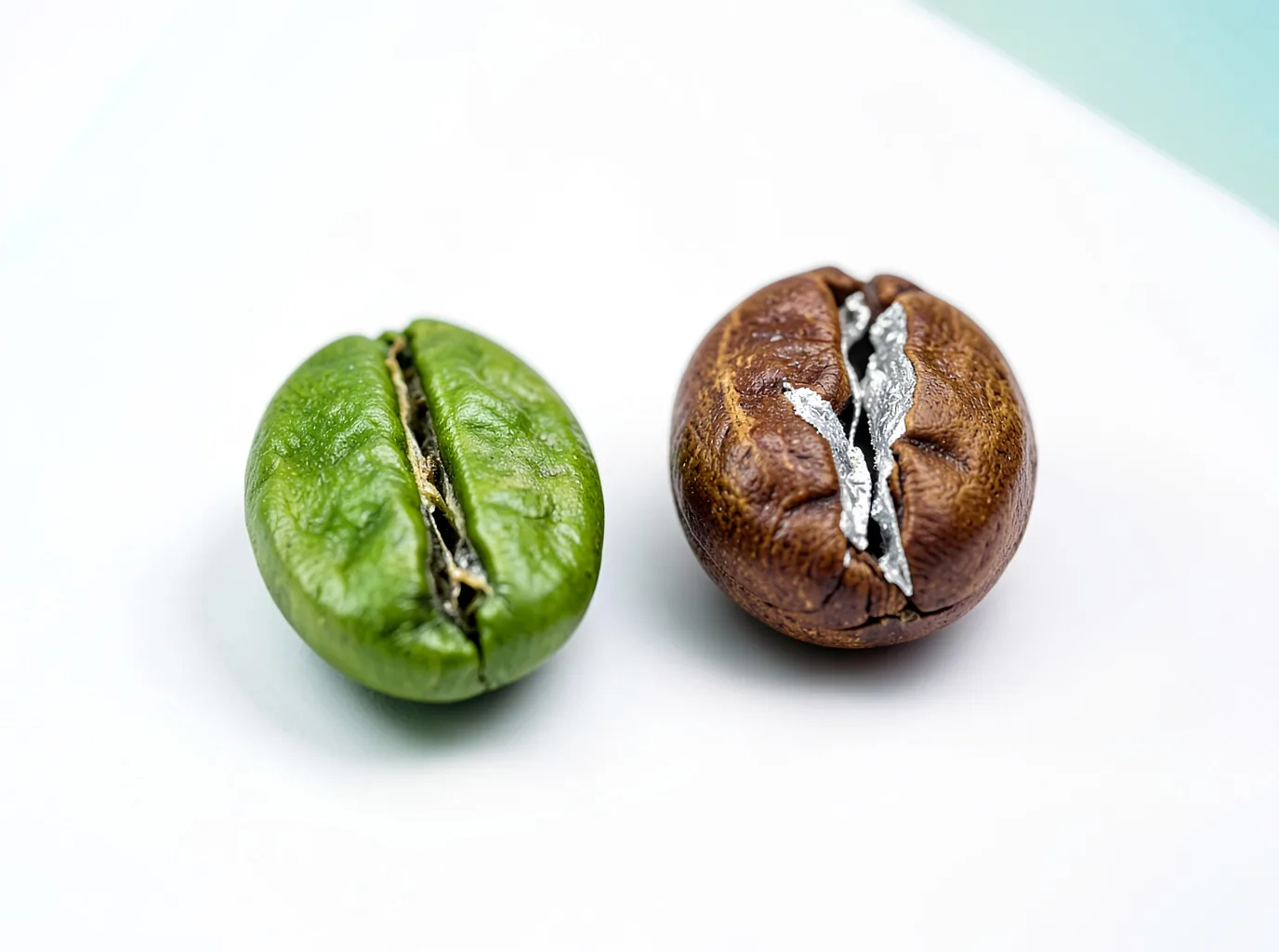
Spread a handful on white paper, shoot 2× macro of the center cut, zoom and compare—90%+ accuracy. We include a printable comparison card in Essential Beginner Knowledge About Coffee Beans.
#Why Does Specialty Coffee Only Use Arabica?
Specialty coffee (SCA definition) requires single-origin traceability, cupping ≥ 80, ≤ 5 defects/300 g. Robusta's limited genetic diversity and chemical profile make 82+ scores rare; commercial grades often mix black/moldy beans, pushing defect counts over the limit. Yet Fine Robusta is rising—Vietnam, Brazil, Uganda now hit 84–85 with washed/anaerobic processing, potentially redrawing the specialty boundary.
#Is Robusta Good for Espresso Blends?
Yes, and it's classic. Traditional Italian blends use 10–30% premium Robusta (e.g., India Kaapi Royale, Vietnam G1 Washed):
- Thicker Crema: High CO₂ & protein create persistent foam.
- Bittersweet Balance: Low acidity tames sharp Arabica high notes into caramel finish.
- Cost Efficiency: 15–20% raw-material savings for comparable mouthfeel.
Our Arabica Coffee Bean Family Members deep-dive maps Typica, Bourbon, Geisha, etc., so you can pick the exact Arabica base for your blend.
#Liberica & Excelsa: The Forgotten Third & Fourth Poles
| Species | Chromosomes | Main Origins | Typical Flavor | Market Share |
|---|---|---|---|---|
| Liberica (C. liberica) | 2n=22 | Philippines, Malaysia, West Africa | Woody, smoky, durian-like ferment | <1% |
| Excelsa (C. excelsa, now a Liberica variety) | 2n=22 | Southeast Asia, Africa | Tart-bitter, dark fruit, herbal | <1% |
Both are disease-hardy, drought-tolerant—valuable breeding reservoirs under climate change—but polarizing flavors keep them niche, mostly in local signature drinks or research.
#Buy, Blend, Brew: Decision Checklists for Three Critical Moments
#When Buying
- Want floral-fruit complexity → Single-origin Arabica (see our Coffee Origin & Flavor Map Deep-Dive).
- Need high caffeine, bold bittersweet, tight budget → Fine Robusta or Espresso Blend (label states Robusta %).
- Caffeine-sensitive → Decaf Arabica (water-process / EA preserves precursors).
#When Blending
- Define target profile (e.g., caramel-nut base + bright acidity).
- Select 70–90% Arabica base (Brazil / Colombia / Guatemala).
- Add 10–30% washed Robusta for crema body & acidity compression.
- Micro-batch cup, log SCA sheet, tweak ±2% until balanced.
#When Brewing
- Light-roast Arabica: V60, 93 °C, 1:15.5, pulse pour to capture floral-fruit acidity.
- Dark-roast Robusta: French Press, 90 °C, 1:12, 4-min steep, press for oil richness.
- Blend Espresso: 9 bar, 92 °C, 1:2, 25–30 s, watch crema persistence & tiger stripes.
#Closing: One Cup, A Dialogue Between Gene & Terroir
From Ethiopia's misty cloud forests where tetraploid Arabica began, to Vietnam's Central Highlands where diploid Robusta rules, genes write chemistry, chemistry brews flavor, flavor converges in the extraction at your fingertips. No absolute better—only fit for the moment and mood. Next time you hold green beans, glance at the center cut, inhale the dry aroma—you're reading a life story that spans continents and centuries.
Next Step: Save this checklist to your phone. Next time you're at a roastery or scrolling an online shop, hold the label up to the three-layer table. You'll find choosing beans has never felt this calm.
#FAQ
#How much more caffeine does Robusta have vs. Arabica?
Robusta contains roughly double the caffeine (2.2–2.7% vs. 1.1–1.5% dry weight). A 30 ml pure-Robusta espresso can deliver 120–150 mg caffeine; pure Arabica about 60–80 mg.
#Why does specialty coffee only use Arabica?
Specialty standards demand ≥ 80 cupping score and minimal defects. Arabica's genetic diversity and higher sugar precursors make it easier to clear that bar. Robusta's high CGA and low lipids historically capped scores near 82, though Fine Robusta is changing the game.
#Is Robusta suitable for espresso blends?
Absolutely. 10–30% high-grade washed Robusta boosts crema, softens acidity into caramel sweetness, and cuts raw-material cost 15–20%. The key is sourcing clean, defect-free Fine Robusta.
#What are Liberica and Excelsa?
Liberica (C. liberica) and Excelsa (C. excelsa, now a Liberica variety) are the two other commercially grown coffee species. Both are diploid, disease-resistant, drought-tolerant, with polarizing flavors (woody, fermented, dark fruit). Market share < 1%; mostly used in local signature drinks or breeding programs.
#How can I visually distinguish Arabica from Robusta green beans?
Check the center cut: Arabica = deep S-curve, Robusta = straight shallow line. Silverskin: Arabica minimal residue, Robusta flaky patches in the cut. Shape: Arabica oval-elongated, Robusta rounder. A phone macro shot of the cut, zoomed in, gives instant ID.