
Pour Over Coffee Ratio 1:15: Dynamic Formula by Roast Level & Online Calculator
TL;DR: The 1:15 pour over ratio is a baseline for medium roasts only. Light roasts need 1:16.5 for full extraction, dark roasts 1:13.5 to avoid bitterness. This article gives a dynamic three-tier formula, an embedded calculator, and 0.1 g scale workflow so you can replicate café flavor at home.
#Why 1:15 Is a Starting Point, Not a Fixed Rule
Brew ratio (coffee mass : water mass) governs the balance between extraction yield and TDS (Total Dissolved Solids). The SCA Golden Cup target—18–22 % extraction, 1.15–1.35 % TDS—happens to center on 1:15 for medium roasts. But roast degree changes bean cellular structure and dissolution kinetics: light roasts retain intact cell walls and need more water molecules to penetrate; dark roasts are highly porous and over-extract bitterness if water is excessive. Splitting one ratio into three dynamic formulas is the key to "emotional customization" in every cup.
#Light Roast 1:16.5 | Giving Florals Room to Breathe
Light roasts preserve origin terroir—bright acidity, jasmine, citrus. Dense cell walls release solubles slowly. Sticking to 1:15 starves the brew of water, yielding sharp, under-extracted acidity.
#Practical Parameters
- Ratio: 1:16.5 (e.g., 15 g coffee × 247.5 g water)
- Water temp: 92–94 °C
- Grind: Half notch finer than medium (hand grinder ~22–24 clicks, electric ~800–900 μm)
- Pour cadence: Three-stage—bloom 30 s (30 g) → slow spiral to 165 g → top up to 247.5 g, total 2:15–2:30
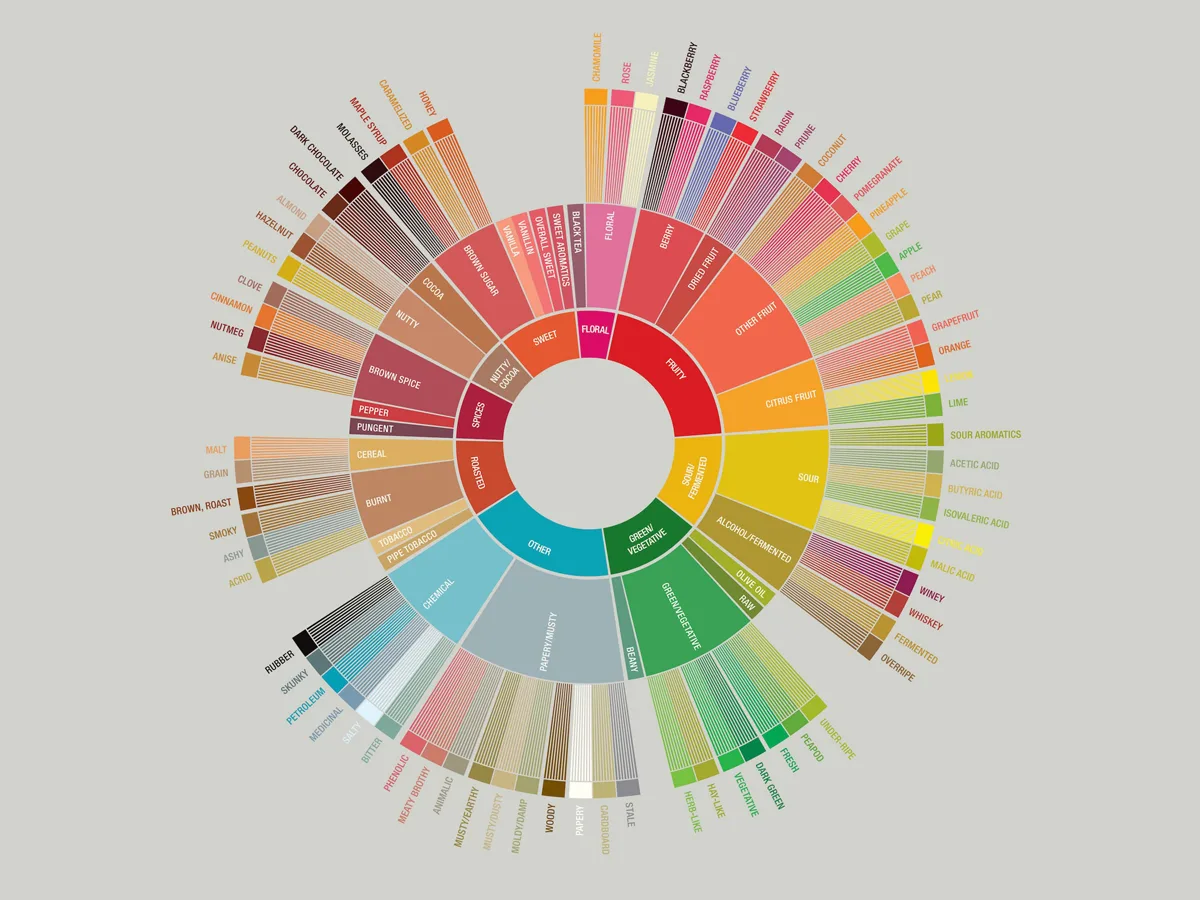
Flavor coordinates: Jasmine, citrus acidity, tea-like body, clean sweet finish.
#Medium Roast 1:15 | The Balanced Standard
Medium roasts sit between Maillard and caramelization, offering complete acid-sweet-bitter structure and moderate dissolution rate. 1:15 is the geometric mean derived from the SCA model, delivering the highest fault tolerance.
#Practical Parameters
- Ratio: 1:15 (e.g., 15 g coffee × 225 g water)
- Water temp: 90–92 °C
- Grind: Standard pour over (hand grinder 20–22 clicks, electric 700–800 μm)
- Pour cadence: Two-stage—bloom 30 s (30 g) → single pour to 225 g, total 1:55–2:10
Flavor coordinates: Caramel sweetness, nutty body, gentle fruit acidity, velvet mouthfeel.
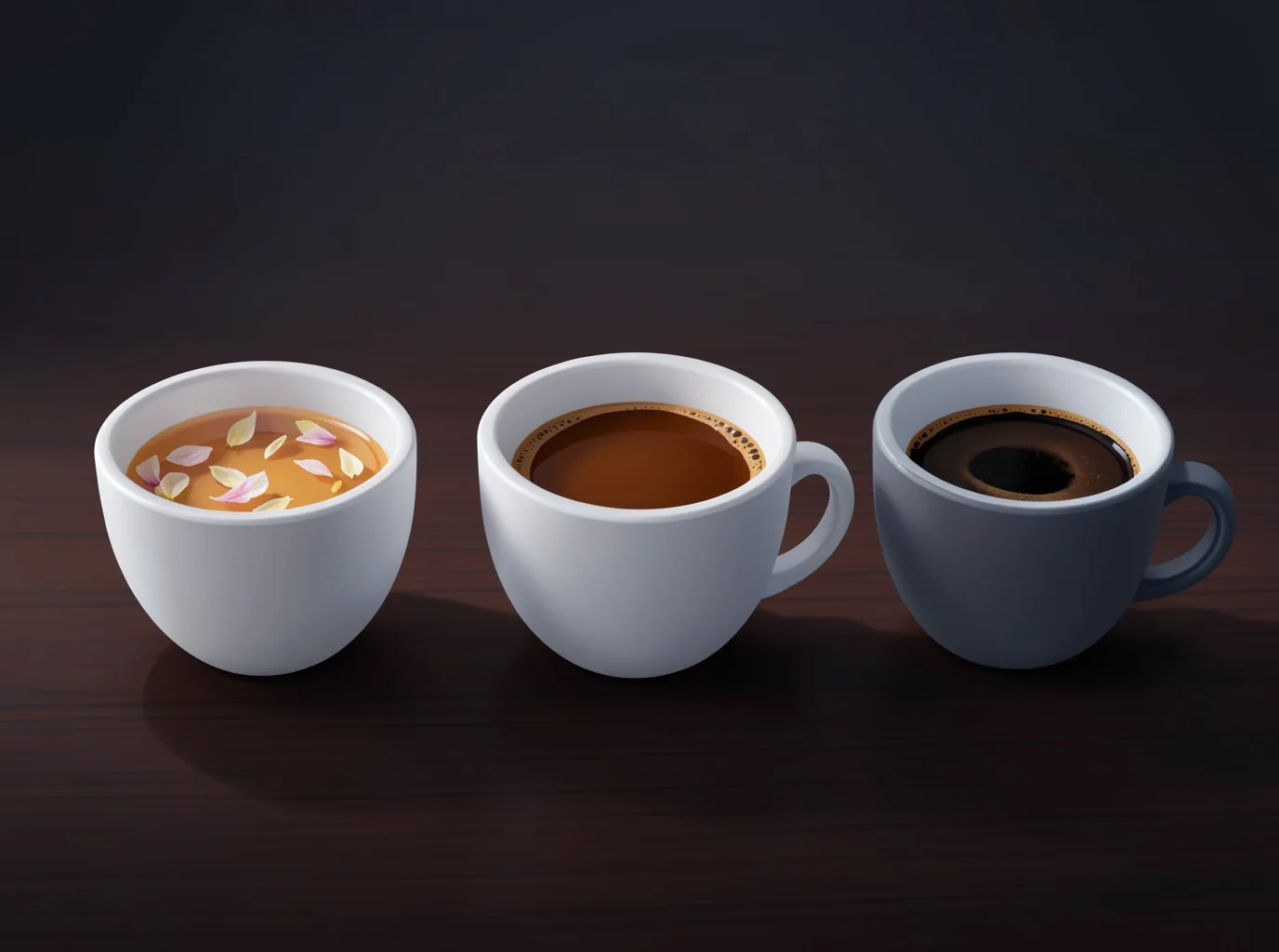
#Dark Roast 1:13.5 | Restricting Water to Lock In Caramel Depth
Dark roasts have shattered cell walls and surface oils; solubles extract aggressively. Excess water pulls harsh, smoky notes. Tightening to 1:13.5 with lower temperature preserves chocolate-whiskey richness.
#Practical Parameters
- Ratio: 1:13.5 (e.g., 15 g coffee × 202.5 g water)
- Water temp: 86–88 °C
- Grind: Half notch coarser than medium (hand grinder 18–20 clicks, electric 600–700 μm)
- Pour cadence: Two-stage—bloom 30 s (30 g) → fine stream to 202.5 g, total 1:45–2:00
Flavor coordinates: Dark chocolate, caramelized nuts, whiskey barrel notes, long sweet aftertaste.
#Three-Tier Dynamic Formula Comparison Table
| Roast Level | Ratio (Coffee:Water) | Water for 15 g Coffee | Temp Range | Grind Ref (Hand Clicks) | Key Flavor Notes |
|---|---|---|---|---|---|
| Light | 1:16.5 | 247.5 g | 92–94 °C | 22–24 | Jasmine, citrus, tea-like |
| Medium | 1:15 | 225 g | 90–92 °C | 20–22 | Caramel, nut, round |
| Dark | 1:13.5 | 202.5 g | 86–88 °C | 18–20 | Dark chocolate, whiskey, lingering sweetness |
#How to Control Ratio Precisely with a Kitchen Scale
- Zero: Place dripper + filter on scale → tare.
- Dose: Add target coffee mass (15–18 g recommended) → record actual weight.
- Calculate water: Use the embedded calculator or mental math: water = dose × ratio factor.
- Staged pouring: Hit bloom, main pour, and top-up targets while watching the scale in real time.
- Log: Note dose, water, brew time, and tasting notes in a "Coffee Stylesheet" for repeatable results.
💡 Pro tip: If your scale shows flow rate, maintain 3–5 g/s during main pour to further stabilize extraction yield.
#How Much Does Ratio Adjustment Shift Flavor?
Every 0.5 ratio step (e.g., 1:15 → 1:15.5) moves TDS ~0.03–0.04 % and extraction yield ~0.5–0.8 %. Sensory impact:
- More water (higher ratio): Acidity opens, body drops, finish cleaner; too far → watery, hollow.
- Less water (lower ratio): Sweetness and body rise, acidity suppressed; too far → bitter, astringent.
Adjust in 0.5 increments paired with micro grind changes—a dual-axis "ratio-grind" calibration method.
#Do Light / Dark Roasts Require Ratio Changes?
Yes, absolutely. It's dictated by dissolution physics, not preference. Light roast without extra water = sour under-extraction; dark roast without less water = bitter over-extraction. Grind, temperature, and pour can compensate only so far; dynamic ratio sets a higher ceiling.
#Embedded Online Calculator: Input Dose, Get Water Instantly
#Closing: One Cup, One Life Attitude
From sun-dried Yirgacheffe on Ethiopian highlands to deep-roasted Mandheling, every bean waits for the moment it is understood. We quantify science with the "golden ratio" and measure patience with "ritual"; what meets in the cup is never just caffeine, but a savorable fragment of time. Next brew, ask yourself: do I want florals, caramel, or dark chocolate today? Adjust the ratio, and begin your "emotional customization" journey.
For a systematic path from beginner to advanced pour over logic, see our Beginner Guide to Pour Over Coffee: Golden Ratio 1:15.5 & Staged Pouring Visualized. To explore more brewing dimensions, Cold Brew Coffee Recipe: 5 Methods Compared & Golden Ratios by Roast Level and Pour Over Coffee Tutorial: Master the "Coffee Stylesheet" for Café-Quality Brews at Home are worth bookmarking.
#FAQ
#Is 1:15 suitable for all beans?
No. 1:15 is calibrated for medium roasts. Light roasts need 1:16.5, dark roasts 1:13.5; otherwise you risk under- or over-extraction.
#How to control ratio precisely with a kitchen scale?
Place dripper on scale → tare → weigh coffee → calculate water → pour in stages while reading the scale → log actuals for replication.
#How much does ratio adjustment affect flavor?
Each 0.5 ratio step shifts TDS ~0.03–0.04 % and extraction yield ~0.5–0.8 %, perceptibly rebalancing acidity, sweetness, bitterness, and body.
#Do light/dark roasts require ratio changes?
Yes. Light roasts have dense cell walls needing more water; dark roasts are highly soluble needing less. This is physics, not taste preference.
#Is there an automatic calculator?
The embedded calculator above gives instant water weight from dose and roast level, with custom ratio support—no mental math needed.


Comments