
Robusta Coffee vs Arabica: A Scientific Comparison of Flavor, Caffeine & Growing Conditions
TL;DR: The core difference between Arabica and Robusta coffee is genetic: Arabica is tetraploid (44 chromosomes), self-pollinating, with delicate flavor, bright acidity, and ~1.2% caffeine; Robusta is diploid (22 chromosomes), cross-pollinating, with bold bitter flavor, heavy body, ~2.2% caffeine, and high tolerance for low-altitude heat and pests.
#Why Is Arabica vs Robusta the First Filter When Choosing Beans?
If you love coffee, the name Ethiopia will never feel unfamiliar. Legend tells of a ninth-century goatherd named Kaldi who noticed his flock dancing after eating red cherries; monks brewed the fruit and stayed awake through the night—thus coffee was born in myth. Today, when you stand before shelves labeled "100% Arabica" and "Robusta Blend," you are actually choosing between two divergent evolutionary stories. Coffea arabica originated in the misty highland forests of southwestern Ethiopia. As the only tetraploid coffee species, its 44 chromosomes yield a stable genome that underpins a nuanced flavor map. Coffea canephora (Robusta) is native to the lowland rainforests of the Congo Basin. Its diploid 22 chromosomes and obligate cross-pollination create high heterozygosity, granting remarkable environmental resilience and nearly double the caffeine content. This is not merely taxonomic trivia—it dictates the acidity, sweetness, bitterness, price tag, and brewing approach of what ends up in your cup.
#Genetics & Chromosomes: The Base Code That Sets the Flavor Ceiling
Tetraploid vs. diploid is the fundamental divide. Arabica underwent a rare natural chromosome-doubling event, giving it two complete genome sets. It exhibits self-pollination with high homozygosity—meaning offspring are highly stable, and flavor traits can be fixed through selection, giving us varieties like Geisha and Typica. Robusta, as a diploid, enforces cross-pollination, resulting in high heterozygosity. Wild populations vary widely, making breeding harder but preserving a rich disease-resistance gene pool.
- Arabica: 44 chromosomes, weak self-incompatibility, high varietal purity, stable delicate flavor expression.
- Robusta: 22 chromosomes, strong self-incompatibility, pronounced heterosis, strong stress tolerance but difficult flavor standardization.
CoffeeStyle's "Arabica vs Robusta Difference: A Deep-Dive Comparison from Gene to Cup" traces the genomic evolution of both species in detail.
#Caffeine Content: Natural Pesticide vs. Alertness Utility
Caffeine is an alkaloid defense compound in the plant, suppressing competing vegetation and paralyzing insect nervous systems. Robusta evolved in low-altitude, high-pest-pressure environments, developing 2.2–2.7% caffeine by dry weight. Arabica, sheltered in high-altitude cloud belts with less pest pressure, settled at 1.2–1.5%.
| Metric | Arabica | Robusta |
|---|---|---|
| Caffeine (dry weight) | 1.2–1.5% | 2.2–2.7% |
| Per 8 oz cup (est.) | 80–100 mg | 160–200 mg |
| Chlorogenic Acid (CGA) | 5.5–8% | 7–10% |
| Lipid / Sugar Precursors | Higher | Lower |
Practical tip: Caffeine-sensitive individuals, pregnant drinkers, or evening sippers should favor Arabica or decaf; those needing strong alertness, making Vietnamese drip coffee, or building espresso blends for body will find Robusta cost-effective.
#Flavor Map: From Floral Citrus to Caramel Dark Chocolate
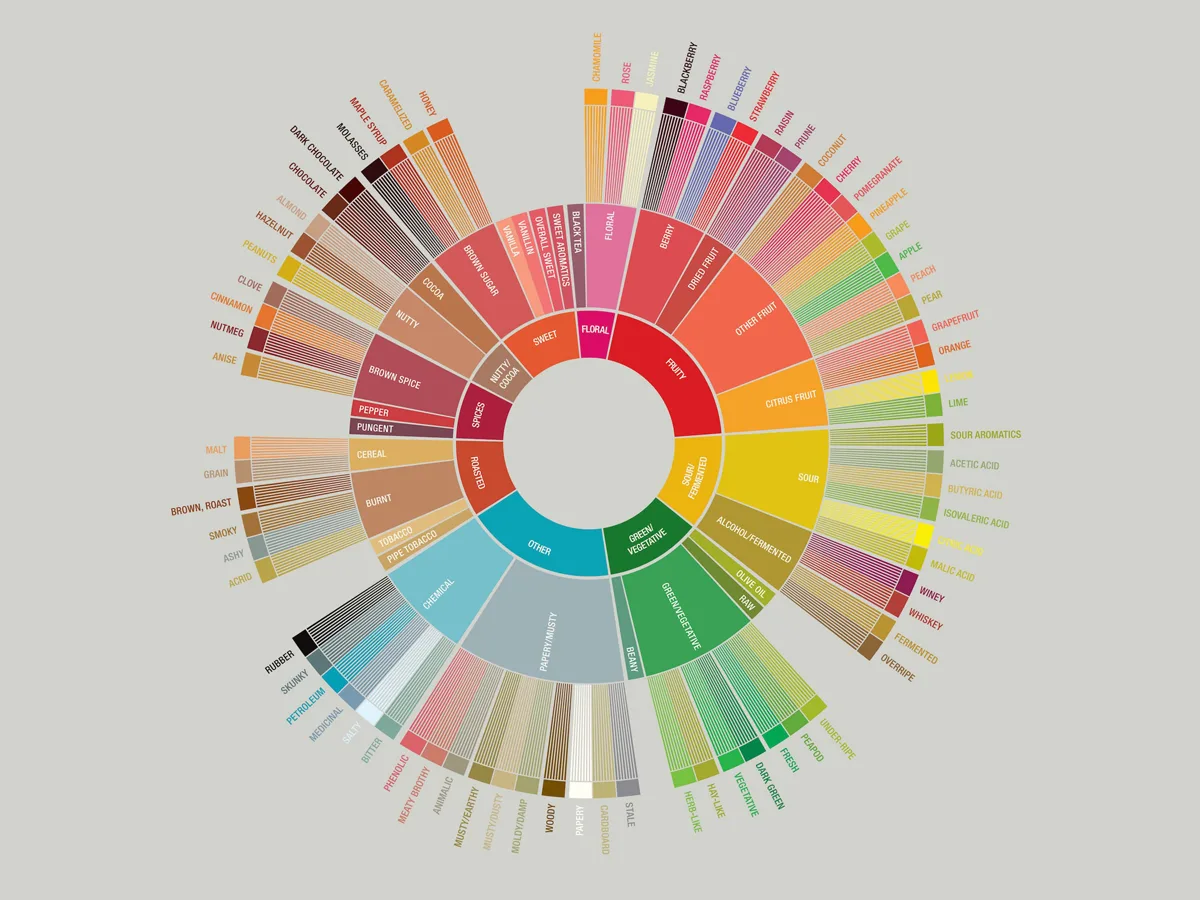
On the SCA Flavor Wheel, Arabica typically lands in "floral, citrus, berry, caramel, chocolate" zones, with bright acidity (high citric and malic acid), medium body, and clean finish. Robusta clusters around "cereal, woody, smoky, dark chocolate, bitter," with low flat acidity, high body, and frequent rubbery/earthy aftertaste.
#Key Flavor Compound Comparison
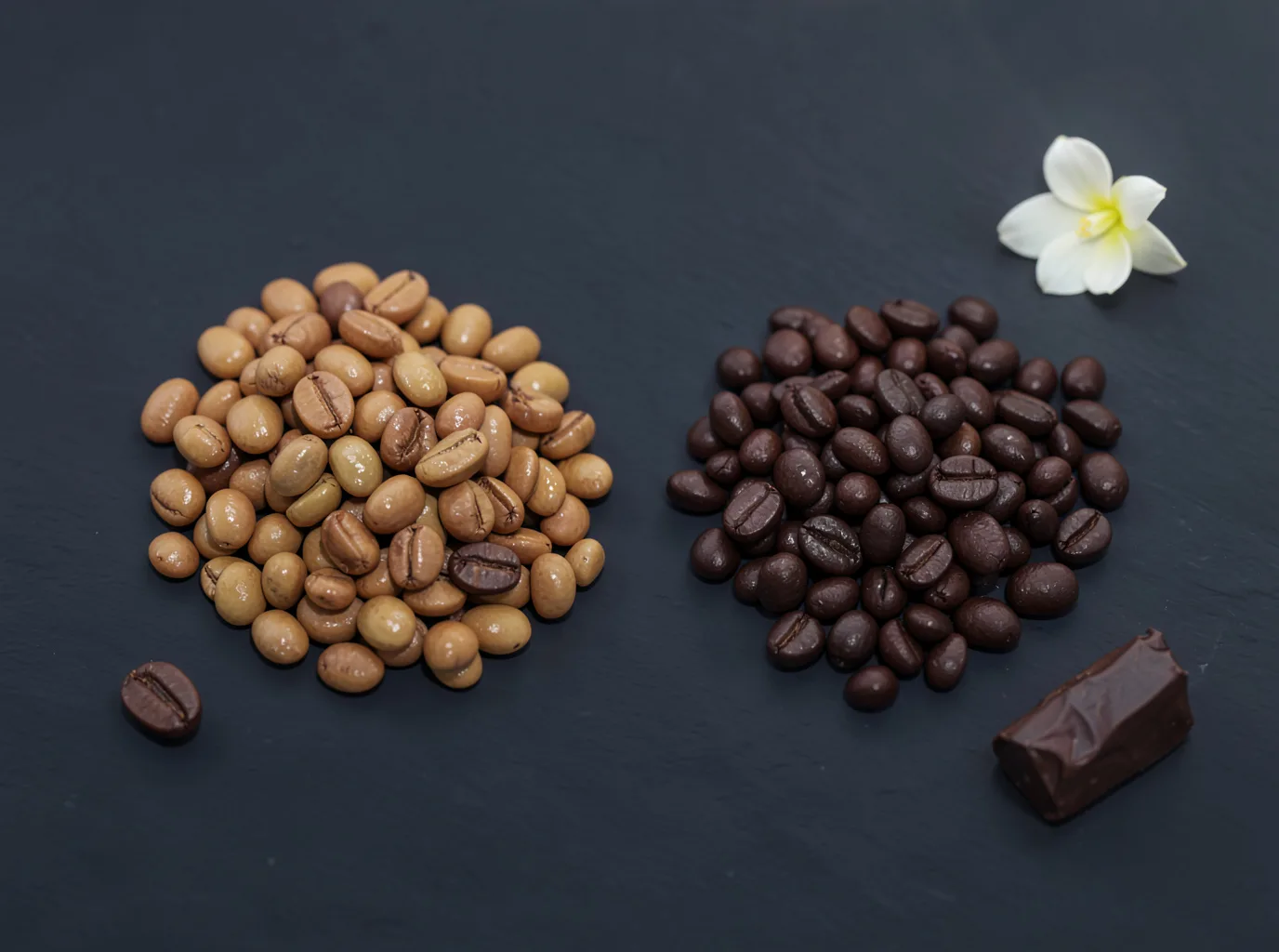
- Arabica: High sugar precursors (sucrose 6–9%) + moderate CGA → light-medium roasts show floral/fruit notes; medium-dark shifts to caramel/nut.
- Robusta: Low sugar, high CGA + high caffeine → roasting readily generates pyrazine-driven bitter compounds, pushing flavor toward bitter, heavy, thick.
#Cupping Score Reality
In specialty coffee definitions, SCA scores ≥ 80 are almost exclusively Arabica. Robusta has a Fine Robusta standard (CQI R-score), but ≥ 80 samples are rare; commercial grades mostly sit at 60–75.
Our "Arabica vs Robusta Coffee: Beyond Stereotypes — Genetics, Flavor & Market Reality" compares multi-origin cupping data for reference.
#Growing Conditions: Altitude, Temperature & the Disease Survival Game
| Dimension | Arabica | Robusta |
|---|---|---|
| Ideal Altitude | 1,000–2,200 m | 200–800 m |
| Ideal Temperature | 15–24 °C | 22–30 °C |
| Annual Rainfall | 1,500–2,000 mm | 2,000–3,000 mm |
| Leaf Rust Resistance | Very low (needs shade/resistant varieties) | High (SH3 resistance genes) |
| Coffee Berry Borer | Susceptible | Relatively tolerant |
| Yield per Tree | 0.5–1.5 kg green bean | 1.5–3 kg green bean |
| Harvest Cycle | Distinct single/double season | Year-round (tropics) |
Climate change lens: Rising temperatures push the "coffee belt" upslope; Arabica's suitable area may shrink >50% by 2050. Robusta's heat tolerance makes it a key breeding parent (e.g., Catimor, Sarchimor lines) and a strategic pillar for future supply security.
#Why Is Arabica More Expensive? Cost, Risk & Pricing in Three Acts
- High cultivation cost: Steep highland terrain resists mechanization; hand-picking dominates. Shade-growing and pest/disease management add expense.
- High yield risk: Leaf rust, CBD virus outbreaks, and single-season harvests create volatility.
- Specialty premium mechanism: SCA scoring, traceability, and micro-lot auctions (BOP, COE) build high-margin narratives.
Robusta thrives on flat land with mechanical harvest, year-round picking, high yield, and strong disease resistance—marginal cost stays low. It has long served as the base for instant coffee and commercial blends, typically priced at 30–50% of Arabica.
Track price cycles in "2026 Coffee Price Forecast: Supply-Demand-Cost-Sentiment Three-Factor Model with Monthly Ranges".
#How to Pick Beans for Your Scenario: A Decision Checklist
- Pour-over / Siphon / Cold brew / Single-origin experience → Arabica (light-medium roast preserves floral/fruit acidity; medium-dark balances caramel/nut)
- Espresso blends / Milk drinks / Vietnamese drip / High caffeine need → Blends with 10–30% quality Robusta (boosts crema, bittersweet balance, lowers cost)
- Caffeine-sensitive / Pregnancy / Evening → Decaf Arabica (Swiss Water / EA process) or naturally low-caf variety (Laurina)
- Home roasting practice / Cost control → Robusta green beans to learn first/second crack timing
#Closing: Bitterness Ends in Sweetness—Every Cup Is a Letter from the Terroir
The difference between Arabica and Robusta coffee is ultimately the survival strategy each plant wrote in its terroir. Arabica sips morning mist on cloud-capped peaks, distilling delicate acidity and floral perfume. Robusta endures scorching lowlands and insect choruses, depositing bold bitterness and heavy body. There is no better—only fit. Life, like coffee, sometimes calls for the bright clarity of a floral dawn; other times, the thick resilience of bitterness turning sweet. Next time you hold a cup, ask yourself: which terroir's embrace do I need right now?
#FAQ
#Which is better, Arabica or Robusta?
There is no absolute "better"—only what fits your need. Arabica offers delicate, complex flavor with lower caffeine, ideal for specialty coffee exploration. Robusta delivers high caffeine, heavy body, and disease-resistant yield, suiting espresso blends, Vietnamese drip, or strong alertness needs.
#Why is Arabica more expensive?
Arabica grows on steep high-altitude slopes where mechanization is difficult, raising labor costs. It is highly vulnerable to leaf rust and other diseases, requiring costly management and yielding volatile harvests. Specialty scoring (SCA), traceability, and micro-lot auctions (BOP, COE) further drive premium pricing.
#What are the flavor differences between the two?
Arabica typically shows floral, citrus, berry, and caramel notes with bright acidity and medium body. Robusta leans toward cereal, woody, smoky, and dark chocolate flavors with low acidity, pronounced bitterness, high body, and often a rubbery or earthy finish.
#Is Robusta always low-quality coffee?
No. Fine Robusta—rigorously sorted and carefully processed—can present clean dark chocolate, spice, and nut notes. It also provides essential crema stability and body in espresso blends. Quality hinges on variety selection, processing method, and roast profile control.
#How should caffeine-sensitive people choose?
Prioritize light-medium roast Arabica single origins, or decaf Arabica processed via Swiss Water or Ethyl Acetate (residual caffeine < 0.1%). Avoid dark-roast Robusta and high-Robusta blends. Consume before 2 PM and keep total daily caffeine under 200 mg.


Comments